
Could a Solar Phenomenon Be Mistaken for a UFO or Alien Signal?
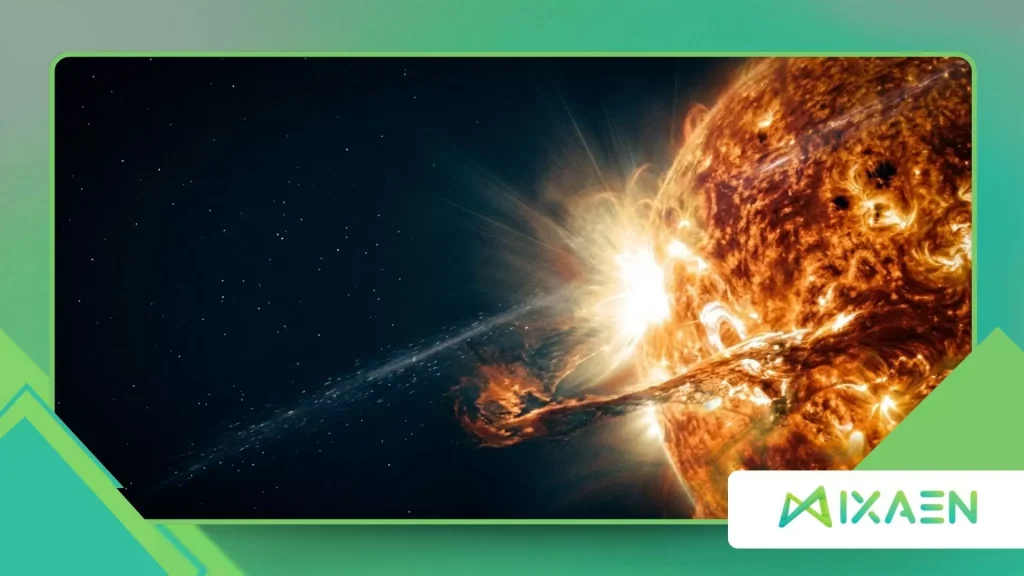
Could a solar phenomenon be mistaken for an extraterrestrial spacecraft or an alien communication signal flashing through the deep cosmos?
This compelling question resurfaces with renewed vigor every time our Sun approaches the energetic peak of its unpredictable eleven-year magnetic cycle.
As global observers document strange aerial anomalies with highly sensitive smartphones in 2026, scientific literacy remains our best shield against wild internet speculation.
Misinterpreting natural heliospheric events as artificial anomalies happens far more often than the public realizes, fueling viral social media misinformation campaigns overnight.
Sorting cosmic truth from fiction requires analyzing real-world physics, optical anomalies, and the fascinating ways our active star interacts with Earth.
Core Analytical Insights
- Atmospheric Refraction: Solar pillars, sun dogs, and unique thermal inversions routinely create geometric light shapes that mimic metallic metallic hulls.
- Geomagnetic Interference: Intense solar storms manipulate global ionospheric layers, generating erratic radar reflections and anomalous radio static over modern communication equipment.
- Coronal Activity: Mega-flares release blinding bursts of radiation that can easily blind camera sensors, producing phantom digital artifacts on astronomical images.
What Types of Light Distortions Mimic Alien Craft?
How Do Sun Dogs Create Geometric Visual Illusions?
Atmospheric ice crystals frequently act like millions of tiny, floating glass prisms, bending bright sunlight into striking geometric halos and phantom light patches.
These beautiful optical events, scientifically categorized as parhelia or “sun dogs,” manifest as brilliant, glowing spots positioned precisely on either side of the Sun.
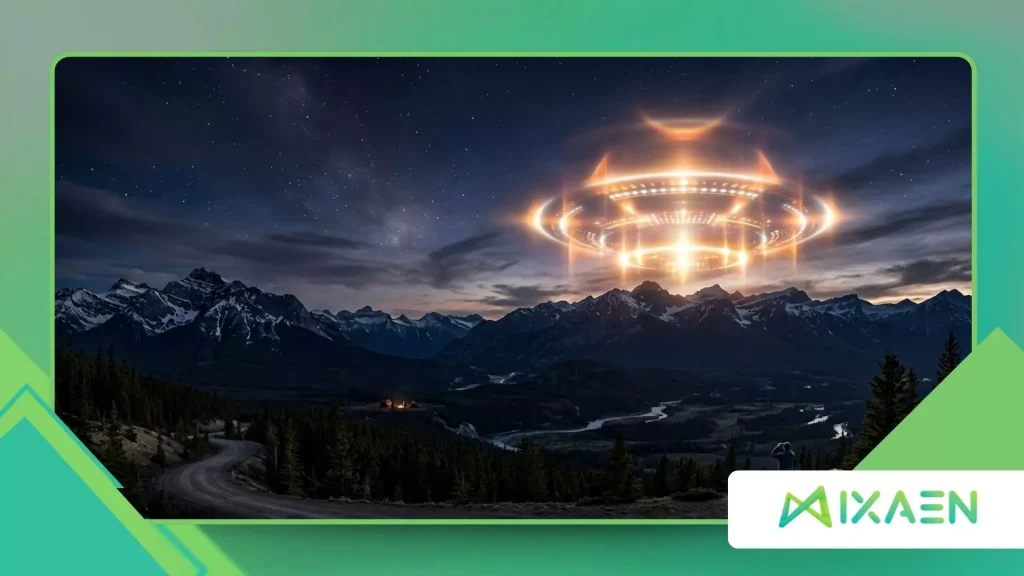
To an untrained observer looking at the horizon during a chilly twilight, these bright spots can easily appear to be structured, glowing spacecraft hovering silently in the upper atmosphere.
The illusion intensifies when shifting high-altitude winds cause these ice crystals to ripple uniformly, making the phantom lights appear to dart across the sky.
Why do we instantly leap to interstellar visitors when our own atmosphere routinely constructs such breathtaking optical illusions out of basic frozen water vapor?
The human brain naturally searches for familiar patterns, meaning a perfectly round solar halo quickly transforms into an otherworldly metallic saucer within the imagination of an excited witness.
Why Do Upper-Atmosphere Pillars Look Like Starship Engines?
Solar pillars present another profound visual challenge for ground-based observers, appearing as massive, vertical columns of intense light shooting directly into space.
This stunning phenomenon occurs when flat, hexagonal ice crystals slowly drift downward through stable air layers, reflecting the brilliant rays of a setting sun.
The resulting geometric beam can span miles into the sky, mimicking the fiery exhaust trail of an immense, departing interstellar vehicle.
When these columns interact with shifting clouds, they can appear to detach from the horizon completely, floating independently like a solid, glowing structure.
Pilots flying at high altitudes occasionally encounter these vertical light sheets cutting straight through dense cloud layers, creating an understandably startling visual perspective.
Understanding the mechanics of ice-crystal reflection helps dismiss sensationalized claims, grounding our observations in verifiable atmospheric physics rather than speculative science fiction.
++ How Solar Plasma Filaments Trigger Massive Magnetic Eruptions
How Do Thermal Inversions Generate Phantom Moving Saucers?
A unique meteorological condition known as a thermal inversion can trap a layer of cold air beneath a massive blanket of warm air.
This atmospheric layering bends low-angle sunlight over the horizon in a dramatic curve, creating an advanced mirage known as a Fata Morgana.
Objects situated far below the horizon, such as distant maritime vessels or coastal islands, suddenly appear to float high above the water line like massive, elongated geometric hulls.
When intense solar glare reflects off these warped, floating images, the mirage can appear to flatten and expand rapidly like a spinning metallic disk.
These shifting thermal boundaries can even make static ground objects look like they are accelerating at supersonic speeds through the sky.
This powerful illusion has historically fooled veteran navy lookouts and civilian airline pilots alike, demonstrating the absolute dominance of atmospheric refraction over human perception.
How Does Solar Activity Jam Global Telecommunications?
Why Do Solar Flares Trigger False Radio Signals?
Our Sun routinely releases massive bursts of electromagnetic energy known as solar flares, which flood the Earth’s ionosphere with intense X-ray radiation.
This sudden energy bombardment alters the electrical charge of our upper atmosphere, completely disrupting long-range high-frequency radio transmissions across entire hemispheres.
During these intense solar blackouts, shortwave radio operators often report hearing bizarre, rhythmic static patterns that sound deceptively engineered.
These rhythmic, pulsing static bursts can easily confuse amateur researchers who are actively scanning the airwaves for potential signs of intelligent extraterrestrial life.
This exact scenario occurred historically during the early days of radio exploration, when pioneers misidentified natural cosmic static as deliberate Martian transmissions.
Modern astrophysics proves that our star functions as an incredibly noisy electrical generator, constantly singing a chaotic song that requires careful filtration.
Also read: How Close Can We Get to the Sun Without Melting?
How Do Coronal Mass Ejections Fool Advanced Military Radar Systems?
A coronal mass ejection, or CME, hurls billions of tons of magnetized plasma directly into the fragile magnetic shield of our planet.
When this solar plasma collides with the magnetosphere, it triggers a powerful geomagnetic storm that warps the pathways of radar signals.
Modern defense radar arrays can interpret these bent signals as physical, non-existent objects moving erratically along the edge of space.
Military air traffic controllers might suddenly observe phantom tracks appearing on their digital screens, demonstrating impossible flight patterns and extreme velocities.
These radar anomalies can easily be mistaken for stealth spy drones or mysterious aerial phenomena if operators ignore real-time space weather forecasts.
Specialized tracking centers must constantly monitor solar wind speeds to prevent these ghostly plasma interactions from triggering unnecessary geopolitical panics.
Read more: How Scientists Photograph the Sun Without Blinding Themselves
What Role Does Ionospheric Scintillation Play in Satellite Glitches?
When solar particles agitate the ionosphere, they create localized plasma bubbles that act like turbulent, warped lenses for satellite communications.
This phenomenon, known as ionospheric scintillation, causes global positioning data and satellite internet signals to fluctuate wildly over short geographical distances.
A ground receiving station might experience a sudden, unexplained data transmission drop that mimics an intentional electronic jamming attempt by an unknown adversary.
Enthusiasts monitoring deep-space communication arrays occasionally mistake these localized satellite signal distortions for anomalous telemetry beaming down from deep space.
In reality, the signal was simply scattered by the restless, glowing plasma sea hovering just a few hundred miles above our heads.
It reminds us that our local space environment is incredibly dynamic, constantly altering the digital signals we rely on for global connectivity.
Why Are Satellite Cameras Vulnerable to Solar Artifacts?
How Do Cosmic Rays Produce Ghost Images on Space Sensors?
Orbiting space observatories like the James Webb Space Telescope and TESS operate outside the protective blanket of the Earth’s thick atmosphere.
When our Sun experiences intense magnetic eruptions, it accelerates highly energetic subatomic particles, known as cosmic rays, to near light speed.
When these microscopic projectiles strike the digital camera sensors of a telescope, they leave bright, linear streaks and glowing geometric artifacts.
Unscrupulous internet forums frequently crop these tiny sensor blemishes out of context, claiming they represent fleets of alien ships cruising past the moon.
Astronomers must routinely execute specialized software algorithms to clean these inevitable solar impacts out of their scientific data sets.
These digital phantoms are simply the pixelated scars of a telescope surviving in a harsh, unshielded radiation environment.
Why Do Coronal Loops Look Like Artificially Engineered Mega-Structures?
Through the lens of specialized extreme-ultraviolet cameras, the solar atmosphere reveals a stunning tapestry of immense, glowing plasma arches called coronal loops.
These loops follow the invisible, twisted magnetic fields of the Sun, stretching hundreds of thousands of miles out into the vacuum of space.
When these magnetic structures twist into perfect geometric circles or parallel lines, they can look astonishingly like artificial, manufactured mega-structures.
Non-experts reviewing public NASA satellite feeds occasionally mistake these bright plasma tunnels for immense alien refueling stations draining energy from the star.
This misunderstanding stems from a lack of familiarity with how magnetic fields manipulate superheated plasma in zero gravity.
The Sun is entirely capable of forging mind-boggling geometric artwork on a scale that humbles even the wildest imaginations of science fiction writers.
What Is the “Snowstorm” Effect on Solar Research Satellites?
During a severe solar proton event, the digital video feeds from specialized sun-monitoring spacecraft become entirely flooded with blinding white flashes.
This visual distortion looks exactly like a furious, chaotic winter snowstorm blowing across the digital lens of the satellite camera.
Some online commentators have wildly claimed that this “snow” is actually a massive swarm of microscopic alien probes operating near the solar surface.
In truth, this dazzling phenomenon is caused by solar protons physically smashing into the charge-coupled devices of the camera sensor at extreme velocities.
It is the literal visual representation of a solar hurricane tearing through the delicate circuitry of our space-based instrumentation.
Recognizing this harsh environment helps us appreciate the engineering resilience required to capture real-time solar data without our technology melting down.
Space Weather Anomalies vs. Extraterrestrial Signatures
The table below contrasts the physical characteristics of common solar phenomena with the theoretical indicators of artificial alien signals.
| Diagnostic Parameter | Natural Solar Phenomenon | Theoretical Alien Signal / Craft |
| Spectral Bandwidth | Extremely Broad (Covers All Frequencies) | Ultra-Narrow (Concentrated Frequency) |
| Polarization State | Random / Unpolarized Chaos | Highly Structured / Linear Coherence |
| Radar Characteristics | Diffuse / Transient Glitches | Solid / Consistent Kinematic Track |
| Visual Geometry | Diffuse Halos & Shifting Pillars | Defined Physical Boundaries & Materials |
| Predictability | Directly Correlated with Solar Cycle | Entirely Independent of Stellar Activity |
| Signal Modulation | Stochastic / No Data Encoding | Formatted Digital or Analog Information |
Separating Solar Physics From Fiction
We must conclude this cosmic investigation by emphasizing that the Sun remains an incredibly vibrant, unpredictable powerhouse capable of producing astonishing visual illusions.
Every single anomaly discussed today highlights how easily a lack of scientific context can turn a natural plasma interaction into an unverified extraterrestrial encounter.
As space weather monitoring technology continues to advance rapidly in 2026, our ability to identify these beautiful solar disruptions improves daily.
Ultimately, keeping an open mind about the cosmos should never come at the expense of rigorous, evidence-based scientific skepticism.
By taking the time to understand the elegant physics governing heliospheric activity, we protect ourselves from sensationalism while deepening our genuine appreciation for the cosmos.
The universe is already filled with wondrous, natural spectacles that do not require the addition of fictional alien narratives to be truly awe-inspiring.
Have you ever witnessed an unusual trick of light or a solar halo that made you stop and question what you were seeing? Compartilhe sua experiência nos comentários abaixo and let’s explore the science together!
Frequently Asked Questions
Could a solar phenomenon be mistaken for a UFO during a solar eclipse?
Yes, the sudden drop in ambient daylight can expose bright planets, meteors, and unique coronal loops that look unfamiliar to casual observers.
Do solar flares affect smartphone cameras on the ground?
No, the Earth’s thick atmosphere shields ground-based electronics from the direct particle impacts that cause digital ghost artifacts on space satellites.
Can solar activity create green glowing lights that look like alien spaceships?
Intense solar storms trigger beautiful auroras in the polar regions, but these are diffuse atmospheric glows rather than solid, structured crafts.
How do scientists know a signal isn’t from aliens?
Astrophysicists analyze the bandwidth and polarization of incoming signals; natural solar emissions are chaotic and spread across a massive frequency range.
