
Why Microgravity Manufacturing Could Expand Space Industry Soon
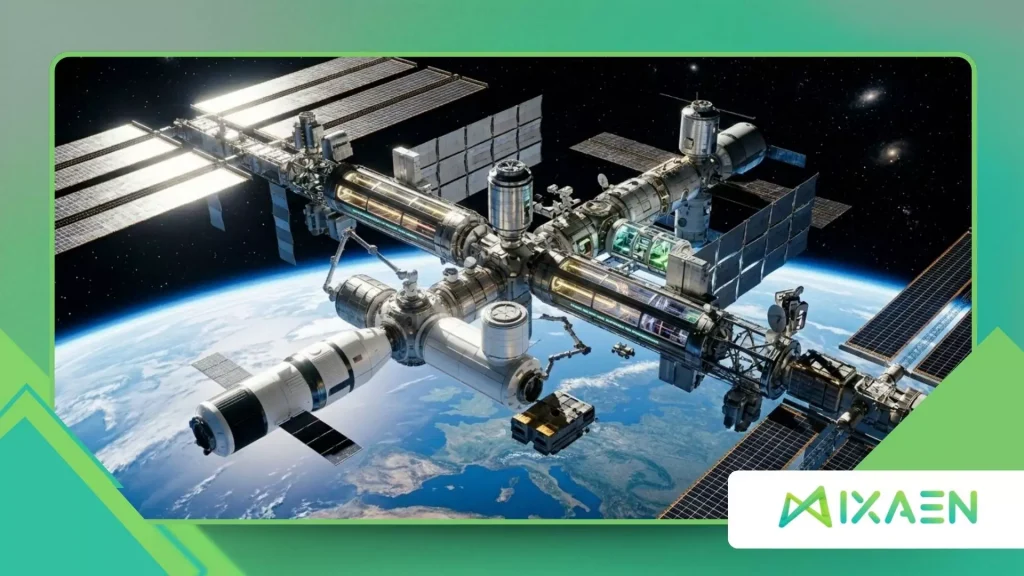
Microgravity Manufacturing is quietly sparking a quiet industrial revolution right above our heads, changing how humans engineer high-value materials.
As we progress through 2026, low Earth orbit has evolved from a purely scientific outpost into a highly lucrative commercial frontier.
Private aerospace companies are launching specialized automated orbital factories designed to produce items that are physically impossible to create within Earth’s gravity.
This paradigm shift offers an unprecedented economic foundation for the commercial space economy, promising to revolutionize medical treatments and communication grids.
Core Highlights
- Flawless Fiber Optics: Producing ZBLAN glass in orbit completely eliminates crystallization, drastically boosting signal transmission capabilities.
- Bioprinting Breakthroughs: Removing gravity allows scientists to print complex three-dimensional human tissues without structural collapse.
- Perfect Crystal Growth: Semiconductor production benefits from ultra-pure environments, yielding chips with far fewer internal defects.
What Is driving the Economic Shift Toward Orbital Factories?
Why Does Sedimentation Ruin Precision Engineering on Earth?
On Earth, gravity acts as a disruptive physical force that constantly pulls heavier particles downward during chemical mixing processes.
This downward pull creates uneven density distribution, structural weak points, and thermal convection currents within cooling liquids.
Why should we limit our technological progress to a terrestrial environment that actively distorts the molecular alignment of sensitive components?
By shifting manufacturing into low Earth orbit, engineers can completely neutralize these gravity-driven physical imperfections.
Without sedimentation, molten components remain perfectly suspended in uniform mixtures, cooling with absolute molecular uniformity.
This pristine state allows for the creation of flawless structural materials that simply cannot exist within our atmosphere.
How Has Launch Cost Reduction Accelerated Commercial Viability?
Historically, the astronomical price of launching cargo into orbit restricted space activities to government-funded exploratory missions.
The rapid maturation of reusable rocket architectures has completely decimated these economic barriers over the past several years.
Payload costs per kilogram have plummeted significantly, turning orbital production lines into a genuinely profitable corporate strategy.
Lower launch costs mean private corporations can regularly send raw materials into orbit and return finished goods safely via automated atmospheric capsules.
This financial predictability shifts the discussion from theoretical scientific experimentation to aggressive quarterly manufacturing output. Low Earth orbit functions as an accessible, high-yield business park for forward-thinking tech enterprises.
++ Why Reusable Spacecraft Systems Redefine Exploration Costs
What Role Does Varda Space Industries Play in This Revolution?
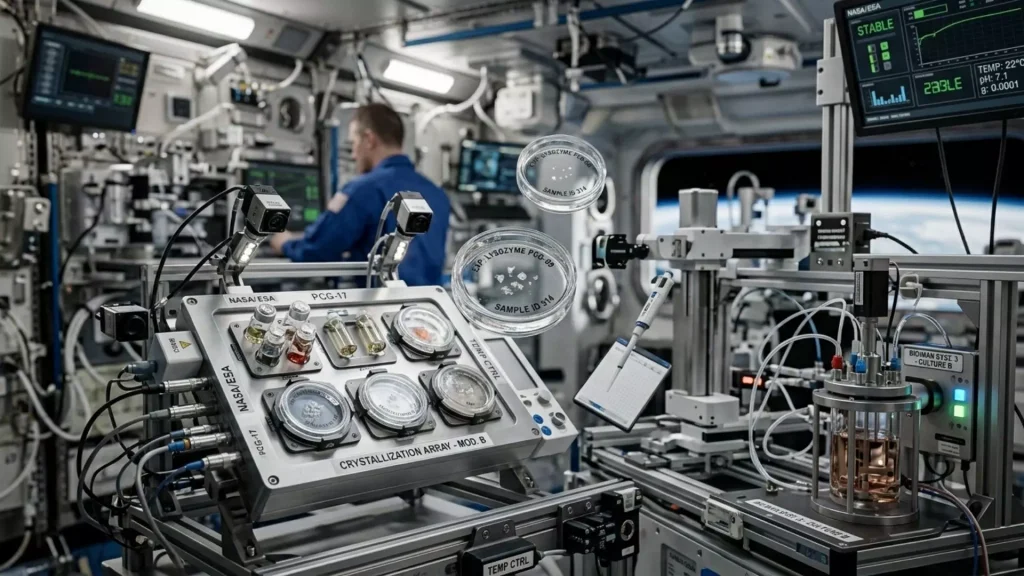
Recent successful orbital return missions have validated the commercial feasibility of autonomous processing units in space. Varda
Space Industries successfully demonstrated this by launching automated capsules that synthesized premium pharmaceutical crystals in microgravity before returning them to Earth.
According to official flight data, their autonomous system confirmed that zero-gravity crystallization significantly alters drug structural purity.
This concrete historical milestone proves that private entities can successfully navigate the entire logistics loop of space-based production.
It signals to international venture capitalists that investing in orbital factories yields highly tangible, revolutionary physical products. The era of theoretical space manufacturing has officially closed, giving way to active automated industrial production.
How Does Microgravity Alter Material Dynamics Deeply?
Why Is ZBLAN Fiber Optics More Effective When Made in Space?
ZBLAN represents a specialized class of heavy-metal fluoride glass that can theoretically transmit data one hundred times more efficiently than standard silica.
However, when cooled on Earth, gravity triggers micro-crystallization, turning the internal structure hazy and degrading the light signals.
Manufacturing this glass on Microgravity Manufacturing lines prevents these crystals from forming, creating an optically flawless strand.
A single kilometer of space-manufactured ZBLAN fiber can handle vast data volumes without losing signal strength over immense distances.
This advancement provides a massive leap forward for oceanic communication cables and defense networks. It bridges the critical physical gap between traditional wiring limitations and future quantum computing grids.
Also read: What We’ve Learned from Landing Rovers on Other Planets
How Does 3D Bioprinting Excel Without Gravity Support Structures?
Printing complex biological organs on Earth resembles trying to build a delicate house of cards inside a turbulent swimming pool. The fragile cellular walls collapse under their own physical weight unless scientists use toxic synthetic scaffolding to hold them upright.
In orbit, human heart cells and intricate vascular networks float perfectly in place without any artificial structural assistance.
This weightless freedom allows bioprinters to meticulously map out complex internal organ structures with absolute cellular accuracy.
Medical researchers can cultivate thick, fully functional human tissues that are easily compatible with living patients.
This technology fundamentally redefines modern organ transplant logistics, offering hope to millions on waitlists worldwide.
Read more: Reimagining the Hubble: How It Changed the Way We See Space
What Makes Semiconductor Crystal Growth Superior in Orbit?
Modern microchips require exceptionally pure silicon crystal sheets to operate at the extreme processing speeds demanded by artificial intelligence.
Earth-bound production lines face constant contamination challenges from airborne particulates and thermal currents inside the melting furnaces.
Utilizing Microgravity Manufacturing ensures that the liquid material forms a perfectly uniform crystalline lattice structure.
These pristine space-grown crystals allow for far denser transistor layouts without risking dangerous electrical leakage or system failures.
Silicon wafers processed in orbit could soon power the most efficient computing systems in human history. The digital future relies heavily on physical architecture forged beyond our home planet.
What Challenges Must the Industrial Space Sector Overcome?
How Do Automated Return Capsules Safely Deliver Sensitive Goods?
Synthesizing materials in low Earth orbit is only half the battle; returning those delicate assets through the blazing atmosphere represents an immense engineering hurdle.
Re-entry capsules must withstand extreme thermal friction while keeping the internal cargo completely protected from violent structural vibrations.
A single mechanical failure during touchdown can instantly liquefy millions of dollars in pristine pharmaceutical crystals.
Aerospace engineers are developing advanced magnetic deceleration systems and specialized soft-landing parachutes to minimize physical stress upon terrestrial impact.
These smart recovery capsules ensure that fragile bioprinted tissues or flawless glass strands survive the rough journey home.
Perfecting this return loop is vital for maintaining steady supply chains between orbital factories and land-bound consumers.
Why Are Scalable Private Space Stations Replacing the Aging ISS?
The historic International Space Station was built primarily for human scientific discovery rather than high-volume commercial industrial activity.
Private corporations are currently deploying modular orbital platforms specifically optimized for automated manufacturing lines.
These commercial stations feature advanced robotic arms, massive solar arrays, and dedicated docks for cargo transport vehicles.
Operating without the life-support complexities required for human astronauts allows these private stations to maximize internal production space.
They can run dangerous chemical reactions or high-heat manufacturing processes without risking human lives. This evolution transforms our presence in orbit from temporary scientific exploration to permanent industrial infrastructure.
What Legal and Regulatory Frameworks Govern Orbital Assets?
As international corporations compete for valuable orbital slots, international space law faces unprecedented regulatory pressure.
Current treaties lack specific guidelines regarding commercial property rights, liability for orbital debris, and fair airspace usage for manufacturing zones.
If a private capsule collards with a debris cloud, defining legal fault becomes an incredibly convoluted geopolitical nightmare.
International regulatory bodies are working frantically to establish clear, unified commercial codes for corporate space operations.
Establishing transparent asset protection laws is absolutely crucial to encourage conservative industries to move their production lines into orbit.
Secure legal foundations will ultimately drive the sustained economic expansion of the orbital marketplace.
Orbital Material Manufacturing Comparison Matrix
The table below contrasts the production dynamics of key high-value components on Earth versus in orbit.
| Material / Component | Terrestrial Production Limit | Microgravity Manufacturing Advantage | Primary Industry Disruption |
| ZBLAN Fiber Optics | High micro-crystallization defects | Flawless amorphous structure | Global Telecommunications |
| 3D Human Organs | Structural collapse without scaffolding | Self-supporting cellular growth | Regenerative Medicine |
| Semiconductor Wafers | Thermal convection warps the lattice | Uniform crystalline alignment | Advanced AI Computing |
| Protein Crystals | Small, irregular crystal growth | Large, highly ordered formations | Pharmaceutical Development |
| Specialized Alloys | Uneven settling of heavier metals | Perfect metallurgical blending | Aerospace & Defense |
The Horizon of Orbital Industrialization
Embracing Microgravity Manufacturing signals a profound paradigm shift, moving humanity from mere cosmic observers to active celestial builders.
The unique physical environment of low Earth orbit allows us to bypass the deep structural constraints that have limited metallurgical and biological science for centuries.
By turning weightlessness into an active industrial tool, tech firms are unlocking an entirely new tier of mechanical capability.
Ultimately, the sky is no longer a barrier; it has become the ultimate venue for advanced human production.
The items synthesized in the silent vacuum of space will directly improve the quality of human life across our planet. We are witnessing the dawn of a vibrant, self-sustaining orbital economy that will redefine global industry forever.
How do you think space-manufactured materials will impact your life first? Share your thoughts on this orbital evolution in the comments section below!
Frequently Asked Questions
Why can’t we simulate microgravity effectively on Earth for manufacturing?
Earth-bound drop towers and parabolic flights only provide a few fleeting seconds of weightlessness, which is far too brief for complex material synthesis.
Will space-manufactured goods ever be affordable for average consumers?
Initially, Microgravity Manufacturing will focus exclusively on hyper-premium goods like life-saving drugs and specialized data fibers where the immense performance gains justify the cost.
How do solar flares affect automated manufacturing systems in orbit?
Modern commercial stations utilize heavy electromagnetic shielding to protect delicate automated processing units and computer circuits from unpredictable solar radiation events.
Is orbital manufacturing safe for our planet’s upper atmosphere?
Yes, automated factories operate cleanly without producing carbon emissions, though companies must carefully manage re-entry trajectories to prevent creating excess space debris.
