
How Cryogenic Space Propulsion Extends Deep Space Mission Ranges
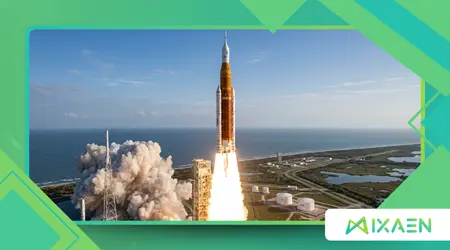
Cryogenic Space Propulsion is reshaping our journey into the cosmos, turning distant cosmic destinations into reachable realities for modern astronauts.
For decades, deep space missions faced a rigid chemical wall, limited by the heavy, less efficient fuels of early rocketry.
Today, the aerospace sector demands higher efficiency, forcing a massive shift toward super-cooled liquid propellants that maximize thrust per kilogram.
As humanity targets Mars and the outer solar system, conventional options simply fall short.
This advanced propulsion method utilizes gases liquefied at extremely low temperatures, primarily liquid hydrogen and liquid oxygen, to deliver unprecedented efficiency.
By packing more energy into smaller volumes, these cold propellants serve as the definitive fuel upgrade required for long-duration voyages.
Key Highlights of the Mission Expansion
- The Efficiency Leap: Discover how super-cooled liquids outperform traditional fuels.
- The Thermal Battle: Explore the technology keeping propellants cold in deep space.
- Real-World Deployments: Examine current rockets utilizing this technology in 2026.
- Future Destinations: Analyze how these systems enable crewed Mars transits.
Why is Cryogenic Space Propulsion Essential for Deep Space?
Space missions require immense energy to break free from Earth’s gravity and navigate the vacuum.
Traditional storable propellants, while reliable and stable over long periods, lack the energetic punch needed for heavy payloads.
This performance deficit forces engineers to build larger, heavier spacecraft, which exponentially increases launch costs and limits scientific equipment.
To reach the outer planets, transport efficiency becomes the ultimate metric of success.
Cryogenic Space Propulsion solves this challenge by delivering a significantly higher specific impulse, which acts as the fuel economy metric for celestial travel.
This boost allows probes to travel faster, cut years off transit times, and carry heavier scientific instruments.
What is Specific Impulse?
Specific impulse measures how effectively an engine converts propellant mass into thrust. Think of it as the kilometers-per-liter metric for a spacecraft exploring the void.
Liquid hydrogen systems achieve values roughly 30% higher than traditional refined petroleum options.
++ How Space Tug Vehicles Could Redefine Orbital Transportation
How Does Density Affect Spacecraft Design?
Liquefying gases at sub-zero temperatures vastly increases their storage density.
This compact storage means engineers can design smaller tanks, reducing the structural mass of the vehicle. Consequently, a lighter rocket can carry more fuel or heavier scientific payloads.
Also read: The Role of Indigenous Knowledge in Modern Astronomical Research
Why Do Mars Missions Depend on It?
A journey to Mars requires massive velocity changes during departure and arrival phases. Heavy, low-efficiency fuels make a crewed round trip mathematically impractical due to weight constraints.
Super-cooled propellants offer the exact energy density required to make human footprints on Mars a reality.
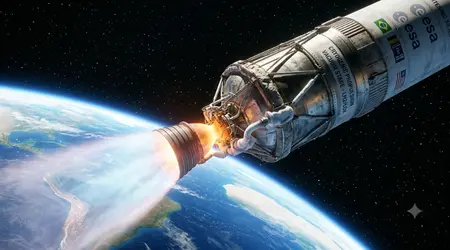
How Does Cryogenic Space Propulsion Work Under Extreme Conditions?
The core mechanics rely on maintaining elements like hydrogen and oxygen in their liquid states, well below their boiling points.
Liquid oxygen requires temperatures below -183°C, while liquid hydrogen demands a freezing -253°C to remain stable. Managing these thermal states inside a metal tank represents a pinnacle of modern mechanical engineering.
Engine systems feed these ultra-cold liquids into a combustion chamber using high-speed turbopumps. Once mixed and ignited, the rapid expansion creates high-velocity exhaust, driving the vehicle forward.
The entire process requires precise plumbing to prevent the fluids from boiling off into gas before reaching the chamber.
Read more: China’s Silent Space Rise: What the World Should Pay Attention To
How Do Turbopumps Manage Ultra-Cold Liquids?
Turbopumps must spin at tens of thousands of revolutions per minute while handling fluids near absolute zero.
These components endure extreme thermal shock, transitioning from ambient launchpad temperatures to cryogenic states in seconds.
Their survival depends on advanced metallurgy and specialized, self-lubricating ceramic bearings.
What Role Does Thermodynamic Venting Play?
In the vacuum of space, solar radiation continuously heats the propellant tanks, creating pressure buildup.
Thermodynamic venting systems carefully release tiny amounts of boiled gas without wasting precious liquid fuel. This keeps internal tank pressures perfectly balanced during multi-month journeys.
How Do Regenerative Cooling Systems Protect the Nozzle?
The heat generated during combustion easily melts standard aerospace alloys. To prevent this, engines route the ultra-cold liquid fuel through tiny channels surrounding the nozzle before ignition.
This clever design cools the engine walls while simultaneously pre-heating the fuel for better combustion.
What Are the Main Advancements in Propellant Management?
The primary challenge of using Cryogenic Space Propulsion over multi-year timelines is fuel preservation.
In early rocketry, these systems were used within minutes of launch because the fuel boiled away quickly. Modern missions use advanced insulation blankets and active cryo-coolers to keep these fluids cold for years.
NASA’s Glenn Research Center recently demonstrated zero-boil-off storage systems designed for long-term orbital depots.
These systems combine reflective multi-layer insulation with mechanical cryo-refrigerators, effectively stopping heat leakages.
This milestone ensures that spacecraft arriving at staging orbits retain every drop of fuel for their deep space burn.
How Do Multi-Layer Insulation Blankets Reflect Solar Heat?
Multi-layer insulation consists of dozens of micro-thin, highly reflective plastic sheets separated by netting.
These blankets reflect solar radiation away from the fuel tanks, acting like a premium vacuum flask. In deep space, this simple barrier stops the majority of radiant heat transfer.
What is Active Zero-Boil-Off Technology?
Active systems use small, highly efficient stirling cryo-coolers to actively chill the storage tanks.
By consuming a fraction of the spacecraft’s solar power, these coolers remove the tiny amounts of heat that breach the insulation. This tech eliminates fuel loss during long loiter times.
How Do Advanced Slosh Baffles Maintain Trajectory?
Liquid fuel moving inside a large tank can destabilize a spacecraft’s orientation. Engineers install lightweight internal structures called baffles to dampen fluid movement during engine burns.
This suppression ensures smooth, predictable thruster vectoring during delicate deep space maneuvers.
Comparative Efficiency of Space Propulsion Systems
The data below contrasts modern propulsion methods, highlighting why super-cooled liquids excel at heavy payload transport compared to alternative technologies.
| Propulsion Type | Fuel / Oxidizer Combination | Average Specific Impulse (seconds) | Primary Mission Application |
| Solid Rocket | Ammonium Perchlorate / Aluminum | 280 – 300 | Initial Launch Booster |
| Hypergolic (Storable) | Hydrazine / Nitrogen Tetroxide | 310 – 340 | Orbital Maneuvering / Probes |
| Cryogenic Chemical | Liquid Hydrogen / Liquid Oxygen | 450 – 455 | Deep Space Departure / Heavy Lift |
| Electric (Ion) | Xenon Gas / Solar Electrical | 3,000 – 4,500 | Low-Thrust Long-Duration Cruise |
What Are the Operational Realities of Modern Cryo-Rockets?
Using these systems requires a complete rethink of ground infrastructure and launch day timelines.
Because the fuels are so cold, launchpads need specialized vacuum-insulated piping to deliver the propellants safely. Any delay on the countdown clock requires continuous top-offs as ambient heat causes the liquids to boil.
The European Space Agency’s Ariane 6 and NASA’s Space Launch System highlight this modern operational paradigm.
These heavy-lift vehicles leverage high-energy upper stages to send massive payloads toward the Moon and Lagrange points.
Their success relies heavily on precise automated ground control systems managing the volatile fuels.
How Do Launchpads Handle Continuous Fuel Boil-Off?
Before liftoff, launchpad systems constantly vent gaseous hydrogen while pumping fresh liquid back into the rocket.
This continuous loop maintains the strict volume levels required for flight. The vented gas is safely routed away and burned off through flare stacks.
What is the Danger of Ice Accumulation?
Super-cooled tanks cause moisture in the surrounding air to instantly freeze onto the rocket’s exterior.
This heavy ice accumulation can break loose during launch, potentially damaging delicate thermal tiles or sensors. Engineers use dry nitrogen gas purging systems around the vehicle to prevent moisture buildup.
How Do Automated Umbilical Systems Disconnect?
At the exact moment of liftoff, specialized umbilical arms must disconnect and retract away from the volatile fuel valves.
These systems use quick-disconnect couplings that seal instantly to prevent fuel leaks. Automated safety sensors monitor these points up to the final millisecond.
How Does This Technology Transform Future Mission Profiles?
Without Cryogenic Space Propulsion, humanity remains confined to Earth’s immediate orbital neighborhood.
Ion engines offer amazing efficiency but produce tiny amounts of thrust, making them too slow for human transport.
Chemical cryo-engines bridge this gap, providing the high thrust and high efficiency needed to move heavy crew habitats quickly.
Have you ever wondered how we will realistically establish a permanent laboratory on Mars?
The answer lies in refueling these advanced stages at orbital gas stations. By launching dry transport vehicles and filling them in orbit, we can bypass Earth’s gravity tax entirely.
What Are Orbital Fuel Depots?
Orbital depots are specialized spacecraft designed solely to store thousands of liters of super-cooled propellants in low Earth orbit.
Incoming Mars-bound ships hook up to these depots to top off their tanks before leaving Earth’s gravity well. This strategy doubles the payload capacity of deep space missions.
How Does This Support In-Situ Resource Utilization?
Mars and the Moon possess vast reserves of water ice hidden in craters and subsurface soil. Future automated factories can mine this ice, split it into hydrogen and oxygen, and liquefy it.
This allows explorers to manufacture their return fuel directly on foreign worlds.
How Does This Reduce Planetary Transit Times?
Higher efficiency allows engines to burn longer, accelerating spacecraft to much higher cruise velocities.
Shorter travel times reduce the crew’s exposure to dangerous deep-space cosmic radiation and muscle-wasting microgravity. This makes long journeys much safer for human health.
Final Thoughts on Cosmic Expansion
The evolution of Cryogenic Space Propulsion represents the defining line between looking at the stars and walking among them.
By mastering the storage and handling of ultra-cold liquids, aerospace engineers have unlocked the key to sustained deep space transport.
This technological triumph converts the hostile vacuum of space into a navigable highway for future generations of explorers.
As we look toward the next decade of exploration, the refinement of zero-boil-off storage and automated orbital refueling will solidify our status as an interplanetary species.
The journey is long, cold, and unforgiving, but our propulsion technology is finally catching up to our collective ambition.
What destination do you think we should prioritize next with these advanced rockets? Share your thoughts in the comments below!
Frequently Asked Questions
Why not use ion engines for everything?
Ion engines are incredibly efficient but produce very low thrust, meaning they take months to accelerate. They are perfect for small, robotic probes but cannot move heavy crewed habitats quickly through space.
Is cryogenic fuel safe for long-duration storage?
With older technology, fuel boiled away too quickly for long trips. However, 2026-era active cryo-coolers and multi-layer insulation allow us to store these liquids for months without significant loss.
What happens if cryogenic fuel leaks in space?
In the vacuum of space, a leak causes the liquid fuel to instantly flash into a gas cloud and dissipate. While it does not explode without an ignition source, losing the fuel abandons the mission.
