
How Space Tug Vehicles Could Redefine Orbital Transportation
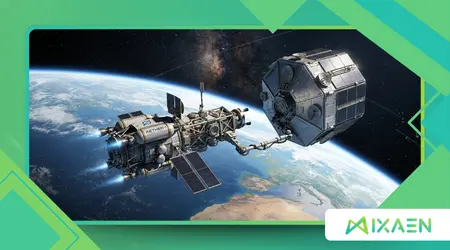
Space Tug Vehicles are quietly orchestrating a massive, structural revolution in how humanity navigates and manages our increasingly crowded Earth orbits.
The international space sector no longer views rocket launches as individual, single-destination journeys that leave dead hardware behind.
In 2026, autonomous transfer craft intercept payloads directly in low orbit to ferry them precisely to higher, highly specialized scientific trajectories.
This structural shift fixes the rigid constraints of traditional rocketry, where a single booster dictates the final destination of every onboard satellite.
Private operators now deploy modular, reusable orbital transfer vehicles to handle the complex logistics of maneuvering assets safely across different altitudes.
The emerging celestial economy demands this specific type of dynamic flexibility to remain financially viable.
Commercial satellite operators can drastically cut their initial launch masses by leaving heavy, chemical propulsion systems off their newly designed spacecraft.
Instead, specialized orbital ferries handle the grueling journey from initial drop-off points to final operational geostationary slots.
This specialized division of labor maximizes commercial efficiency while extending the operational lifespan of invaluable orbital assets.
Structural Overview
- Orbital Reusability: Dynamic craft designed for multiple transport missions instead of single-use destruction.
- Debris Mitigation: Active removal of abandoned rocket upper stages from highly congested orbits.
- Propulsion Efficiency: Utilization of high-efficiency electric thrusters for long-duration asset shifting.
What Is an Orbital Transfer Craft?
The global space industry defines these specialized machines as autonomous spacecraft designed specifically to move payloads between different orbits.
Instead of carrying scientific instruments, their entire architecture prioritizes robust docking mechanisms, advanced refueling valves, and highly efficient propulsion systems.
Have you ever considered how wasteful it is to abandon a billion-dollar satellite just because its maneuvering fuel ran out?
Operating like specialized tugboats in a busy harbor, space tug vehicles alter the lifecycle economics of every asset circling our planet.
They convert passive, drifting hardware into active components of a larger, fully connected logistics network. This technological leap allows operators to restructure their assets dynamically as market demands shift over time.
Consider the physical reality of traditional shipping networks where giant cargo ocean liners never pull directly into small, shallow local docks.
Instead, flexible local tugboats guide them safely through the final, complex segments of their long international journeys. The space sector now replicates this exact hub-and-spoke model using automated transit craft.
A recent analytical report from the Space Foundation shows that orbital servicing demands will drive a multi-billion-dollar logistics sector by 2030.
This documented market growth proves that logistics providers are moving away from rigid, single-launch frameworks toward flexible in-orbit architectures. Sustainable infrastructure development requires these reusable orbital workhorses.
++ Why Cislunar Infrastructure Projects Are Expanding Rapidly Today
How Does Autonomous Docking Work?
Advanced optical sensors, LiDAR arrays, and machine-learning algorithms guide the transfer craft toward its target payload with millimeter precision.
The vehicle matches the exact spin and velocity of the client satellite before engaging secure mechanical capture rings. This delicate process prevents dangerous collisions during high-speed orbital rendezvous maneuvers.
Also read: The Role of Indigenous Knowledge in Modern Astronomical Research
Why Is Chemical Propulsion Changing?
Traditional rockets rely on high-thrust chemical reactions to escape Earth’s gravity well rapidly despite burning through massive fuel reserves.
Transfer craft utilize highly efficient xenon ion engines to move heavy payloads across orbits using a fraction of the propellant mass. This fuel economy lowers total mission costs over multi-year operational lifespans.
Read more: China’s Silent Space Rise: What the World Should Pay Attention To
Where Do Servicing Missions Occur?
Most operations target the highly congested corridors of Low Earth Orbit (LEO) and the economically vital rings of Geostationary Orbit (GEO).
Servicing craft stabilize drifting communications satellites in GEO or relocate older, defunct weather monitors down into destructive atmospheric reentry paths. These targeted interventions preserve prime celestial real estate.
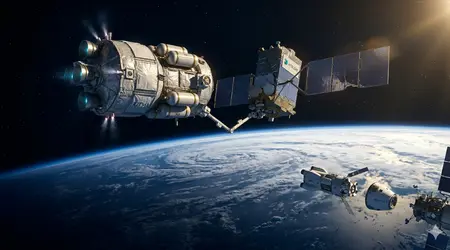
How Do Space Tug Vehicles Change Launch Economics?
Integrating specialized space tug vehicles into commercial launch manifests allows satellite manufacturers to build smaller, lighter, and far cheaper hardware.
Heavy onboard propellant tanks usually consume up to fifty percent of a standard satellite’s total liftoff weight. Eliminating this dead weight allows companies to pack more advanced sensors onto their platforms.
Furthermore, rideshare launches become vastly more practical when an independent transport vehicle can sort mixed payloads after initial deployment.
A heavy rocket drops twenty different satellites into a generic holding zone, leaving the tug to distribute them individually. This post-launch sorting maximizes the utility of cheap, bulk rocket launches.
For example, Northrop Grumman’s Mission Extension Vehicles have successfully docked with aging Intelsat satellites, completely taking over their altitude control systems.
This real-world intervention extends the revenue-generating life of these massive communications platforms by multiple years without requiring new launches. Financial analysts praise this approach for mitigating capital expenditure risks.
Consequently, insurance underwriters are updating their risk models to account for these newly available in-orbit rescue options.
If a primary rocket upper stage misfires, a standby transit craft can intercept the stranded satellite and push it into its correct slot. This safety net stabilizes the volatile economics of commercial space insurance.
What Is the Value of Modular Refueling?
Modern transfer platforms feature standardized propellant valves that allow them to receive fresh fuel from orbital storage depots regularly.
This refuelable nature ensures the vehicle can perform dozens of separate transport missions over a single decade. Longevity turns a capital-intensive asset into a highly profitable infrastructure utility.
How Do Operators Reduce Capital Risk?
Building massive, all-in-one satellites exposes telecommunications conglomerates to catastrophic losses if a single component fails prematurely in orbit.
Spreading capabilities across smaller, interconnected constellations managed by autonomous transport craft reduces single-point failure risks significantly. Distributed architectures offer superior long-term operational resilience.
Can Fleet Operators Reconfigure Constellations Safely?
When market demands shift or regional conflicts require localized satellite coverage, transport craft can rapidly pull assets into new orbital inclinations.
This active maneuvering capability gives operators unprecedented control over their hardware assets long after initial launch phases. Adaptability defines the modern era of satellite fleet management.
Why Is Orbital Sustainability Dependent on Transfer Logistics?
The accumulation of uncontrolled space debris presents an existential threat to future exploratory missions and global communication systems alike.
Deploying space tug vehicles provides international space agencies with a proactive tool to capture and remove hazardous debris fields. Debris removal transitions from a theoretical policy discussion into an active, operational reality.
Imagine a busy highway where crashed cars are simply left in the middle of the lanes forever; how long until the road becomes completely impassable?
The current orbital environment faces this exact crisis, requiring immediate, mechanical clearing efforts to protect active commercial constellations. Reusable transit craft offer the most viable solution to this growing tragedy.
Another practical example involves Astroscale’s ongoing commercial demonstration missions, which utilize magnetic capture systems to track and secure mock debris targets.
These real-world operations prove that capturing non-cooperative, tumbling objects is technically achievable with modern autonomous guidance software. The technology safeguards critical orbits for future generations.
Statistically, over 30,000 tracked pieces of debris currently circle Earth, threatening trillions of dollars in global orbital infrastructure assets.
Deploying operational fleets of transport tugs lowers the statistical probability of catastrophic debris chain reactions known as the Kessler Syndrome. Protecting these trajectories preserves our modern, satellite-dependent way of life.
How Does Active Debris Removal Function?
The transport craft approaches an abandoned rocket body, secures it using specialized robotic arms, and utilizes its thrusters to decelerate.
This deceleration forces both objects into a controlled descent toward Earth’s atmosphere, where they burn up safely over unpopulated oceans. This cleaning process keeps vital orbital pathways clear.
What Role Do Standardized Grapple Fixtures Play?
International regulatory bodies are pushing satellite manufacturers to install universal mechanical interface plates on all new hardware before launch.
These low-cost fixtures allow future space tug vehicles to easily capture and service the assets regardless of who manufactured them. Universal standards accelerate the growth of orbital logistics.
How Do Servicing Craft Prevent Satellite Abandonment?
When a satellite experiences a critical component failure, a repair tug can swap out modular battery packs or broken solar arrays.
This roadside assistance capability prevents functional hardware from becoming dangerous space junk due to isolated system malfunctions.
Maintenance infrastructure changes our relationship with orbital technology.
Technical Specifications of Modern Space Tug Platforms
The structural diversity of contemporary orbital transfer vehicles reflects the varied demands of the modern space logistics market.
The following table highlights the operational parameters of primary vehicle classes currently servicing Earth orbits.
Fleet Logistics Matrix
| Vehicle Classification | Primary Propulsion Type | Maximum Payload Capacity | Target Operational Zone | Primary Mission Profile |
| Light Micro-Tug | Chemical Monopropellant | 500 Kilograms | Low Earth Orbit (LEO) | CubeSat Constellation Deployment |
| Heavy Orbital Ferry | Xenon Ion / Electric | 4,000 Kilograms | LEO to Geostationary (GEO) | Large SatCom Relocation |
| Active Debris Interceptor | Bipropellant / Robotic | 6,000 Kilograms | High-Density Debris Belts | Deorbiting Abandoned Rocket Stages |
The Strategic Horizon of Orbital Transportation
The widespread adoption of space tug vehicles marks a permanent departure from the archaic, single-use logic of early space exploration.
These dynamic platforms optimize launch parameters, insulate operators from orbital asset losses, and actively clean the delicate pathways surrounding our planet.
While rocket boosters will always provide the brute force needed to escape Earth, autonomous transfer craft will dictate how humanity navigates the final frontier.
What are your thoughts on using autonomous vehicles to clean up decades of abandoned space debris? Share your perspectives and insights in the comments section below to join the global conversation!
Frequently Asked Questions
How do space tug vehicles intercept non-cooperative space debris?
Specialized vehicles utilize advanced machine-vision algorithms and LiDAR to analyze the rotation of tumbling debris objects.
The craft then syncs its own rotation perfectly before deploying robotic arms to secure a safe hold.
Can these transfer craft operate indefinitely without maintenance?
No, while electric propulsion maximizes fuel efficiency, these vehicles eventually exhaust their onboard propellant reserves.
However, emerging orbital fuel depots allow these craft to launch refueling missions to extend their service indefinitely.
How does using an orbital ferry reduce overall satellite manufacturing costs?
Satellites no longer require massive internal propulsion systems or heavy propellant tanks to reach their final high orbits.
This weight reduction allows engineers to design cheaper, highly streamlined structures focused exclusively on data transmission.
