
How The 21-Centimeter Signal Could Reveal the Cosmic Dark Ages
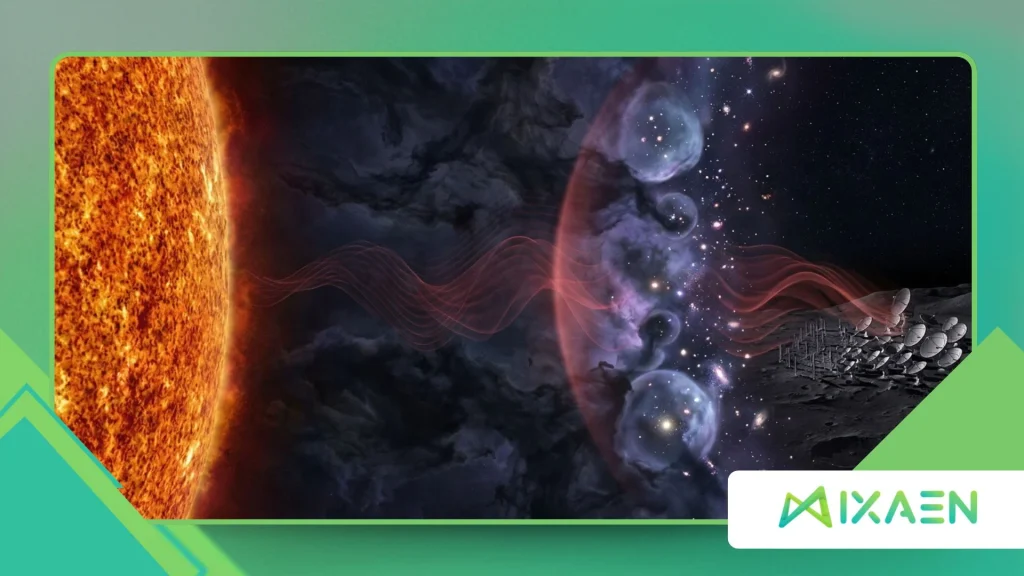
The 21-Centimeter Signal represents our most promising cosmic window into the infancy of the universe, offering a revolutionary method to explore epochs long hidden from traditional optical telescopes.
Modern astrophysics stands on the brink of an unprecedented observational renaissance as advanced radio telescope arrays tune in to the faint hyperfine transition of neutral hydrogen gas.
This subtle emission line acts as an ancient cosmic telegraph, transmitting radio waves across billions of light-years to modern detectors on Earth.
Researchers around the globe utilize these delicate radio frequencies to map the distribution of matter during periods when stars had not yet ignited.
Unlocking these primordial whispers allows scientists to reconstruct the chronological sequence of structural formation, shedding light on the fundamental physics that governed the early cosmos.
Every detected wave carries physical information encoded during the first billion years after the Big Bang, bridging the gap between theoretical cosmology and tangible radio astronomy.
- Exploring the Cosmic Dawn and Dark Ages through neutral hydrogen mapping.
- Unraveling the chronological milestones of early stellar ignition and reionization.
- Evaluating the technological capabilities of modern radio interferometer arrays.
What Is the 21-Centimeter Signal and Why Does It Matter?
How Does Neutral Hydrogen Emit This Characteristic Frequency?
The 21-Centimeter Signal originates from a fundamental quantum mechanical transition in neutral hydrogen atoms known as the hyperfine spin-flip transition.
When the relative orientations of the electron and proton spins shift from parallel to anti-parallel, the atom emits a photon with a specific wavelength of approximately twenty-one centimeters.
This atomic interaction occurs naturally throughout the vast interstellar medium without requiring extreme thermal excitation or stellar radiation fields.
Radio astronomers capture these persistent emissions to trace the invisible reservoirs of primordial gas that permeate intergalactic space.
Because hydrogen constitutes the vast majority of baryonic matter in the universe, tracking its spatial distribution provides a comprehensive map of cosmic evolution.
The intrinsic stability of this atomic transition establishes a reliable clock and ruler for mapping large-scale structures across deep space and time.
Advanced digital backends process these weak radio signals by separating faint cosmological frequencies from intense terrestrial radio frequency interference.
Understanding this quantum mechanism empowers scientists to interpret the complex thermal history of neutral gas during ancient cosmological epochs.
++ Why Quantum Reference Frames Could Redefine Observation
Why Is This Signal Crucial for Studying the Cosmic Dark Ages?
The Cosmic Dark Ages represent a mysterious era lasting from roughly three hundred thousand years to one billion years after the Big Bang when no luminous stars existed.
Traditional optical and infrared observatories remain blind to this dark epoch because visible starlight had not yet emerged to illuminate the expanding universe.
The 21-Centimeter Signal cuts directly through this optical opacity, serving as a unique direct probe of baryonic gas density and temperature fluctuations.
By measuring differential brightness temperatures against the cosmic microwave background, researchers visualize primordial structures that preceded galaxy formation.
Observing this neutral hydrogen background reveals how gravity slowly gathered diffuse matter into the very first cosmic webs and protogalactic cores.
This observational technique circumvents the limitations of starlight-dependent astronomy, offering an unobstructed view of the universe’s formative developmental stages.
Cosmologists rely on these radio measurements to test foundational models of dark matter distribution and early structure growth.
Ultimately, studying this hidden era clarifies the complex sequence of events that transformed a uniform gas cloud into a luminous cosmos.
How Do Radio Telescopes Detect These Faint Primordial Waves?
What Technological Breakthroughs Enable Modern Low-Frequency Radio Astronomy?
Detecting The 21-Centimeter Signal requires overcoming immense technological hurdles posed by weak cosmological fluxes and overwhelming terrestrial radio noise pollution.
Modern instruments like the Low Frequency Array and the Hydrogen Epoch of Reionization Array utilize massive fields of dipole antennas rather than traditional parabolic dishes.
These interferometric arrays combine signals mathematically from thousands of individual receptors, synthesizing a virtual aperture of unprecedented sensitivity and angular resolution.
Sophisticated calibration algorithms continuously subtract bright galactic foreground emissions that outshine the primordial signal by several orders of magnitude.
Engineering teams design specialized cryogenic receiver systems to minimize thermal noise within electronic components, preserving the integrity of delicate incoming radio waves.
Advanced field-programmable gate arrays process petabytes of raw observational data in real time, isolating micro-Kelvin temperature variations across targeted frequency bands.
These hardware and software innovations transform silent desert plains into premier listening posts for tuning into the oldest whispers of the universe.
Continuous technological refinement pushes observational thresholds deeper into the past, expanding humanity’s capacity to decode ancient cosmological messages.
Also read: Why Conformal Cyclic Cosmology Still Divides Physicists
What Challenges Do Researchers Face with Foreground Interference and RFI?
Radio frequency interference generated by human communication networks, satellites, and commercial broadcasting poses a severe contamination threat to sensitive cosmological observations.
Ground-based telescopes must be constructed in remote, radio-quiet zones such as the Murchison Radio-astronomy Observatory in Western Australia to escape anthropogenic noise.
Furthermore, galactic synchrotron emission from our own Milky Way galaxy swamps the primordial signal, requiring complex foreground removal pipelines to isolate cosmological data.
Researchers develop advanced statistical methods, including Bayesian inference and machine learning classifiers, to distinguish between foreground noise and genuine cosmological structure.
Ionospheric disturbances further complicate low-frequency radio measurements by refracting incoming wavefronts and introducing time-variable phase errors across the array.
Atmospheric modeling and real-time calibration mitigate these distortions, restoring spatial coherence to the synthesized radio images.
Overcoming these multi-faceted observational barriers demands relentless collaboration between astrophysicists, signal processing engineers, and software developers worldwide.
Successfully navigating these hurdles unlocks unprecedented clarity regarding the physical state of the early intergalactic medium.
What Insights Do These Observations Reveal About Cosmic Evolution?
How Did the First Stars and Black Holes Heat the Intergalactic Medium?
The emergence of the first luminous sources marked a dramatic turning point in cosmic history, terminating the silent expansion of the Dark Ages.
Ultraviolet radiation and X-rays emitted by early stars and accreting black holes began heating the surrounding neutral hydrogen gas.
The 21-Centimeter Signal transitions from an absorption feature to an emission feature as the spin temperature of the gas exceeds the temperature of the cosmic microwave background.
Measuring this thermal transition allows astronomers to date the exact moment when the universe’s first generation of stars ignited.
Astrophysicists analyze spatial fluctuations in the radio signal to estimate the mass, distribution, and luminosity of these elusive stellar pioneers.
This data constrains theoretical models of radiative feedback, explaining how early energetic photons ionized and heated surrounding gas clouds.
Understanding these processes clarifies the energetic feedback loops that regulated galaxy formation during the first billion years of cosmic time.
Consequently, radio observations provide critical empirical constraints on theoretical scenarios of early stellar evolution.
Read more: Can Logic Fully Explain the Cosmos?
What Does the Epoch of Reionization Tell Us About Galaxy Formation?
The Epoch of Reionization represents the final major phase transition of the universe, during which ionizing radiation from galaxies cleared out neutral hydrogen.
The 21-Centimeter Signal fades away as neutral gas is progressively ionized into plasma throughout intergalactic space.
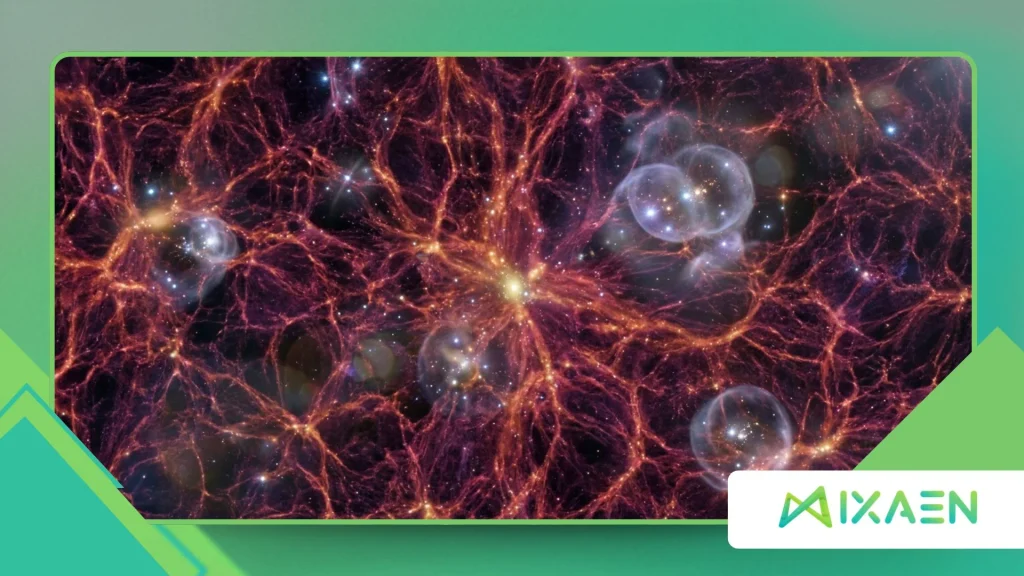
Tracking the decline and patchiness of this neutral hydrogen signature maps the growth of ionized bubbles around growing galaxy clusters.
This spatial topology offers direct insight into the distribution of ionizing sources and the transparency of the early intergalactic medium.
Comparative studies between 21-centimeter maps and distant quasar absorption spectra validate theoretical timelines of cosmic reionization and galactic feedback.
Researchers utilize these observational insights to refine cosmological simulations, ensuring consistency with Planck satellite measurements of the cosmic microwave background.
Mapping this transition illuminates the intricate mechanisms that shaped the modern large-scale structure of the cosmos.
Ultimately, these findings connect the microscopic quantum properties of hydrogen atoms to the macroscopic architecture of the observable universe.
Observational Characteristics of Cosmological Epochs
| Epoch Name | Approximate Time After Big Bang | Primary Physical Characteristic | Observational Method |
|---|---|---|---|
| Cosmic Dark Ages | 380,000 to 150 Million Years | Uniform neutral hydrogen gas, no luminous stars | 21-Centimeter hyperfine line absorption |
| Cosmic Dawn | 150 to 500 Million Years | Formation of first stars, initial gas heating | Spatial fluctuations in radio emission |
| Epoch of Reionization | 500 Million to 1 Billion Years | Ionizing bubbles expanding, neutral gas depleting | Differential brightness temperature mapping |
Reflecting on Primordial Horizons
Illuminating the earliest chapters of cosmic history transforms our fundamental understanding of physical reality across vast spatial and temporal scales.
Tuning into ancient neutral hydrogen emissions bridges the gap between theoretical cosmology and observational radio astronomy with remarkable precision.
As next-generation instruments come online, humanity inches closer to visualizing the exact moments when darkness yielded to starlight.
Share your thoughts or questions about these groundbreaking cosmic discoveries in the comments below.
Frequently Asked Questions
What is the 21-centimeter signal in cosmology?
It is a faint radio emission line produced by neutral hydrogen atoms undergoing a quantum hyperfine spin-flip transition.
Why are the Cosmic Dark Ages difficult to study?
The universe contained no stars or luminous objects during this era, making optical and infrared telescopes completely blind.
How do radio telescopes isolate the signal from noise?
Arrays combine thousands of antenna signals while advanced algorithms filter out terrestrial radio interference and galactic foregrounds.
What can neutral hydrogen mapping reveal about reionization?
It maps the growth of ionized bubbles around early galaxies, showing how ionizing radiation cleared out intergalactic gas.
Where are modern low-frequency radio telescopes located?
They are built in remote, radio-quiet zones like the Australian desert to escape human-made electromagnetic interference.
