
The Most Powerful Explosion Ever Detected: Still No Clear Explanation
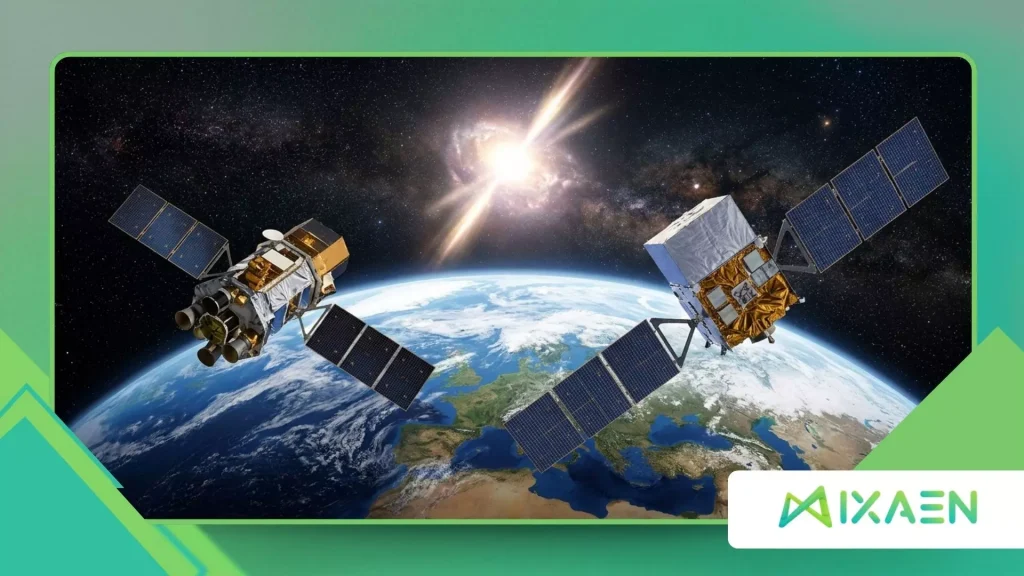
Most powerful explosion ever detected across our observable universe continues to baffle astrophysicists seeking clear explanations for colossal cosmic energy releases.
Modern space observatories record cataclysmic outbursts releasing unimaginable quantities of high-energy radiation, challenging standard models of stellar evolution and collapse.
Researchers across international astronomical institutions scrutinize telemetry data trying to pinpoint the exact triggering mechanisms behind these colossal anomalies.
Understanding these extreme events illuminates the most violent physical processes operating within deep space environments.
Navigating this profound cosmic mystery requires examining gamma-ray burst anomalies, anomalous gravitational lensing phenomena, and theoretical black hole mergers.
Advanced orbital telescopes constantly scan distant galactic coordinates, recording transient flashes that defy conventional scientific categorization.
Think of these sudden outbursts as cosmic flashbulbs illuminating hidden secrets of the early universe. Are you ready to explore the deepest astrophysical enigma of our modern era?
Navigating Cosmic Cataclysm Investigations
- Investigating anomalous gamma-ray burst telemetry and extreme energy release signatures.
- Analyzing theoretical magnetar collapses and supermassive black hole accretion models.
- Evaluating gravitational lensing effects distorting distant cosmic transient signals.
- Documenting orbital telescope discoveries tracking unprecedented deep space explosions.
What Makes This Cosmic Explosion Uniquely Terrifying?
Most powerful explosion ever detected unleashed a staggering wave of high-energy photons that completely saturated satellite sensors across multiple space agencies.
Astronomers calculated that this singular cataclysm emitted more energy in a few hours than our Sun will produce over its entire ten-billion-year lifespan.
Imagine dropping a thermonuclear bomb inside a quiet library, only the scale involves entire galaxies vaporizing into glowing plasma.
Astrophysicists immediately recognized that standard stellar collapse models failed to account for such extreme luminosity outputs.
Observational data published by NASA and ESA astrophysicists confirmed that the transient event, designated scientifically as BOAT (Brightest of All Time), originated billions of light-years away.
Despite this immense cosmic distance, the incoming radiation ionized Earth’s upper atmosphere temporarily, triggering sensitive detectors worldwide.
Researchers realized they were witnessing an unprecedented physical phenomenon pushing the absolute limits of matter and energy.
The sheer magnitude of the blast stunned the global scientific community entirely.
How Do Gamma-Ray Bursts Generate Extreme Energy?
Massive dying stars collapsing inward form rotating black holes surrounded by ferocious accretion disks launching ultra-relativistic jets.
These focused particle beams pierce outward at nearly the speed of light, beaming intense radiation directly toward Earth.
++ How Transient Lunar Phenomena Continue Defying Clear Explanations
Why Did This Specific Outburst Stun Astronomers?
The sheer photon flux shattered all historical records, surpassing typical gamma-ray bursts by orders of magnitude and defying conventional statistical probability distributions.
Instruments designed to measure cosmic intensity literally pegged out maximum recording capacities instantly.
Also read: Cosmic Lithium Problem Defies Big Bang Predictions Today
What Role Do Relativistic Jets Play?
Narrow collimated jets concentrate massive kinetic energy into tight beams, magnifying apparent brightness when pointed directly toward terrestrial observers.
This unique geometric alignment explains how distant flashes appear blindingly intense across cosmic voids.
What Are the Leading Theories Attempting to Explain the Anomaly?
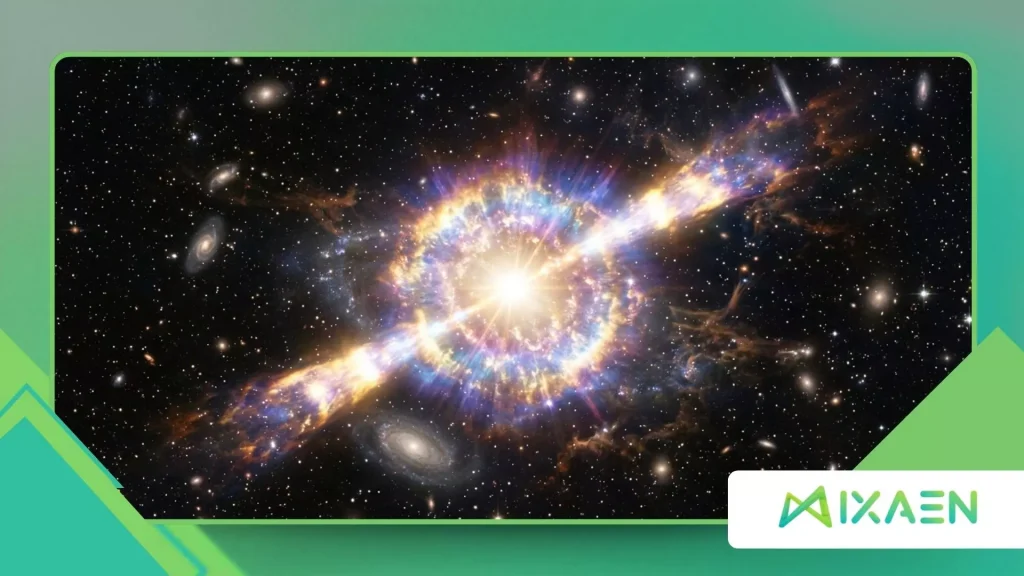
Most powerful explosion ever detected sparked intense academic debate as theoretical physicists proposed radical mechanisms to account for the surplus energy.
One leading hypothesis suggests the event involved a collapsar interacting with dense circumstellar material, creating an unprecedented shockwave breakout.
Think of a hyper-massive star exploding inside a thick shell of gas, amplifying kinetic force through catastrophic hydrodynamic compression.
Other researchers explore exotic physics, including primordial black hole evaporations or magnetic field reconnection storms.
Peer-reviewed studies featured in astrophysical journals emphasize that traditional stellar collapse equations require significant revision to accommodate these extreme observational anomalies.
Computer simulations model asymmetric core collapses where magnetic dynamo effects extract rotational energy from spinning black holes with terrifying efficiency.
Yet, no single theoretical model perfectly replicates every nuance of the recorded telemetry data. The quest for a definitive scientific explanation remains wide open.
Read omre: Why Extreme Magnetar Flares Produce Unusual Gamma-Ray Signals
Could Primordial Black Holes Be Responsible?
Some theoretical physicists suggest microscopic primordial black holes merging within dense stellar cores could trigger anomalous high-energy cascades.
However, observational evidence supporting this exotic scenario remains entirely circumstantial at present.
How Do Magnetic Dynamo Fields Amplify Blasts?
Intensely twisted magnetic fields surrounding newly formed black holes can act as cosmic particle accelerators, boosting jet velocities to extreme extremes.
This magnetic extraction mechanism surpasses standard thermal pressure models significantly.
Why Do Computer Simulations Fall Short?
Current supercomputer algorithms struggle to model the complex magnetohydrodynamics operating under extreme gravitational fields and relativistic velocities.
Approximations required in code calculations often smooth out critical fine-scale physical instabilities.
How Do Modern Observatories Track Transients in Real Time?
Most powerful explosion ever detected was captured because global networks of automated space telescopes communicate instantly when sudden high-energy flashes occur.
Ground-based robotic observatories slew rapidly toward targeted coordinates within seconds of receiving orbital satellite alerts.
Imagine an automated planetary defense grid tracking sudden lightning flashes across a pitch-black thunderstorm sky. This rapid-response capability ensures fleeting optical afterglows are documented before fading into darkness.
Recent instrumentation upgrades across major optical and radio arrays allow scientists to measure polarization curves and spectral shifts with unprecedented accuracy.
Multimessenger astronomy combines gamma-ray telemetry with gravitational wave detectors and neutrino observatories to form a complete physical picture.
When multiple independent sensors confirm an anomaly, researchers unlock crucial clues regarding internal explosion dynamics. Technology turns transient cosmic mysteries into solvable equations.
What Role Do Robotic Telescopes Play?
Automated systems eliminate human reaction delays, pivoting massive optical reflectors toward transient coordinates while primary prompt emission phases still echo.
Speed determines whether fleeting afterglows yield actionable scientific data.
How Does Multimessenger Astronomy Enhance Discovery?
Detecting simultaneous gravitational waves and electromagnetic radiation allows physicists to verify whether colliding neutron stars or collapsing massive stars triggered the event. Combining signals eliminates speculative guesswork entirely.
Why Are Space-Based Detectors Essential?
Earth’s atmosphere absorbs high-energy X-rays and gamma-rays completely, making orbital satellites our only viable window for detecting primary cosmic explosions. Space telescopes serve as humanity’s frontline cosmic sentinels.
Cosmic Explosion Detection Comparison Matrix
The structured table below contrasts historical gamma-ray burst metrics with the unprecedented anomaly recorded during the event.
| Event Metric | Standard Gamma-Ray Burst | The Record-Breaking Anomaly (BOAT) |
| Energy Output (Ergs) | 10⁵² ergs | Exceeded 10⁵⁴ ergs (Historic peak) |
| Atmospheric Impact | Negligible terrestrial disturbance | Ionized Earth’s upper ionosphere temporarily |
| Duration of Brightness | Several minutes to hours | Extended X-ray and optical afterglows lasting months |
| Scientific Consensus | Well-understood collapsar model | Ongoing debate requiring revised physical models |
Unlocking the Ultimate Secrets of Deep Space Cataclysms
Most powerful explosion ever detected serves as a humbling reminder of the violent, majestic forces shaping our vast and mysterious universe.
By combining advanced orbital telemetry, supercomputer simulations, and multimessenger astronomy, researchers inch closer to solving this enduring astrophysical puzzle.
Every new discovery challenges our fundamental understanding of matter, gravity, and spacetime under extreme conditions.
Take a moment to reflect on the immense scale of the cosmos shining silently above us tonight. Which astrophysical mystery captures your imagination the most? Share your thoughts in the comments below!
Frequently Asked Questions
Could an explosion like this threaten life on Earth?
An explosion of this magnitude would need to occur within a few thousand light-years and point its relativistic jet directly at Earth to cause serious atmospheric damage.
Fortunately, this record-breaking event occurred billions of light-years away, posing zero danger to our planet.
How do scientists calculate the distance of a cosmic explosion?
Astrophysicists measure the redshift of the host galaxy’s light spectrum using optical spectroscopes, determining how much the universe expanded while photons traveled across space.
Why do gamma-ray bursts only last a few seconds or minutes?
The primary prompt emission represents the initial violent collapse and jet breakout phase, which exhausts the immediate fuel supply rapidly before transitioning into a fading afterglow.
What instruments detected the Brightest of All Time (BOAT)?
A global network of space observatories, including NASA’s Fermi Gamma-ray Space Telescope, Swift Observatory, and Russia’s Konus instrument, recorded the historic burst simultaneously.
Will astronomers ever find another explosion this powerful?
Given the vast scale of the observable universe and billions of galaxies constantly evolving, astronomers anticipate detecting similar or even more powerful transients as deep-space survey capabilities improve.
