
What Retired Astronauts Say About the Future of Space Travel
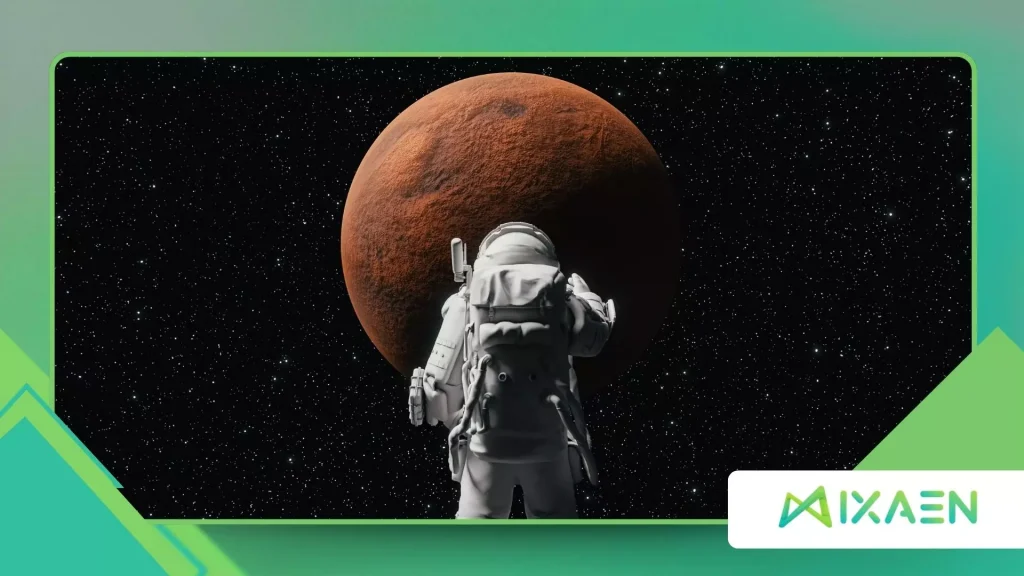
What retired astronauts say about the future of space travel shapes our current understanding of cosmic exploration, especially as we navigate the complexities of deep-space missions in 2026.
These pioneers, having experienced the harsh realities of orbit, offer an indispensable reality check to the aggressive timelines set by private corporations and government agencies alike.
Their collective wisdom bridges the gap between ambitious corporate marketing and the brutal physics of microgravity environments.
As humanity stands on the precipice of becoming a multiplanetary species, listening to these veterans is no longer just a matter of historical respect; it is a strict operational necessity for survival.
The landscape of space exploration has shifted from geopolitical posturing to a fast-paced commercial race.
Veterans from the Apollo, Space Shuttle, and early International Space Station (ISS) eras frequently voice their perspectives on this transition, highlighting both the immense opportunities and the systemic vulnerabilities of modern missions.
They provide a unique analytical lens, evaluating how contemporary engineering aligns with the physiological constraints of the human body.
This article analyzes their insights, focusing on safety, commercialization, and the imminent journey to Mars.
Key Insights at a Glance
- Commercial Evolution: Private enterprises accelerate launch frequencies but require rigorous safety oversight.
- The Mars Dilemma: Deep-space radiation and psychological isolation remain the primary unresolved bottlenecks.
- Lunar Stepping Stone: The Moon serves as a critical testbed for life-support systems before attempting Martian transit.
- Sustainability: Managing orbital debris is vital to maintaining safe departure corridors for future crews.
Why Is the Perspective of Space Veterans Crucial for Mars?
How Does Deep-Space Radiation Threaten Long-Duration Crews?
Earth’s magnetosphere shields low-Earth orbit missions, but traveling to Mars exposes astronauts to intense galactic cosmic rays and solar particle events.
Veterans frequently emphasize that current shielding technology remains inadequate for a three-year round trip, raising cancer and neurological risks significantly.
They argue that propulsion systems must evolve to shorten transit times, thereby minimizing cumulative exposure to lethal space environments.
What Are the Unseen Psychological Challenges of Deep Space?
An overlooked aspect of what retired astronauts say about the future of space travel involves the profound psychological toll of the “Earth-out-of-view” phenomenon.
Unlike ISS crews who look down at their home planet, Martian explorers will see Earth as a mere speck of dust.
This extreme isolation can trigger severe depression, anxiety, and interpersonal friction, necessitating advanced autonomous psychological support systems.
++ Why Reusable Spacecraft Systems Redefine Exploration Costs
Why Must Life-Support Systems Achieve Absolute Self-Sufficiency?
On the ISS, resupply missions can deliver spare parts or fresh water within hours or days during an emergency. For a crew bound for Mars, help is millions of miles away, making mechanical failures potentially fatal.
Space veterans insist that life-support systems must achieve a 98% recycling efficiency rate, utilizing robust, easily repairable components rather than complex, delicate machinery.
Also read: What We’ve Learned from Landing Rovers on Other Planets
How Do Analog Missions Prepare Astronauts for Martian Isolation?
To mitigate these risks, veterans advocate for extensive utilization of Earth-based analog environments, such as isolated habitats in Antarctica or the deep desert.
These simulations replicate the claustrophobia, communication delays, and resource scarcity that crews will encounter on the Red Planet.
Practicing operational autonomy in these brutal terrestrial environments remains the best way to predict human behavioral responses during deep-space transit.

How Is Commercialization Redefining the Space Race?
What Safety Lessons Must Private Companies Learn from the Past?
The entry of aerospace titans has drastically lowered payload launch costs, democratizing access to orbit through unprecedented reusable rocket technology.
However, what retired astronauts say about the future of space travel often includes a stern warning about avoiding the normalization of deviance.
Legacy programs suffered catastrophic losses when minor engineering anomalies were ignored, a cultural trap that rapid-prototyping commercial firms must actively resist.
Read more: Reimagining the Hubble: How It Changed the Way We See Space
How Does Tourism Impact Professional Scientific Missions?
The proliferation of suborbital and orbital space tourism has transformed the exclusivity of spaceflight, turning civilians into temporary astronauts.
While veterans welcome the public enthusiasm and capital influx, they urge a clear distinction between recreational flight and rigorous scientific research.
They emphasize that professional crews undergo thousands of hours of emergency training, a standard that must never be compromised for paying passengers.
Why Is Public-Private Collaboration Essential for Lunar Exploration?
Neither government space agencies nor private corporations can successfully conquer deep space independently due to budget constraints and bureaucratic inertia.
The Artemis program exemplifies this synergy, combining NASA’s deep-space oversight with agile commercial landing systems to establish sustainable infrastructure.
Veterans view this hybrid framework as the definitive blueprint for funding, executing, and sustaining multi-decade exploration initiatives across the solar system.
What Regulating Frameworks Are Needed for Commercial Orbit?
As private space stations prepare to replace the aging ISS by the end of this decade, international regulatory frameworks must evolve rapidly.
Veterans express concern over jurisdictional ambiguities regarding property rights, liability, and safety protocols in celestial environments.
Without clear, enforceable international treaties, the commercialization of orbit could devolve into a chaotic and hazardous corporate Wild West.
What Are the Immediate Technical Challenges in 2026?
| Challenge Domain | Primary Risk Factor | Veteran-Proposed Solution | Expected Implementation |
| Orbital Debris | Kinetic destruction of satellites and spacecraft | Active debris removal and strict mitigation laws | Ongoing / 2028 |
| Radiation Shielding | DNA damage from Galactic Cosmic Rays | Advanced hydrogen-rich materials and fast transit | 2030-2035 |
| Life Support (ECLSS) | Component failure and resource depletion | Closed-loop biomimetic systems and 3D-printed parts | 2027 |
| Human Physiology | Bone density loss and muscular atrophy | Centrifugal artificial gravity and gene therapeutics | Research Phase |
How Severe Is the Threat of Orbital Space Debris?
The accumulation of space junk in low-Earth orbit represents an existential threat to all future exploratory ambitions.
Millions of high-velocity fragments jeopardize structural integrity, threatening a catastrophic chain reaction known as the Kessler syndrome.
Reflecting on what retired astronauts say about the future of space travel, urgent international cooperation is required to track, capture, and de-orbit legacy debris fields immediately.
Why Is the Moon the Perfect Testing Ground?
Before sending humans to Mars, we must utilize the Moon to rigorously test surface habitats, automated drilling equipment, and nuclear power reactors.
The lunar surface offers a harsh, accurate environment to validate In-Situ Resource Utilization (ISRU) techniques, such as extracting water ice from polar craters.
Skipping this stepping stone would be equivalent to sailing across the Atlantic Ocean on a vessel that has never left the harbor.
What Role Will Artificial Intelligence Play in Piloting Spacecraft?
Modern spacecraft rely heavily on autonomous flight computers, reducing the necessity for manual piloting during standard mission phases.
Veterans emphasize that while artificial intelligence can process telemetry data at hyper-speed, human intuition remains irreplaceable during unforeseen, black-swan emergencies.
The future architecture must balance machine learning algorithms with robust manual overrides, ensuring that human judgment remains the ultimate authority in critical moments.
How Do We Solve the Problem of Artificial Gravity?
Prolonged exposure to microgravity causes irreversible bone density loss, muscular atrophy, and cardiovascular deconditioning over long multi-month deployments.
Astronauts returning from six-month stints on the ISS often require weeks of physical therapy to walk properly again.
To safely send crews to Mars, veterans suggest developing rotating spacecraft modules that generate artificial gravity via centrifugal force, maintaining human musculoskeletal health during transit.
How Will the Next Generation of Astronauts Adapt?
What Skills Are Essential for Modern Space Explorers?
The profile of the ideal astronaut has shifted from Cold War military test pilots to multidisciplinary scientists, engineers, and medical professionals.
Future crews must possess cross-functional expertise, enabling a geologist to repair an electrical grid or a software engineer to perform emergency surgery.
Furthermore, emotional intelligence and intercultural communication skills are paramount for maintaining harmony within diverse, cooped-up international crews during multi-year deployments.
How Does International Diversity Strengthen Global Missions?
Space exploration has evolved into a global endeavor, transcending old national rivalries to leverage international intellectual capital and financial resources.
Veterans note that diverse teams bring varied problem-solving methodologies, which prevents groupthink and sparks creative engineering solutions.
The shared vulnerability of spaceflight serves as a powerful geopolitical unifier, demonstrating that humanity thrives when facing existential cosmic challenges together.
Why Must We Inspire the Next Generation of Explorers?
The sustainability of space exploration depends on inspiring youth to pursue careers in science, technology, engineering, and mathematics (STEM).
Veterans dedicate significant time to educational outreach, understanding that the individuals who will walk on Mars are currently sitting in primary school classrooms.
By sharing their lived experiences, they transform abstract scientific concepts into tangible, inspiring human goals that ignite global curiosity.
What Ethical Responsibilities Do We Have on Other Worlds?
As we prepare to establish permanent settlements on the Moon and Mars, complex ethical questions regarding planetary protection surface.
Veterans discuss the vital importance of preventing forward contamination introducing terrestrial microbes that could ruin the search for indigenous extraterrestrial life.
Preserving the pristine scientific integrity of these alien environments is a profound moral obligation that we must honor as we expand outward.
The Path Forward into the Cosmos
The invaluable insights regarding what retired astronauts say about the future of space travel illuminate a clear, balanced path forward for humanity.
Their collective perspective warns us against reckless haste while simultaneously fueling our innate drive to explore the unknown.
By prioritizing robust safety engineering, international regulatory cooperation, and comprehensive physiological protection, we can safely transform from terrestrial dwellers into interplanetary explorers.
The future of space travel depends entirely on our ability to transform the hard-earned lessons of our space veterans into the foundational engineering standards of tomorrow.
What do you think is the biggest hurdle for future space travelers? Share your thoughts and experiences in the comments below!
Frequently Asked Questions
What do retired astronauts say about the private space race?
They generally praise the rapid innovation and cost reductions brought by private firms, but they consistently emphasize that safety standards must never be compromised for corporate profit or speed.
Why is radiation considered the biggest obstacle for a Mars mission?
Deep-space radiation consists of high-energy particles that easily penetrate standard aluminum spacecraft hulls, causing severe cellular and DNA damage to astronauts over long exposures.
Can humans realistically live permanently on the Moon or Mars?
Yes, but it requires developing closed-loop life support systems, robust surface radiation shielding (like underground lava tubes), and sustainable methods for extracting water and oxygen directly from the local soil.
