
Why Lunar Ice Prospecting Drives Modern Exploration Missions
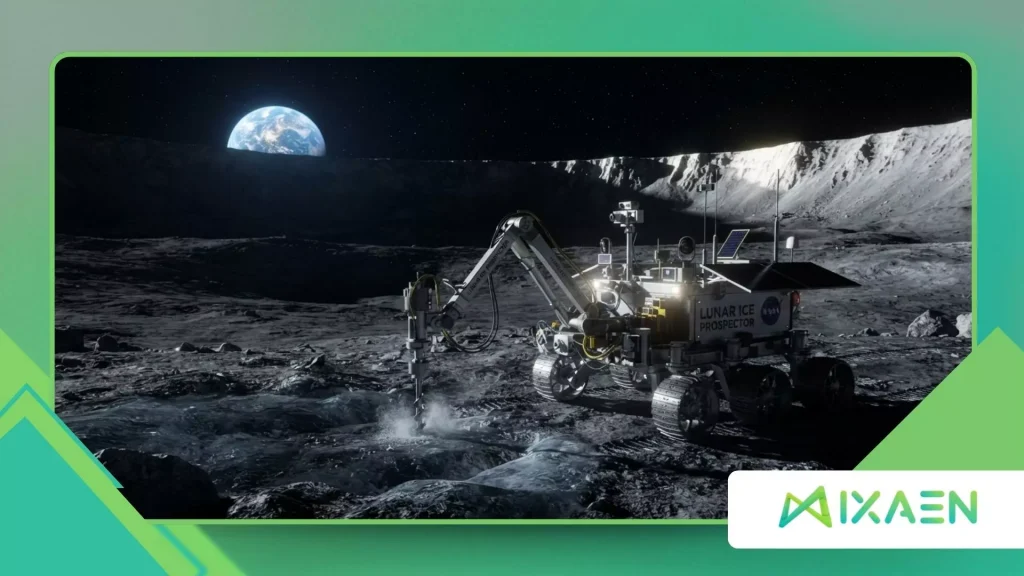
Lunar Ice Prospecting initiatives fuel modern space agencies aiming to establish permanent human settlements on the lunar surface.
Space scientists recognize that trapping water ice inside permanently shadowed polar craters provides critical life support reserves.
Finding accessible water transforms the Moon from a barren rock into a self-sustaining refueling outpost.
Astronauts can extract hydrogen and oxygen directly from local reserves instead of launching heavy supplies from Earth.
Navigating this lunar resource revolution requires unprecedented technological innovation and international collaboration across space programs.
Planetary researchers deploy advanced robotic rovers to map volatile compounds hidden beneath the dark regolith.
Think of these frozen polar deposits as liquid gold buried in Earth’s closest cosmic neighbor. Are you ready to explore how hidden ice will power humanity’s next giant leap?
Navigating Lunar Resource Extraction
- Mapping permanently shadowed polar craters using orbital neutron spectrometers and advanced thermal radar.
- Deploying autonomous robotic rovers to drill and sample subsurface volatile ice deposits.
- Converting raw water ice into rocket propellant and breathable oxygen reserves.
- Establishing sustainable international legal frameworks for extraterrestrial resource mining rights.
Why Is Water Ice the Ultimate Key to Deep Space Exploration?
Lunar Ice Prospecting efforts matter because launching payload mass out of Earth’s heavy gravitational well costs tens of thousands of dollars per pound.
Transporting bulk water from terrestrial oceans to sustain lunar bases proves financially and logistically impossible for long-term missions.
Scientists can split harvested water molecules into liquid hydrogen and oxygen to manufacture high-performance rocket fuel on-site.
Imagine operating an interstellar gas station right on the lunar south pole for deep space travelers.
Recent technical findings published by the Lunar and Planetary Institute confirm that polar craters contain billions of tons of trapped volatiles.
Utilizing these local resources reduces mission launch mass exponentially, unlocking sustainable travel trajectories toward Mars and beyond.
Space agencies prioritize these volatile deposits because survival on foreign worlds depends entirely on local resource utilization. Water extraction forms the indispensable bedrock of interplanetary civilization.
How Do Polar Craters Trap Ancient Ice?
Impact craters near the lunar poles feature towering rims that block direct sunlight for billions of consecutive years.
This permanent shadow creates cryogenic cold traps where temperatures plunge lower than minus four hundred degrees Fahrenheit.
Cometary impacts deposited water vapor that froze instantly and remained undisturbed across geological epochs.
++ Why Reusable Spacecraft Systems Redefine Exploration Costs
What Technologies Extract Subsurface Water?
Autonomous robotic drills penetrate hardened lunar regolith to extract frozen core samples containing ice and mineral grains.
Specialized thermal ovens heat the excavated material inside sealed chambers to vaporize trapped moisture cleanly.
Condensation systems then capture the resulting steam and filter it into pure drinking water.
Also read: What We’ve Learned from Landing Rovers on Other Planets
Why Is Hydrogen Fuel Production Crucial?
Manufacturing liquid hydrogen and oxygen on the Moon fuels return vehicles and deep-space transport vessels efficiently.
Refueling spacecraft off-world eliminates the need to carry return propellant from Earth’s surface during initial launch phases.
This logistical breakthrough slashes mission budgets and payload weight constraints.
How Are Robotic Missions Mapping Hidden Polar Reserves?
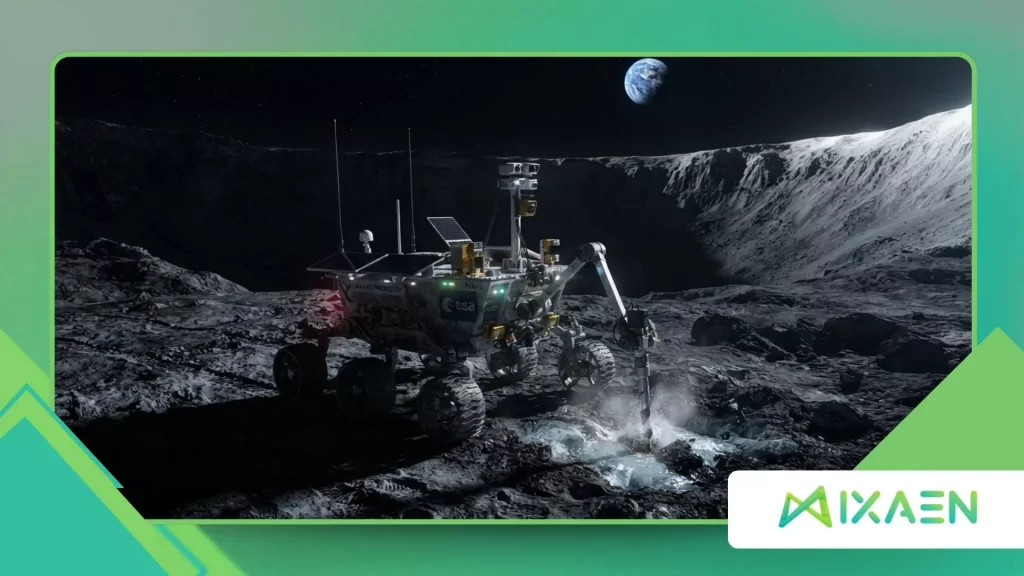
Lunar Ice Prospecting relies heavily on sophisticated robotic surveyors equipped with neutron detectors, mass spectrometers, and ground-penetrating radar arrays.
These robotic explorers brave sub-zero temperatures inside permanently shadowed craters to map volatile distribution patterns with millimeter precision.
Engineers design specialized rovers with nuclear radioisotope heating units to survive long lunar nights without freezing solid.
Think of these autonomous scouts as microscopic detectives sniffing out hidden treasure in pitch-black subterranean vaults.
Orbital data cross-referenced with surface rover telemetry reveals that ice is often mixed intimately with rocky regolith rather than forming pure sheets.
Understanding this geological matrix dictates how industrial mining equipment must be engineered to harvest resources effectively.
International space partnerships pool valuable sensor data to map the most lucrative extraction zones collaboratively. Every successful survey brings humanity closer to permanent off-world habitation.
Read more: Reimagining the Hubble: How It Changed the Way We See Space
What Role Do Neutron Spectrometers Play?
Neutron spectrometers measure how fast-moving cosmic rays bounce off hydrogen atoms buried beneath the top layer of lunar soil.
High concentrations of reflected thermal neutrons indicate significant quantities of hydrogen, confirming underground water ice presence.
Orbiting spacecraft scan entire polar regions using this non-invasive remote sensing technique.
How Do Rovers Survive Extreme Cold?
Temperatures inside polar craters drop far below standard electronic operating thresholds, threatening total mechanical failure and battery freeze-ups.
Advanced thermal control systems and miniature nuclear generators maintain internal operating warmth for delicate computer processors.
This robust engineering ensures weeks of continuous subsurface drilling operations.
Why Is International Collaboration Essential?
Pooling financial resources and engineering talent allows multiple space agencies to share expensive lunar mapping data openly.
Joint missions prevent redundant hardware launches and accelerate the timeline for establishing permanent crewed research stations. Cooperation unites global scientific intellect toward a common interplanetary goal.
What Are the Commercial and Geopolitical Implications of Lunar Mining?
Lunar Ice Prospecting triggers intense geopolitical interest as spacefaring nations race to secure strategic real estate near water-rich polar peaks.
Controlling access to permanent sunlight and subterranean ice deposits grants immense tactical advantages for future commercial space economies.
Private aerospace corporations invest heavily in prospecting technology to position themselves as primary suppliers of extraterrestrial propellant.
Imagine a modern gold rush unfolding across the desolate craters of our nearest celestial satellite.
Legal experts debate international space treaties to establish fair regulatory frameworks governing commercial extraction rights without triggering terrestrial conflicts.
The Outer Space Treaty prohibits national sovereignty claims, yet encourages peaceful scientific exploration and resource utilization by private entities.
Balancing cooperative science with competitive commerce requires delicate diplomatic maneuvering among global superpowers. The rules written today will govern interplanetary trade for generations.
How Do International Treaties Regulate Mining?
Existing global agreements state that celestial bodies belong to all of humanity and cannot be claimed by any single nation state.
However, recent legal amendments permit companies to extract, own, and sell harvested space resources commercially. Navigating this legal gray area remains a top priority for international diplomats.
Why Are Private Aerospace Companies Investing?
Commercial ventures envision refueling commercial satellites and supplying future lunar tourist habitats with locally sourced water and oxygen.
Generating revenue from space-based resources promises lucrative financial returns for early corporate pioneers in the astrobusiness sector. Profit drives rapid technological innovation faster than government budgets alone.
What Safety Protocols Protect Lunar Heritage?
Scientific committees advocate for strict quarantine zones around historic Apollo landing sites to prevent contamination from active mining operations.
Preserving untouched polar craters for geological research ensures we do not destroy ancient clues about solar system history. Balancing industry with conservation is vital.
Lunar Exploration Technology Comparison Matrix
The structured table below contrasts traditional Earth-supplied missions with modern in-situ resource utilization approaches.
| Exploration Strategy | Supply Chain Model | Launch Cost Impact | Sustainability Level |
| Terrestrial Supply | Transport all water and fuel from Earth | Extremely High ($50k+/lb) | Unsustainable for long-term bases |
| In-Situ Resource Utilization | Extract water ice directly on the Moon | Dramatically Lower | Highly sustainable self-sufficiency |
| Hybrid Robotic Mining | Automated extraction supplemented by resupply | Moderate Cost | Balanced interim operational phase |
Securing Humanity’s Interplanetary Future
Lunar Ice Prospecting represents the critical turning point where science fiction transforms into actionable industrial reality across our solar system.
By unlocking polar water reserves, we secure the life support and fuel necessary to establish permanent human outposts.
Embracing this cosmic frontier demands rigorous engineering, cooperative diplomacy, and unwavering human curiosity. Take a moment to reflect on our species expanding beyond Earth’s cradle.
How will you participate in the unfolding history of human space exploration? Share your experience in the comments below!
Frequently Asked Questions
Is liquid water found freely flowing on the lunar surface?
Liquid water cannot exist on the Moon because atmospheric pressure is virtually non-existent, causing exposed liquids to boil away instantly.
Water only exists as solid ice crystals trapped inside cryogenic, permanently shadowed polar craters.
How much water ice is estimated to exist on the Moon?
Orbital radar and neutron spectrometer data indicate that billions of metric tons of water ice are sequestered within polar craters.
This vast reserve is more than sufficient to support extensive human habitation and fuel production for centuries.
Can astronauts drink harvested lunar ice directly?
Raw lunar ice is heavily contaminated with abrasive volcanic dust, heavy metals, and toxic chemical compounds.
Extracted ice must undergo rigorous filtration, distillation, and chemical purification before it becomes safe for human consumption.
Who owns the water resources mined on the Moon?
International space law prohibits sovereign national ownership of celestial territory, but legal frameworks permit private companies to extract and sell resources.
This evolving legal landscape encourages commercial investment while maintaining scientific access.
Why are permanently shadowed craters so difficult to explore?
Pitch-black darkness, extreme sub-zero temperatures, and rugged terrain make these polar craters exceptionally hazardous for traditional solar-powered rovers.
Specialized nuclear-heated robots and floodlights are required to illuminate and navigate these extreme environments safely.
