
Starship and the Future of Interplanetary Cargo
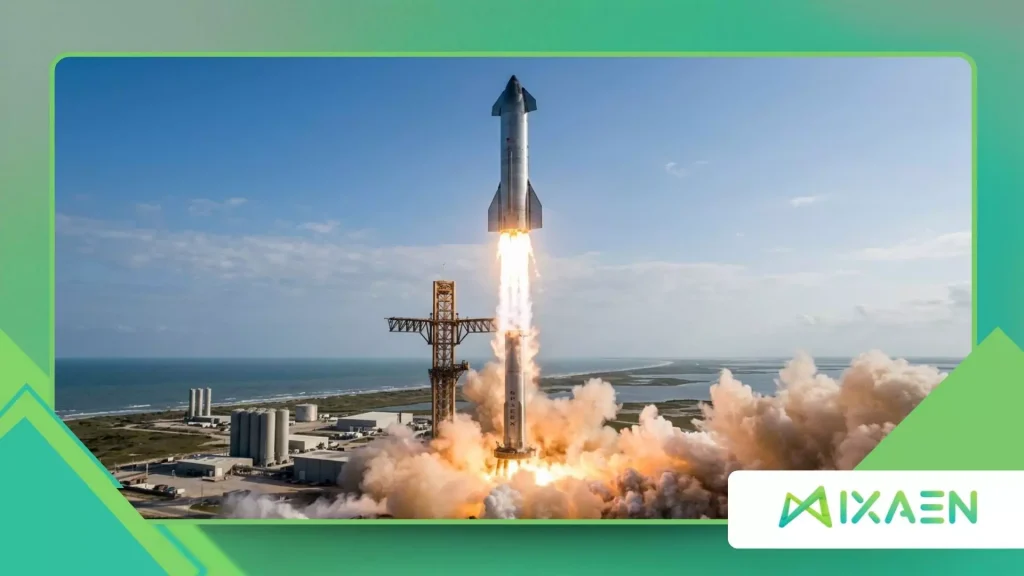
Starship represents a monumental leap forward in aerospace engineering, redefining heavy-lift orbital transport capabilities for future interplanetary colonization missions.
SpaceX has engineered a fully reusable transportation system capable of ferrying massive cargo payloads and hundreds of metric tons to lunar and Martian surfaces.
Modern space exploration relies heavily on dramatic payload capacity increases to reduce cost per kilogram significantly.
This technological revolution opens unprecedented commercial and scientific opportunities across the entire solar system.
Navigating this ambitious interplanetary era requires a comprehensive understanding of orbital mechanics, propulsive landing technologies, and orbital propellant transfer protocols.
Aerospace analysts track every flight test to measure payload mass improvements and heat shield durability under extreme atmospheric re-entry conditions.
Think of this heavy-lift vehicle as an interplanetary cargo freighter connecting Earth ports directly to distant planetary outposts. Are you ready to explore how heavy transport rockets are reshaping humanity’s cosmic future?
Navigating Interplanetary Heavy Transport
- Investigating orbital refueling mechanics necessary for deep space Martian missions.
- Analyzing massive payload volumetric capacities for building permanent lunar bases.
- Evaluating rapid launch cadence strategies and full rocket reusability economics.
- Documenting recent flight test milestones achieved by SpaceX launch facilities.
What Makes Heavy-Lift Interplanetary Logistics Revolutionary?
Starship transforms traditional aerospace logistics by offering an unprecedented cargo bay volume exceeding one thousand cubic meters for deep space missions.
Traditional rocket designs face strict mass limitations that restrict deep space infrastructure deployment severely. Imagine a massive ocean container ship replacing a small wooden rowboat for global commercial trade.
This colossal payload capacity allows space agencies to transport entire modular habitats, solar power grids, and rovers in a single launch.
Recent commercial space flight data published by global aerospace regulatory bodies indicates that reducing launch costs below one hundred dollars per kilogram unlocks sustainable lunar colonization.
When heavy freight expenses drop dramatically, private corporations and scientific institutions can accelerate deep space infrastructure deployment schedules by decades.
This economic shift democratizes access to celestial bodies, turning science fiction into practical engineering reality. Innovation drives continuous progress across the entire aerospace sector.
How Does Massive Payload Volume Change Mission Design?
Engineers no longer need to design hyper-compact folding mechanisms for space telescopes and habitat modules because massive cargo bays accommodate fully assembled structures.
Larger hardware components reduce mechanical deployment risks during critical orbital insertion phases significantly. Simplicity enhances overall mission reliability.
++ Why Reusable Spacecraft Systems Redefine Exploration Costs
Why Is Full Reusability Critical for Interplanetary Trade?
Disposing of multi-million-dollar booster stages after a single flight makes regular interplanetary cargo transport economically impossible for long-term colonial settlements.
Rapidly reusing both booster and ship hardware mimics commercial aviation economics closely. Sustainable reuse lowers financial barriers permanently.
Also read: What We’ve Learned from Landing Rovers on Other Planets
What Role Does Orbital Refueling Play in Deep Space?
Reaching Mars requires launching additional propellant tankers to refuel the primary transport vehicle in low Earth orbit before trans-Mars injection burns.
Orbital propellant transfer mastered through automated docking unlocks limitless range across the solar system. Logistics form the backbone of interplanetary expansion.
How Do Advanced Heat Shields Enable Reusable Interplanetary Travel?
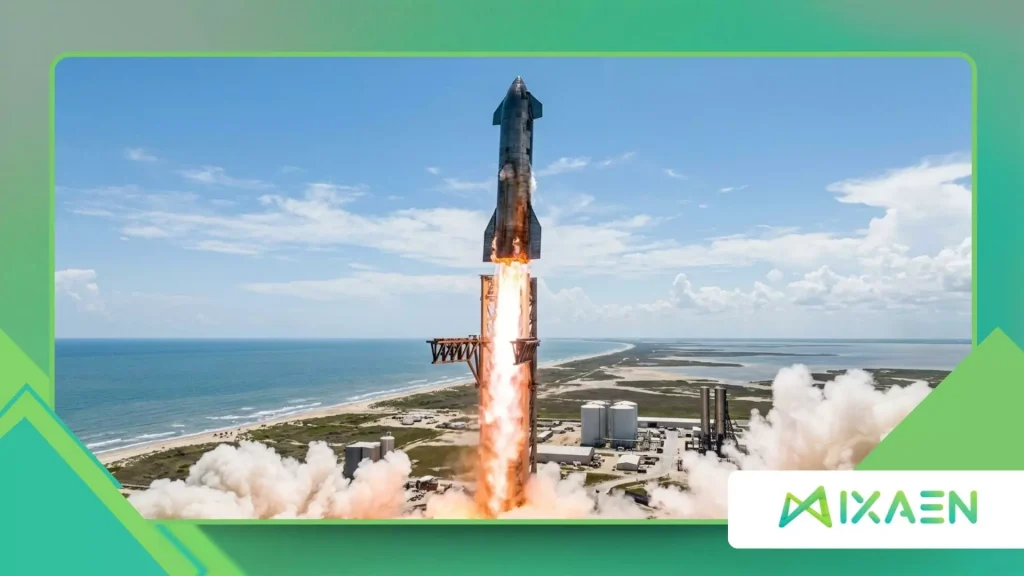
Starship utilizes thousands of hexagonal ceramic thermal protection tiles designed to withstand searing plasma temperatures exceeding fourteen hundred degrees Celsius during atmospheric re-entry.
Returning high-mass vehicles safely through planetary atmospheres requires innovative cooling systems and durable materials that survive repeated thermal shock cycles.
Think of these protective heat shields as a metallic dragon’s armor protecting vulnerable internal electronics from fiery destruction.
Engineers continuously refine tile attachment mechanisms to withstand intense vibrational stresses during liftoff.
Flight telemetry reports from recent orbital test campaigns demonstrate that active cooling channels and resilient ceramic composites prevent structural warping during high-velocity descents.
When heat shields survive multiple re-entries without requiring complete replacement, turnaround times between launches shrink to mere days.
This operational efficiency mirrors commercial airline fleet management practices for the very first time. Reliability guarantees passenger and cargo safety.
Read more: Reimagining the Hubble: How It Changed the Way We See Space
How Do Hexagonal Tiles Protect Against Thermal Stress?
Each ceramic tile is mounted with flexible retention pins that allow thermal expansion and contraction without cracking under extreme temperature fluctuations.
This clever mechanical isolation prevents catastrophic tile shedding during high-stress atmospheric braking phases. Durability ensures rapid fleet turnaround.
Why Is Rapid Turnaround Essential for Cargo Fleets?
Operating an interplanetary transport network requires high asset utilization rates to justify immense initial research and development investments.
Launching multiple times per week amortizes capital expenses efficiently across hundreds of commercial payload deliveries. Fleet economics dictate mission frequency.
What Role Do Aerodynamic Flaps Play During Descent?
Large articulating body flaps manage pitch and roll orientation during atmospheric entry, guiding the vehicle accurately toward its designated landing zone.
Active aerodynamic control eliminates the need for heavy parachutes during terminal descent sequences. Precision landing saves valuable payload mass.
What Are the Implications for Future Lunar and Martian Bases?
Starship serves as the foundational logistics backbone required to establish sustainable human settlements on both the Moon and Mars over the coming decades.
Transporting heavy resource extraction machinery, agricultural life support modules, and water purification units requires unprecedented cargo-carrying capacity.
Imagine establishing a bustling colonial seaport on an alien world where every incoming vessel unloads vital survival equipment.
These heavy-lift missions eliminate the historical constraints that limited previous space exploration programs to brief exploratory visits.
Space agency mission planners project that establishing permanent lunar outposts requires delivering over one hundred metric tons of infrastructure per landing sequence.
Having reliable heavy-lift capabilities ensures that life support supplies, power generators, and habitat modules arrive intact and ready for immediate deployment.
Modern space exploration transitions permanently from temporary exploration to permanent habitation. Humanity becomes a multi-planetary species.
How Will Heavy-Lift Vehicles Support Lunar Base Construction?
Heavy robotic construction rovers and large-scale regolith excavators delivered directly to the lunar surface will prepare building foundations before human crews arrive.
Heavy transport efficiency accelerates permanent infrastructure deployment significantly. Preparation ensures astronaut safety.
Why Is Martian Resource Utilization Dependent on Heavy Equipment?
Extracting subsurface water ice and manufacturing return rocket propellant on Mars requires heavy chemical processing plants transported from Earth.
Delivering modular industrial factories in a single launch makes in-situ resource utilization economically viable. Self-sufficiency is the ultimate goal.
What Challenges Face Interplanetary Communication Networks?
Maintaining high-bandwidth data links between Earth control centers and distant planetary bases requires advanced satellite constellations deployed by heavy cargo rockets.
Reliable communication guarantees mission coordination and scientific data transmission. Connectivity bridges cosmic distances.
Interplanetary Transport Fleet Comparison Matrix
The structured table below contrasts traditional expendable launch vehicles with next-generation heavy-lift transport systems across key performance metrics.
| Transport Metric | Traditional Expendable Rockets | Next-Gen Heavy-Lift System |
| Payload Capacity to LEO | 20 to 65 metric tons | 150+ metric tons fully reusable |
| Stage Recovery Status | Mostly expendable or partial booster return | Fully reusable booster and ship hardware |
| Cost per Kilogram to Orbit | High financial expense per launch | Dramatically lower cost via rapid reuse |
| Interplanetary Range | Limited lunar flybys and robotic probes | Direct human crew and heavy cargo delivery |
Pioneering the Next Era of Human Spaceflight
The relentless development of Starship proves that humanity possesses the engineering ingenuity required to become a truly multi-planetary civilization.
By combining full reusability, massive payload capacity, and innovative orbital refueling, we unlock the entire solar system for scientific discovery and commercial enterprise.
Modern aerospace achievements reflect our enduring desire to explore unknown cosmic frontiers and expand human presence outward.
Take a moment to reflect on the monumental changes happening across the global aerospace industry today.
How do you envision human civilization evolving once interplanetary travel becomes routine? Share your experience in the comments below!
Frequently Asked Questions
What is the primary payload capacity of a fully reusable heavy-lift transport vehicle?
A fully reusable heavy-lift vehicle can transport over one hundred fifty metric tons of cargo or crew to low Earth orbit when utilizing orbital refueling techniques for extended range missions.
How does orbital refueling enable long-duration deep space missions?
Orbital refueling allows the transport vehicle to fill its propellant tanks completely while in Earth orbit, providing the massive delta-v energy required to reach Mars or the lunar surface.
Why are ceramic thermal protection tiles necessary during re-entry?
Ceramic thermal protection tiles insulate the structural airframe from searing plasma temperatures exceeding fourteen hundred degrees Celsius generated by atmospheric friction during high-velocity descent.
How does full reusability reduce the economic cost of space exploration?
Reusing both booster stages and ship hardware eliminates the multi-million-dollar manufacturing expense of building new rockets for every single flight, slashing cost per kilogram significantly.
What role do heavy cargo rockets play in establishing lunar bases?
Heavy cargo rockets transport essential industrial machinery, solar power grids, life support modules, and habitat infrastructure required to build permanent, self-sustaining human settlements on the Moon.
