
Why Carbon-Rich Exoplanets Could Host Exotic Biological Chemistry

Carbon-Rich Exoplanets represent a frontier in astrobiology that challenges our Earth-centric view of what constitutes a “habitable” world in the vast cosmos.
Astronomers now use the James Webb Space Webb (JWST) to peer into atmospheres that contain more carbon than oxygen, defying traditional planetary models.
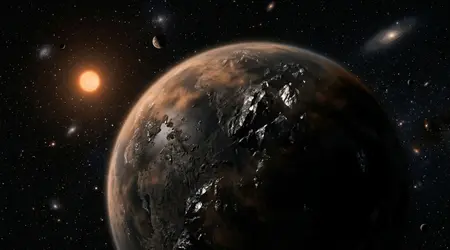
These distant orbs might feature landscapes of diamond and graphite, where liquid hydrocarbons replace the water-based oceans we recognize on our blue marble.
Understanding these chemical anomalies allows us to predict where “exotic” life organisms with completely different metabolic structures might actually thrive in the dark.
Critical Insights for the Space Enthusiast
- Chemical Divergence: How a high carbon-to-oxygen ratio fundamentally alters a planet’s geology and its potential for fostering complex life forms.
- Diamond Geologies: The fascinating possibility of planets with interior layers composed of precious minerals rather than common silicate rocks.
- Methane Skies: Analyzing how thick, hydrocarbon-rich atmospheres serve as both a shield and a potential energy source for alien biology.
- Biological Alternatives: Exploring the theoretical “silicon-carbon” hybrid chemistries that could survive in environments too harsh for standard DNA-based organisms.
What Defines the Geology of Carbon-Rich Worlds?
A world qualifies as one of the Carbon-Rich Exoplanets when its local star system began with a high concentration of carbonaceous dust and gas.
Unlike Earth, where silicates and oxygen dominate the crust, these planets possess mantles potentially rich in carbides and even thick layers of diamond.
Such a composition dictates how heat flows from the core to the surface, affecting volcanic activity and the creation of magnetic shields.
Without a balanced oxygen ratio, the rocks do not form the typical quartz or clay minerals that stabilize Earth’s long-term climate cycles.
Can a diamond planet support an atmosphere?
Yes, but the gases would likely consist of thick smog, heavy with carbon monoxide and methane, creating a permanent, hauntingly dark twilight.
These atmospheres trap heat differently, potentially allowing for liquid lakes of oils or tars even at distances where water would be frozen solid.
++ Why Hycean Exoplanets Are Emerging as Top Life Candidates
How do we detect these dark minerals?
Scientists analyze the light spectrum passing through the planet’s atmosphere to identify the specific “fingerprints” of carbon-based molecules like hydrogen cyanide.
The presence of these volatile compounds suggests a surface that is chemically active, constantly recycling carbon through its bizarre, diamond-laden tectonic plates.
Why Is Carbon the Perfect Engine for Exotic Biology?
Life as we know it relies on carbon’s ability to form four stable bonds, creating the complex chains necessary for the structure of DNA.
On Carbon-Rich Exoplanets, this versatility could lead to “azotosomes” or other membranes that remain fluid in frigid, oxygen-poor hydrocarbon seas.
Imagine an organism that breathes hydrogen and consumes acetylene, thriving in a world where oxygen is a toxic rarity rather than a necessity.
This “bio-weirdness” isn’t just science fiction; it is a mathematical possibility based on the laws of organic chemistry in high-pressure environments.
Also read: How Artificial Intelligence Is Accelerating the Search for Life
What are the limits of non-aqueous life?
While water is a great solvent, liquid methane or ethane can also facilitate chemical reactions, albeit at much slower speeds due to colder temperatures.
Evolution on these worlds might take billions of extra years to produce complex structures, resulting in a slow-motion biosphere that eludes quick detection.
Read more: The Debate Around Technosignatures: Searching for Alien Technology
Could these organisms use silicon?
In a carbon-heavy environment, silicon might act as a secondary structural element, creating sturdy, glass-like skeletal structures for creatures living in high-pressure zones.
This hybridization allows for biological machines that are far more heat-resistant or pressure-tolerant than the fragile, soft-bodied organisms found on our home planet.
What Does Current Astronomical Data Reveal?
The landmark 2024 study regarding the exoplanet K2-18b ignited global interest by detecting carbon-bearing molecules like dimethyl sulfide in a potential “Hycean” world.
While debate continues over the specific biological origin, the presence of such complex carbon chemistry confirms that the cosmic laboratory is far from uniform.
Data from the TESS mission suggests that Carbon-Rich Exoplanets are more common near the galactic center, where heavy elements are naturally more abundant.
The following table outlines the chemical signatures researchers prioritize when searching for these exotic, carbon-dominated environments in our nearby stellar neighborhood.
Key Bio-Signatures in Carbon-Heavy Atmospheres (2026 Data)
| Molecule | Presence Level | Potential Biological Meaning | Detectability (JWST) |
| Methane (CH4) | High | Potential metabolic byproduct of methanogens | Very High |
| Phosphine (PH3) | Trace | Possible anaerobic biological signature | Moderate |
| Acetylene (C2H2) | Moderate | Energy source for “hydrogen-breathing” life | High |
| Dimethyl Sulfide | Rare | Associated with marine life on Earth | Low to Moderate |
Why is the C/O ratio so critical?
A ratio higher than 0.8 transforms the planet’s chemistry, making oxygen unavailable to form water, thus forcing life to find other solvents.
When carbon takes over, the environment becomes “reducing,” which is actually very similar to the conditions found on the primordial, pre-life Earth.
How Does This Expand the “Habitable Zone” Definition?
We usually define habitability by the presence of liquid water, but Carbon-Rich Exoplanets force us to reconsider the necessity of that single liquid.
If life can function in liquid hydrocarbons, the “Goldilocks Zone” of a star expands significantly further out into the colder, darker regions of space.
Isn’t it arrogant to assume that the universe must follow the specific wet and salty recipe that occurred on our tiny planet?
Broadening our search criteria allows us to investigate moons like Titan, which serves as a local laboratory for these exotic, oily chemical reactions.
Could life exist on a diamond-crusted world?
Extreme pressure at the surface might create “super-critical” fluids that possess properties of both gases and liquids, facilitating rapid, exotic biological metabolism.
These worlds would be incredibly dense, with high gravity that would likely favor flat, sprawling life forms rather than tall, upright structures.
Is the analog of a “forest” possible?
Instead of trees, a carbon-rich world might feature massive, crystalline towers of graphite or tubes of carbon fiber grown by colony-based microorganisms.
These structures would harvest thermal energy from the planet’s interior or chemical energy from the atmosphere, creating a landscape that looks utterly alien.
Redefining Our Place in a Carbon Universe
The study of Carbon-Rich Exoplanets proves that the universe is far more creative in its chemistry than our early textbooks ever suggested.
By exploring worlds where diamonds are common and oxygen is rare, we move closer to answering the ultimate question of our own cosmic solitude.
We have learned that life is a persistent phenomenon that likely adapts to the specific elemental “hand” it is dealt by its host star.
Whether these exotic biospheres are rare or common, the hunt for them pushes our technology and our imagination to their absolute breaking points.
Embracing the “weird” in science is the only way to ensure we don’t miss the signs of life simply because they didn’t look like us.
Do you think we should prioritize searching for “Earth-twins” or embrace the search for these exotic, carbon-heavy worlds? Join the discussion in the comments below!
Frequently Asked Questions
Can humans ever land on a carbon-rich planet?
The high gravity and toxic atmospheres would make a landing nearly impossible without advanced robotic systems or pressurized, temperature-controlled habitats.
Are these planets actually made of diamonds?
While not a single giant gem, the high pressure and carbon content could create massive pockets of diamond deep within the mantle layers.
How does JWST see these planets?
It uses transit spectroscopy, measuring how the planet’s atmosphere filters the light of its parent star to determine which chemicals are present.
Why is methane considered a sign of life?
On Earth, most methane is produced by living organisms; finding it in high concentrations elsewhere suggests a constant source of replenishment, potentially biological.
