
Why de Sitter Cosmology Raises New Questions About Time
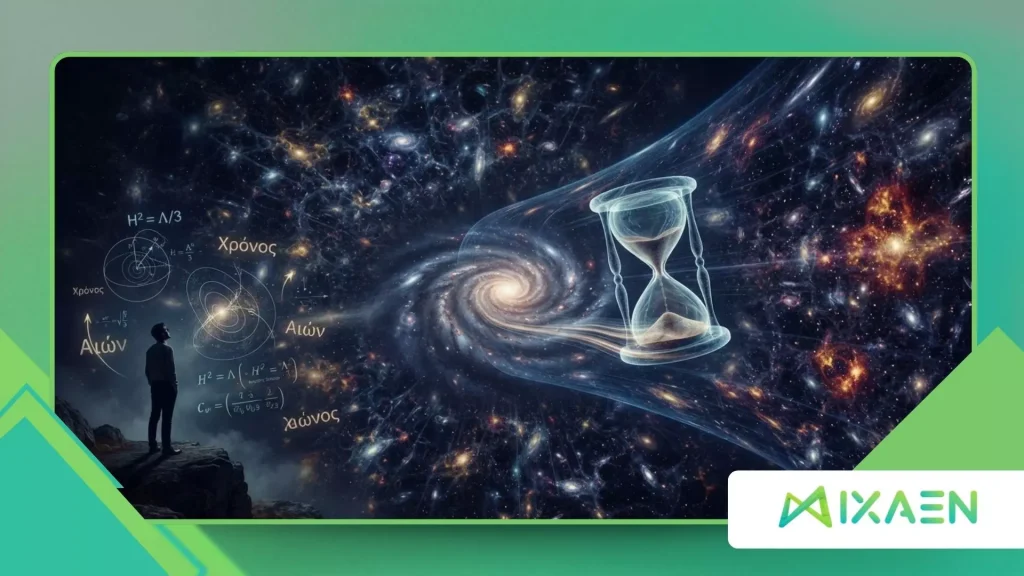
Sitter Cosmology models developed by theoretical physicists challenge our foundational assumptions regarding temporal progression within accelerating universal spacetimes.
Modern astrophysical research suggests that space expands exponentially under a dominant cosmological constant, altering how observers measure duration and decay.
Willem de Sitter originally formulated this exact solution to Einstein’s field equations in 1917, sparking decades of intense scientific debate.
Today, theoretical frameworks rely heavily on these expanding geometries to interpret cosmic microwave background data gathered by space observatories.
Examining these profound theoretical paradigms reveals deep contradictions between quantum mechanics and classical general relativity regarding temporal measurement.
Theoretical physicists grapple with the realization that empty expanding spaces lack a consistent global clock to measure universal aging.
Think of an eternal clock ticking endlessly inside an empty room where no physical objects exist to mark duration. Are you ready to explore how modern theoretical models redefine the very nature of time?
Navigating Theoretical Cosmic Horizons
- Investigating exponential spacetime expansion and observer-dependent cosmological event horizons.
- Analyzing quantum vacuum fluctuations and thermodynamic entropy behavior in empty spaces.
- Evaluating holography principles and boundary conformal field theory dualities.
- Documenting recent astrophysical observations confirming late-time cosmic acceleration trends.
What Is de Sitter Cosmology and How Does It Function?
Sitter Cosmology describes a universe devoid of ordinary matter and radiation, dominated entirely by a positive cosmological constant driving exponential expansion.
Willem de Sitter constructed this elegant mathematical solution to general relativity, demonstrating that empty space possesses intrinsic repulsive gravitational energy.
Imagine inflating a rubber balloon where every painted dot accelerates away from its neighbors at exponentially increasing velocities.
This continuous spatial stretching generates fundamental cosmic horizons that permanently isolate distant observers from causal contact.
Advanced theoretical studies published by theoretical physics institutes indicate that our actual universe currently approaches this exact de Sitter vacuum state.
As dark energy accelerates cosmic expansion, distant galaxies cross event horizons and disappear from our observable horizon forever.
Understanding this geometric structure helps researchers model the ultimate long-term thermodynamic fate of our expanding cosmos. Theoretical elegance meets rigorous mathematical reality within these expanding spacetimes.
Why Do Event Horizons Alter Temporal Perception?
Cosmic event horizons prevent light signals from crossing between separated regions, creating localized causal domains with distinct proper times.
Observers situated in different accelerated frames experience divergent clock rates and conflicting records of sequential events. Local time loses its universal validity entirely.
++ Why False Vacuum Decay Could Redefine Cosmic Stability
How Does Vacuum Energy Drive Expansion?
Quantum vacuum energy exerts negative pressure that counteracts gravitational attraction, forcing space to expand at an accelerating exponential rate.
This relentless repulsive force dictates the global curvature and dynamic evolution of empty cosmological models. Pressure governs the cosmic architecture.
Also read: Why Conformal Cyclic Cosmology Still Divides Physicists
What Role Do Mathematical Invariants Play?
Theoretical calculations rely on geometric symmetries to preserve physical laws across different coordinate systems within expanding de Sitter spaces.
Researchers use conformal transformations to map infinite spacetimes onto finite boundaries for easier analytical computation. Symmetry ensures mathematical consistency.
Why Does Accelerated Expansion Complicate the Definition of Time?
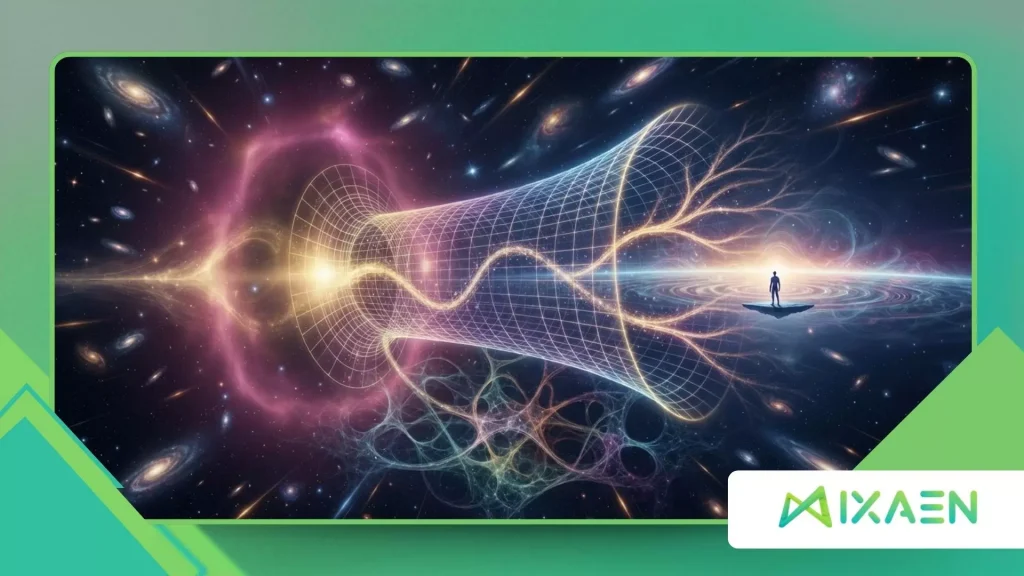
Sitter Cosmology introduces profound philosophical and physical paradoxes by eliminating the traditional background clocks required to measure duration.
In standard physics, measuring time depends on physical processes like atomic vibrations or planetary orbits occurring within matter-filled spaces.
However, an ideal de Sitter vacuum contains no matter particles, rendering conventional physical clock mechanisms completely nonexistent.
Think of trying to measure the speed of a river when all water molecules have vanished into pure abstraction.
Quantum gravity researchers argue that fundamental temporal progression might be an emergent illusion rather than a primary constituent of nature.
Without a reliable global time coordinate, physicists struggle to formulate consistent equations describing quantum state evolution across cosmological horizons.
Resolving this deep theoretical impasse remains one of the greatest challenges facing contemporary theoretical physics. Time resists simple definitions under extreme cosmic conditions.
Read more: Can Logic Fully Explain the Cosmos?
How Do Quantum Fluctuations Replace Clocks?
Subatomic vacuum fluctuations create microscopic energy variations that theorists use as probabilistic substitutes for traditional physical time markers.
These statistical fluctuations provide a fuzzy framework for tracking temporal change within empty expanding spaces. Uncertainty replaces absolute clock precision.
Why Is Global Time Synchronization Impossible?
Due to extreme spatial stretching, clocks separated by cosmological distances cannot synchronize using light signals because horizons block communication pathways.
Every localized observer inhabits a private causal bubble with its own independent temporal rhythm. Isolation shatters universal simultaneity.
What Is the Emergent Time Hypothesis?
Leading theoretical models propose that time is not a fundamental building block of reality, but an emergent property of thermodynamic entanglement.
As quantum systems interact, macroscopic temporal flow arises naturally from underlying timeless quantum information networks. Complexity generates clockwork.
How Do Holographic Principles Resolve Thermodynamic Paradoxes?
Sitter Cosmology challenges standard thermodynamic laws by suggesting that empty expanding spaces possess maximum finite entropy bounds determined by horizon areas.
According to classical physics, an infinite empty universe should possess infinite thermal entropy, violating fundamental statistical mechanics principles.
Theoretical physicists resolve this paradox using the holographic principle, which maps bulk spacetime dynamics onto lower-dimensional boundary theories.
Imagine projecting a three-dimensional holographic movie from flat data encoded securely on a surrounding boundary screen.
Recent holographic research papers demonstrate that quantum gravitational information within expanding spaces resides entirely on cosmological event horizons rather than interior volumes.
This remarkable duality proves that bulk temporal evolution can be completely reconstructed from boundary quantum mechanics without relying on internal clocks.
Theoretical breakthroughs bridge the gap between gravity and quantum information science. Physics unites disparate realms through elegant mathematical mirrors.
How Are Entropy Limits Calculated on Horizons?
The maximum entropy of a de Sitter space is proportional to the surface area of its cosmological event horizon in Planck units.
This finite storage capacity prevents thermodynamic infinities from breaking statistical mechanics laws within expanding geometries. Area dictates informational capacity.
What Is the Bulk-Boundary Correspondence?
The AdS/CFT correspondence framework provides mathematical dictionaries translating gravitational physics inside spaces into quantum field theories operating on boundaries.
Applying similar dualities to cosmological horizons unlocks unprecedented insights into quantum gravity and time. Translation reveals hidden physical truths.
Why Do Physicists Study Toy Models?
Exact analytical solutions are easier to compute in simplified lower-dimensional de Sitter models before tackling complex four-dimensional real-world observations.
Toy models test theoretical boundaries safely without getting overwhelmed by observational noise. Simplicity paves the way for discovery.
Cosmological Model Characteristics Comparison Matrix
The structured table below contrasts traditional matter-dominated cosmological models with pure de Sitter vacuum solutions across key theoretical dimensions.
| Cosmological Dimension | Matter-Dominated Friedmann Model | Pure Sitter Cosmology Model |
| Expansion Rate | Decelerating or moderately accelerating | Exponentially accelerating expansion |
| Primary Energy Source | Baryonic matter, radiation, and cold dark matter | Positive cosmological constant vacuum energy |
| Temporal Reference | Standard physical clocks and matter processes | Emergent quantum fluctuations and horizon bounds |
| Causal Structure | Infinite global communication past early epochs | Permanent cosmological event horizons isolating observers |
Unlocking the Ultimate Mysteries of Temporal Mechanics
Sitter Cosmology forces modern theoretical physicists to question foundational assumptions about time, space, and quantum gravity in an accelerating universe.
By studying these mathematical models, researchers edge closer to a unified theory that reconciles general relativity with quantum mechanics.
Exploring the frontiers of theoretical physics expands human intellectual horizons and deepens our comprehension of reality. Take a moment to reflect on the philosophical implications of an expanding, timeless universe.
How does your personal perspective on duration shift when contemplating cosmic acceleration? Share your experience in the comments below!
Frequently Asked Questions
What is the primary difference between de Sitter and Minkowski spacetime?
Minkowski spacetime represents flat, empty space without gravity or expansion, whereas de Sitter spacetime features a positive cosmological constant driving exponential expansion.
Why does a de Sitter universe lack a global time coordinate?
Because space expands exponentially and forms event horizons that isolate distant observers, maintaining a universal synchronized clock across the entire cosmos becomes physically impossible.
How do quantum fluctuations affect empty space in cosmology?
Quantum vacuum fluctuations create microscopic energy variations that provide statistical markers for change, replacing traditional physical matter clocks in empty spaces.
What is the holographic principle in modern theoretical physics?
The holographic principle states that the physical information contained within a volume of space can be entirely encoded on a lower-dimensional boundary surface.
Does our actual universe follow a pure de Sitter model?
Our universe currently accelerates due to dark energy behaving like a cosmological constant, meaning it increasingly resembles a de Sitter space in its distant future.
