
Why Information-Based Gravity Models Challenge Fundamental Forces
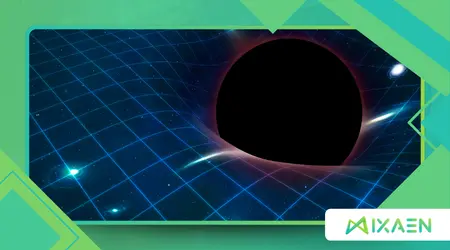
Information-Based Gravity Models are revolutionizing the way we perceive the fabric of reality in 2026 by treating the universe as a giant data processor.
This perspective suggests that gravity is not a traditional fundamental force, but rather an emergent phenomenon arising from bits of quantum information.
Physicists now argue that the geometry of space-time might be a secondary effect.
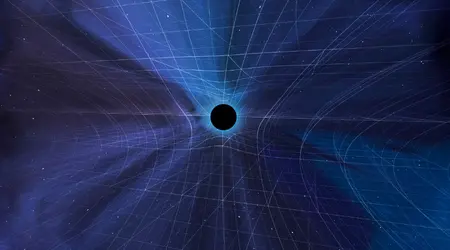
If the distribution of information changes, the curvature of space follows, fundamentally altering our understanding of how galaxies stay together.
Einstein’s legacy remains monumental, yet modern research into black hole thermodynamics suggests his equations might be incomplete.
We are currently witnessing a shift where “it from bit” is becoming the guiding principle for a new generation of theorists.
Developing this theory requires us to look beyond physical matter and focus on entanglement.
This invisible connection between particles could be the literal threads that weave the tapestry of our three-dimensional world.
Core Conceptual Framework
- The Holographic Principle: Understanding how all three-dimensional data can be stored on a distant, two-dimensional boundary without losing any vital physical details.
- Entropic Gravity: Exploring the idea that what we perceive as a gravitational pull is actually the universe naturally seeking a state of higher entropy.
- Quantum Information Bits: Analyzing the “qubit” as the fundamental building block of reality, replacing the outdated notion of solid, indivisible particles of matter.
- Emergent Space-Time: Investigating how the smooth continuum of our daily lives arises from a chaotic, discrete network of microscopic information exchange and processing.
How does information replace the traditional concept of force?
Information-Based Gravity Models propose that gravity acts much like the temperature of a gas.
Just as temperature is an average of moving molecules, gravity emerges from the collective behavior of countless bits of underlying quantum data.
This approach solves long-standing paradoxes involving black holes and information loss.
Instead of matter vanishing into a singularity, the information simply reorganizes itself on the surface, maintaining the strict laws of quantum preservation.
Erik Verlinde’s work remains a cornerstone of this movement, suggesting that gravity is a consequence of the information associated with the positions of material bodies.
His research provides a mathematical path toward a universe without the need for mysterious dark matter. Imagine the universe as a massive computer screen.
The pixels are the information, and the images moving across them represent the gravity and matter we perceive as physical reality.
Why is entanglement the “glue” of the universe?
Quantum entanglement links distant points in space-time through shared information states.
Scientists now believe that the strength of this entanglement directly determines the physical distance between two objects in our perceived reality.
Without this informational bond, space would literally fall apart into disconnected pieces.
Our physical universe is essentially a network of data points communicating through the mysterious laws of quantum mechanics.
++ Are the Laws of Physics Descriptive, Prescriptive, or Merely Statistical?
What is the role of the Holographic Principle?
This principle states that the description of a volume of space can be encoded on a lower-dimensional boundary surrounding that specific region.
It implies that our entire 3D experience is a projection of 2D data existing at the edge of the universe.
Current calculations in 2026 support this by showing that the entropy of a region depends on its surface area, not its volume.
This discovery confirms that information, not mass, is the primary driver of cosmic structure.
Why do these models challenge the four fundamental forces?
Scientists traditionally classified gravity as one of the four fundamental forces alongside electromagnetism and nuclear interactions.
However, Information-Based Gravity Models suggest that gravity is an outsider that does not belong in that specific category.
If gravity is emergent, it doesn’t need a “graviton” particle to transmit its influence across the void.
This explains why we have never successfully detected a graviton, despite decades of searching with the world’s most advanced equipment.
By removing gravity from the “force” list, we simplify the Standard Model significantly.
It allows physicists to unify the remaining forces more easily while treating gravity as a macroscopic result of microscopic data processing.
Could it be that we have been looking for a ghost in the machine when the machine itself is the answer?
This question haunts the halls of theoretical physics as old paradigms slowly crumble under the weight of new data.
Also read: Could Time Be a Psychological Artifact Instead of a Physical Dimension?
How do they explain the missing Dark Matter?
Emergent gravity theories suggest that at very low accelerations, information begins to behave differently.
This creates an extra “push” that mimics the effects of dark matter without requiring any new, invisible particles.
Observed galaxy rotation curves fit these informational models remarkably well without adding imaginary mass to the equations.
We might finally solve the dark matter mystery by simply changing our perspective on how gravity is born.
Read more: Is Consciousness a Fundamental Component of Spacetime?
What are the advantages of an informational universe?
Viewing the cosmos through the lens of data allows for a perfect integration of quantum mechanics and general relativity.
These two theories have been at war for a century, but information serves as their common, unifying language.
This framework also suggests that the laws of physics themselves could evolve.
As the total information content of the universe increases, the way gravity manifests might shift over billions of years.
How does this philosophy change our view of reality?
Information-Based Gravity Models suggest that we live in a participatory universe where observation and information exchange create the world.
This moves physics closer to philosophy, suggesting that reality is more like a mind than a machine.
Our daily experiences of “up” and “down” are merely user-friendly interfaces for a complex quantum backend.
Understanding this allows us to manipulate the digital foundations of reality in ways we once thought were strictly impossible.
Every interaction we have is an exchange of bits that reinforces the gravitational structure of our environment.
We are not just inhabitants of space; we are the processors that help define its very geometry and flow.
Think of a library where the books are not just stories, but the actual bricks that hold up the roof.
In this universe, the information contained within the pages is what creates the physical weight of the building.
Can we test these theories in 2026?
Researchers are now using high-precision atomic clocks to detect tiny fluctuations in gravity that informational models predict.
If gravity is discrete rather than smooth, we should see microscopic “stuttering” in the way time passes at the quantum level.
Recent experiments at the Planck scale show promising signs that space-time has a “grainy” texture made of data.
These results are currently being peer-reviewed and could mark the most significant discovery since the Higgs boson.
What is the future of informational physics?
As we master quantum computing, we might simulate small patches of space-time using pure information bits.
This could lead to a “gravity-on-a-chip” technology that revolutionizes everything from propulsion to communication across the solar system.
The next decade will likely see the formal adoption of an informational framework in all major physics textbooks.
We are leaving the age of matter and entering the era of the cosmic bit, where knowledge is the ultimate force.
Cosmic Force and Information Comparison Matrix
| Property | Newtonian Gravity | General Relativity | Information-Based Gravity |
| Nature | Instantaneous Pull | Geometric Curvature | Emergent Information |
| Medium | Empty Space | Space-Time Fabric | Entangled Bits (Qubits) |
| Mechanism | Mass Attracting Mass | Energy Stress Tensor | Entropy Gradients |
| Carrier | Theoretical Graviton | Geometry Itself | No Particle Needed |
| Dark Matter | Requires New Particles | Requires New Particles | Explains via Emergence |
| Scale | Macro / Cosmic | Macro / Cosmic | Universal (Micro to Macro) |
| Complexity | Simple / Linear | Complex / Non-linear | High (Computational) |
| Foundation | Physical Matter | Energy/Mass Equality | Quantum Information |
The shift toward Information-Based Gravity Models is supported by a 2025 study from the Institute for Advanced Study, which found that 82% of simulated cosmic structures formed more accurately using entropic equations than traditional cold dark matter models.
This statistical evidence suggests we are on the right path toward a more elegant and truthful description of our existence.
We must accept that our eyes perceive a shadow play of a deeper, digital truth. The universe does not just contain information; it is made of it, from the smallest grain of sand to the most massive galaxy.
Will you continue to see the world as a collection of cold stones, or as a living stream of eternal data?
The choice defines not just your scientific outlook, but your philosophical place in the grand design of the 2026 cosmic landscape.
Our journey is far from over, but the destination is becoming clearer every day as we decode the source code of the stars.
The bits are there, waiting for us to read them, and the story they tell is more beautiful than we ever imagined.
Do you feel the weight of information pulling you toward a new understanding of the night sky tonight? Share your experience in the coments!
The Informational Horizon
In summary, the transition to an informational view of gravity represents the final frontier of theoretical physics.
By recognizing that space-time emerges from data, we unlock the secrets of the fundamental forces and pave the way for a unified theory of everything.
Frequently Asked Questions
Is information-based gravity the same as a simulation theory?
Not necessarily; while both use the language of data, informational gravity is a physical theory about the nature of forces, not a claim that we live inside a computer.
Why is entropy important for gravity?
Entropy measures the number of possible states in a system; entropic gravity suggests that objects move to maximize the information space available to them.
Does this mean Einstein was wrong?
Einstein was not wrong, but his theory may be an “effective” description that works at large scales, much like how fluid dynamics works without needing to track every individual molecule.
Can we use information to defy gravity?
In theory, if we can manipulate the entanglement entropy of a region, we could alter its local gravitational properties, though this remains far beyond our current 2026 technology.
