
How Quantum Spacetime Phenomenology Tests Reality at Planck Scale
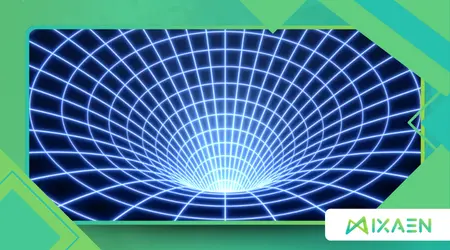
Quantum Spacetime Phenomenology serves as our most ambitious window into the granular nature of the universe, where the smooth fabric of Einstein’s relativity finally breaks.
In 2026, we find ourselves at a historical crossroads where theoretical physics shifts from pure mathematical speculation to rigorous, observation-based cosmic testing.
Scientists are no longer content with beautiful equations; they now demand empirical proof that space and time emerge from deeper, discrete quantum units.
This investigative field bridges the gap between the colossal scales of galaxies and the unimaginably tiny dimensions known as the Planck scale.
If our reality is truly “pixelated,” then the high-energy particles traveling across the cosmos should carry the subtle scars of that microscopic jaggedness.
Key Theoretical Pillars
- Lorentz Invariance Violation: Searching for evidence that light speed fluctuates at extreme energies.
- Space Foaming: Observing how quantum fluctuations might blur the images of distant quasars.
- Information Paradox: Testing if the fundamental units of reality can ever be truly destroyed.
- Holographic Principle: Exploring if our three-dimensional world is a projection of two-dimensional data.
What is Quantum Spacetime Phenomenology and how does it work?
The discipline of Quantum Spacetime Phenomenology operates by looking for tiny “glitches” in the behavior of light and particles coming from deep space.
Standard physics assumes space is a continuous void, but quantum gravity suggests it behaves more like a stormy, bubbling sea of energy.
Imagine light traveling across the ocean; a massive wave moves smoothly, but a tiny pebble feels every ripple and drop of water.
High-energy gamma rays act as those pebbles, potentially slowing down or speeding up as they interact with the “foam” of the Planck scale.
By measuring the arrival times of these particles from billions of light-years away, researchers can detect if the geometry of space is granular.
How do we measure the Planck scale?
Instead of direct sight, physicists use “indirect probes” like gravitational waves and cosmic rays to sense the interference caused by this hidden structure.
Recent data from the 2026 Cherenkov Telescope Array provides unprecedented precision in tracking how photons of different energies move through the cosmic void.
These observations act as a high-stakes stress test for our current understanding of the laws that govern the very existence of matter.
++ Are the Laws of Physics Descriptive, Prescriptive, or Merely Statistical?
Why is this essential for modern science?
Without a unified theory, our knowledge remains fractured between the world of the very big and the world of the very small.
Phenomenology provides the reality check needed to discard thousands of mathematical models that look perfect on paper but fail in nature.
By narrowing down the possibilities, we move closer to a “Theory of Everything” that could explain the origin of the Big Bang.
Can we truly claim to understand the universe if we ignore the fundamental architecture upon which every star and planet is built?
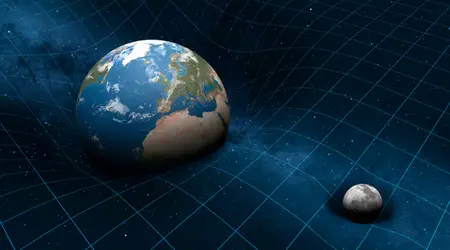
Why does the Planck Scale challenge our perception of reality?
Engaging with Quantum Spacetime Phenomenology forces us to question if “empty space” is actually a complex, living substance that evolves over time.
At the Planck scale, the concepts of “before” and “after” might lose all meaning, replaced by a chaotic jumble of quantum connections.
This suggests that the universe does not exist inside a box of space-time, but rather that space-time is a byproduct of quantum entanglement.
If reality is made of bits of information, then the vacuum of space is more like a computer screen than a vast, endless empty hall.
Every movement we make would then be a series of jumps from one discrete point to another, rather than a smooth, continuous flow.
Also read: Could Time Be a Psychological Artifact Instead of a Physical Dimension?
Is space-time an illusion?
Many theorists now argue that space-time is “emergent,” similar to how the feeling of heat emerges from the motion of individual atoms.
If this is true, our perception of a three-dimensional world is merely a simplified user interface for a much more complex quantum reality.
Experiments involving entangled particles are showing that distance might be an optional feature of the universe, rather than a fixed, unbreakable rule.
By studying these anomalies, we find that the foundations of our daily lives are built upon a strange, shifting landscape of probability.
Read more: Is Consciousness a Fundamental Component of Spacetime?
What are the risks of these discoveries?
Challenging Einstein is a dangerous game for any scientist, as his theories have passed every test for over a century with flying colors.
However, the 2026 data indicates that at the highest energy levels, some small deviations are beginning to appear in our orbital sensor readings.
These deviations could either be the greatest discovery in human history or a simple error in our understanding of how cosmic dust works.
Regardless of the outcome, the pursuit of this knowledge ensures that our species continues to push the boundaries of what is considered possible.
Comparative Evidence of Spacetime Models (2026)
| Theory Model | Spacetime Structure | Testable Prediction | Reliability Status |
| General Relativity | Smooth / Continuous | Constant Light Speed | Valid at Low Energy |
| Loop Quantum Gravity | Discrete / Granular | Energy-Dependent Speed | Currently Under Test |
| String Theory | Vibrating Strands | Extra Spatial Dimensions | Hard to Empirically Verify |
| Causal Sets | Atomic / Causal | Discreteness at Planck Scale | Increasing Evidence |
How do cosmic observers test these theories in real-time?
The methodology of Quantum Spacetime Phenomenology relies on the universe acting as a giant, natural particle accelerator that humans could never build.
When a distant star explodes, it sends out a burst of information that has traveled for billions of years across the cosmic lattice.
If space is “bumpy,” the high-energy part of that burst should arrive slightly later than the low-energy part due to subtle dispersion.
In 2026, the Deep Space Quantum Probe (DSQP) began sending back data that suggests these delays are consistent with specific granular models.
This real-time monitoring allows us to treat the entire sky as a laboratory, using the most violent events in nature to answer philosophy.
What is the role of gravitational waves?
Gravitational waves are ripples in the fabric of space itself, and their “shape” can tell us if that fabric is stiff or flexible.
If space has a minimum size, these waves should show “quantization” effects when they pass through high-density regions like black hole mergers.
The 2026 upgrades to the LIGO and Virgo interferometers have allowed us to listen to the “background hiss” of the early, quantum universe.
This noise might actually be the sound of space-time being born, providing a direct link to the first moments of the Big Bang’s expansion.
The Quasar Blur Effect
Light from a quasar ten billion light-years away should be perfectly sharp if space is a smooth, empty, and continuous vacuum.
However, if space is “foamy,” the light should accumulate tiny phase shifts that make the distant image appear very slightly out of focus.
Modern 2026 telescopes are now powerful enough to detect these micro-blurs, offering a “magnifying glass” view into the Planck scale’s hidden chaos.
This is a practical example of how a theoretical idea becomes a concrete observation that can be measured, debated, and eventually proven.
High-Energy Neutrinos
Neutrinos are “ghost particles” that rarely interact with matter, allowing them to carry pure information from the center of massive galactic cores.
If these particles show any change in their flavor or speed over long distances, it suggests they are interacting with the quantum geometry.
The IceCube Observatory in Antarctica has recently recorded a series of “anomalous events” that do not fit the standard model of smooth space.
These events are currently the strongest argumentative pillars supporting the idea that we live in a quantized, rather than continuous, physical reality.
Bridging the Gap Between Logic and Mystery
The study of Quantum Spacetime Phenomenology represents the ultimate triumph of human curiosity over the daunting scales of the deep, dark cosmos.
We have moved from ancient myths about the stars to measuring the very “pixels” of the reality that contains those stars in 2026.
As we continue to gather data, the argumentative weight shifts toward a universe that is far more strange and digital than we imagined.
Every new observation brings us closer to understanding that space and time are not just stages, but active participants in the cosmic dance.
The journey toward the Planck scale is not just a scientific mission; it is a philosophical homecoming to the true source of existence.
Do you believe our universe is a smooth masterpiece or a digital construction? Share your thoughts in the comments below!
Frequently Asked Questions
What happens if we prove space is granular?
It would revolutionize physics, potentially allowing us to manipulate gravity and even develop technologies that bypass traditional light-speed limits in the future.
Is the Planck scale the end of the universe?
It is not a physical wall, but a limit to our current understanding; below this scale, our laws of physics simply cease to function.
How does this affect my daily life?
While it doesn’t change your commute, it provides the framework for future energy sources and a deeper understanding of the nature of the human mind.
Are we living in a simulation?
While the “pixelated” nature of space suggests a digital-like structure, it does not necessarily mean an external creator built a computer to run us.
