
Is There Such a Thing as a “Wrong” Universe
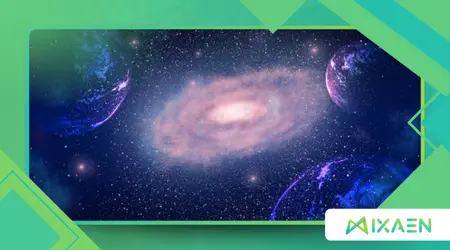
Is There Such a Thing as a “Wrong” Universe is a question that forces us to look beyond the telescope and into the very fabric of logic.
Cosmologists in 2026 are increasingly debating whether our specific physical laws are inevitable or merely a lucky roll of the cosmic dice.
If the strength of gravity shifted by even a fraction, stars would never ignite, leaving the cosmos in eternal, cold darkness.
We must ask ourselves if a universe that fails to produce life or complexity is inherently “wrong” or just a different mathematical possibility.
Essential Points of Exploration
- The Fine-Tuning Problem: Why our physical constants seem perfectly calibrated for existence.
- The Multiverse Hypothesis: How infinite variations might lead to “failed” or sterile cosmic structures.
- Mathematical Realism: The theory that every mathematical structure exists as a physical reality.
What defines the “Right” conditions for a cosmos?
Modern physics suggests that our universe rests on a razor’s edge of specific numbers known as fundamental constants.
If the electromagnetic force were slightly stronger, atoms would fly apart, preventing the formation of solid matter and living cells.
Scientists refer to this as the “Goldilocks Enigma,” where the settings are just right for complexity to emerge.
We perceive our world as “right” because we are here to observe it, creating a deep philosophical bias in our analysis.
Is carbon-based life the only metric?
Most researchers focus on life as the ultimate goal, but a “wrong” universe might simply be one that lacks structural stability.
A cosmos that collapses back into a singularity milliseconds after its birth serves no function in the grand tapestry of time.
We often ignore the possibility of “non-living” complexity, such as intricate crystalline structures that could exist in universes with different laws.
Could a high-gravity world with no biology still be considered “right” in a purely mathematical sense?
++ Could the Universe Be Defined Without Reference to Observers?
Why does fine-tuning suggest a “Wrong” alternative?
The concept of Is There Such a Thing as a “Wrong” Universe stems from the staggering statistical improbability of our own existence.
Sir Martin Rees famously identified six numbers that define the universe, noting that any slight change would lead to chaos.
Think of the universe as a complex radio; if you turn the dial just one millimeter away from the station, you get nothing but static.
This “static” represents the trillions of potential universes that are too simple or too violent to ever develop.
How does the Multiverse explain cosmic failures?
The Multiverse theory posits that our Big Bang was not a unique event but one of many in a vast, bubbling sea. In this view, most “bubbles” result in a Is There Such a Thing as a “Wrong” Universe where the vacuum energy is too high.
These failed universes expand so rapidly that atoms can never meet, creating a lonely void of disconnected particles. Our presence in a functional universe is not a miracle, but a statistical necessity within an infinite sea of errors.
Also read: Could Time Be a Psychological Artifact Instead of a Physical Dimension?
What is the role of Entropy?
Entropy measures the disorder within a system, and a “wrong” universe often hits maximum entropy far too quickly.
Without a low-entropy starting point, a cosmos cannot store energy or build the information systems required for planetary evolution.
Imagine a library where all the books are filled with random letters; the library exists, but it contains no meaning or accessible knowledge.
This analogy describes a universe that has the matter but lacks the structural organization to create a history.
Read more: Is Consciousness a Fundamental Component of Spacetime?
Can a universe be “Wrong” ethically?
Some philosophers argue that a Is There Such a Thing as a “Wrong” Universe is one that contains only suffering or lacks any observers.
If a cosmos exists but no one is there to witness it, does its existence carry any inherent value?
This leads to the “Quantum Suicide” thought experiment, suggesting that consciousness might be the bridge that validates a universe.
Without a mind to perceive the stars, the universe remains a sterile mathematical equation with no one to solve it.
Why are sterile universes statistically more likely?
Calculations involving the Cosmological Constant suggest that the vast majority of potential universes should have collapsed or dissipated instantly.
In our current 2026 models, the probability of a life-bearing universe is less than one inpower.
This statistic forces us to confront the reality that we inhabit a massive anomaly in the cosmic record.
The “wrong” versions of reality are not exceptions; they are likely the overwhelming rule of the grand multiverse.
Comparison of Universal Constants
| Constant Type | Current Setting | Effect of “Wrong” Setting | Result for Complexity |
| Strong Nuclear Force | 0.007 | Slightly higher or lower | No hydrogen or no heavy elements |
| Gravity (G) | $6.67 \times 10^{-11}$ | Significant increase | Universe collapses before stars form |
| Cosmological Constant | Extremely Low | Significant increase | Matter is ripped apart instantly |
| Electromagnetic Force | 1/137 | Increase in strength | Chemical bonds become impossible |
What happens when gravity wins too early?
In a “Big Crunch” scenario, the force of gravity is so dominant that the expansion of space is halted immediately.
These universes are hot, dense, and incredibly brief, lasting only long enough to flicker into existence before returning to dust.
Such a Is There Such a Thing as a “Wrong” Universe acts as a cosmic flashbulb, brilliant but ultimately incapable of sustaining a narrative.
They represent the “stillborn” attempts of nature to create a stable home for matter and light.
Is the “Wrong” universe just a matter of perspective?
We must ask: Does the universe owe us anything, or are we just projecting our needs onto physics? A universe that consists entirely of black holes might be “wrong” for us, but it is a perfect expression of gravity.
Could it be that every Is There Such a Thing as a “Wrong” Universe is actually a masterpiece of different laws? Perhaps the “wrongness” is simply our inability to imagine a form of existence that doesn’t look exactly like our own.
The Final Cosmic Verdict
The debate over Is There Such a Thing as a “Wrong” Universe reveals our deep desire for cosmic purpose and stability.
We have explored how fine-tuning, entropy, and the multiverse define the boundaries between a functional home and a cosmic error.
Physics shows us that while the “right” conditions are rare, they are the only ones capable of producing the minds that ask these questions.
Ultimately, a universe is only “wrong” if we assume its purpose is to host life. If we view the cosmos as a neutral playground of mathematics, every variation is a valid outcome of the laws of nature.
We should cherish our “right” universe, for it is a rare harbor in an infinite ocean of silent, sterile possibilities.
Do you believe our universe was designed for us, or are we just lucky survivors in a sea of failed realities? Share your thoughts in the comments below!
Frequently Asked Questions
What is the Anthropic Principle?
It is the idea that our observations of the universe must be compatible with the conscious life that observes it. We see a “right” universe because we wouldn’t be here to see a “wrong” one.
Can we detect other “Wrong” universes?
Current technology in 2026 looks for “bruises” in the Cosmic Microwave Background radiation caused by colliding bubble universes. These signatures could prove that other, potentially failed, realities exist just beyond our horizon.
Is there a mathematical “error” in physics?
Not necessarily. A “wrong” universe still follows rules; it just follows rules that lead to sterility or collapse rather than the vibrant, star-filled sky we see tonight.
How does the 2026 data change our view?
New high-precision measurements of dark energy suggest that our universe might be more stable than previously thought. This reduces the fear of our own universe turning “wrong” through a sudden vacuum decay event.
