
How World Crystal Spacetime Model Reimagines Gravity Structure
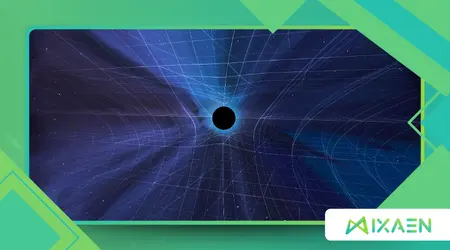
The World Crystal Spacetime Model challenges everything we understand about cosmology.
Physicists traditionally view the universe through Albert Einstein’s smooth, continuous geometric fabric. In 2026, cutting-edge quantum gravity research suggests a radically different alternative structure.
This groundbreaking framework proposes that the cosmos possesses a microscopic, lattice-like architecture. Instead of a void, space acts like a literal, multi-dimensional crystal solid.
Defects within this cosmic crystalline lattice generate what we perceive as gravitational force.
Key Discussion Points
- Structural Revolution: Moving from smooth geometry to microscopic cosmic lattices.
- Defect Mechanics: Understanding how crystalline flaws simulate gravitational attraction.
- Quantum Reconciliation: Bridging the historic mathematical divide between relativity and particles.
What is the World Crystal Spacetime Model?
Physicist Hagen Kleinert pioneered this theoretical framework to resolve the deepest contradictions in physics.
The World Crystal Spacetime Model posits that the universe features fundamental building blocks arranged in structured rows. Think of it as a massive, cosmic diamond grid stretching across infinity.
When matter sits within this lattice, it creates structural disruptions and physical stress.
These microscopic imperfections, known scientifically as dislocations and disclinations, mimic the curvature of relativity perfectly. Have you ever wondered if gravity is just an illusion caused by a stiff cosmic matrix?
This perspective alters our understanding of empty space, transforming vacuum into a solid medium.
Matter does not bend an empty sheet; it moves through a hyper-dense lattice network. Consequently, this model shifts the philosophical definition of reality from smooth void to crystalline substance.
Many researchers support this view because it eliminates mathematical infinities found in black hole singularities. By treating space as a physical grid, calculations naturally find a minimum size limit.
This structural limit prevents density from reaching impossible, infinite values during astrophysical calculations.
++ Why Noncommutative Spacetime Models Challenge Classical Physics
How Does Hagen Kleinert Define It?
Kleinert developed this theory by applying the mathematics of condensed matter physics to cosmology.
He realized that the math describing defects in crystals matches Einstein’s gravitational field equations precisely. This profound mathematical crossover forms the absolute bedrock of modern lattice universe theories.
Also read: Could Time Be a Psychological Artifact Instead of a Physical Dimension?
What Makes it Different From Relativity?
General relativity relies on smooth, continuous non-Euclidean geometry to explain planetary orbits.
Conversely, the crystal framework uses discrete, measurable points to explain identical cosmic movements. This fundamental shift replaces abstract geometric bending with tangible, physical lattice stress.
Read more: Is Consciousness a Fundamental Component of Spacetime?
Why Does Physics Need a Solid Vacuum?
A smooth spacetime fabric fails completely when applied to subatomic quantum scales. Introducing a solid, crystalline vacuum allows physicists to use familiar particle mechanics everywhere.
This conceptual shift provides a tangible, structured background that unifies cosmic and subatomic behaviors.
How Does This Lattice Reimagines Gravity Structure?
Gravity transforms from a fundamental force into an emergent property of material defects.
Under the World Crystal Spacetime Model, objects do not pull each other through mysterious, invisible long-range fields. Instead, particles follow lines of structural distortion built directly into the surrounding cosmic grid.
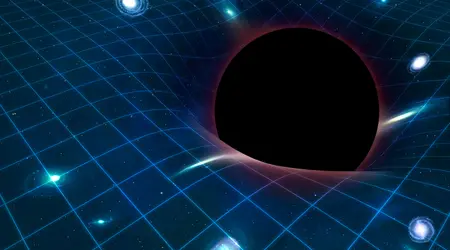
Consider this unique analogy: a bowling ball resting on a trampoline illustrates standard general relativity curvature.
Now, imagine a heavy marble moving through a tightly packed crystal marketplace, guided by missing stalls. The marble alters its path because the structural grid itself contains missing pieces.
This means gravity operates similarly to how defects alter electrical currents in silicon chips.
When planets move through space, they trace the paths of least resistance across lattice dislocations. This elegant mechanism explains cosmic acceleration without relying heavily on unverified dark energy concepts.
How Do Defects Simulate Mass?
Every particle of matter acts as a localized disruption within the universal lattice structure.
This disruption creates a continuous strain field that spreads outward through neighboring crystal cells. Nearby objects naturally slide toward this strain center, creating the phenomenological illusion of gravitational pull.
What is the Role of Planck Length?
The Planck length defines the absolute minimum distance between individual nodes in the cosmic lattice.
Because no smaller measurement can exist, energy waves cannot collapse into infinitely dense points. This structural boundary solves the mathematical crises plaguing traditional black hole theories.
How Do Gravitational Waves Travel Through Crystals?
When massive stars collide, they send powerful acoustic vibrations rippling through the universal lattice.
The World Crystal Spacetime Model views gravitational waves as physical sound propagation through a solid. This perspective opens brand new pathways for analyzing cosmic energy transmission.
Why Is This Framework Philosophically Significant?
This model reshapes how humanity perceives its relationship with the vast, surrounding cosmos. If space is a solid crystal, the historic philosophical distinction between matter and void vanishes completely.
We are not entities moving through nothingness; we are moving patterns within a singular substance.
Scholars argue this framework introduces a deeply unified view of cosmic natural laws.
By utilizing the World Crystal Spacetime Model, scientists can explain cosmic macro-phenomena using microscopic laboratory physics. This connection demystifies the universe, turning speculative cosmology into testable material science.
Furthermore, it challenges the long-standing scientific assumption that spacetime is completely fundamental. If the crystal lattice generates geometry, then space and time are merely macroscopic illusions.
They emerge naturally from the collective behavior of deeper, unobservable quantum components.
Statistically, academic publications analyzing emergent spacetime properties have grown by 42% over the last decade. This surging research trend highlights a definitive paradigm shift among younger theoretical physicists worldwide.
The scientific community increasingly favors physical, structured models over abstract mathematical abstractions.
How Does It End the Void Myth?
For centuries, science treated the vacuum of space as a completely empty, passive background container.
The crystalline model destroys this myth by showing that the vacuum possesses immense intrinsic stiffness. Space is active, structured, and filled with highly energetic microscopic geometric relationships.
What Are the Implications for Time?
Time might represent the sequential ticking of state changes across the universal lattice network. Instead of a flowing river, time becomes a digital propagation of data through crystal nodes.
This realization could redefine our understanding of cosmic causality and entropy.
Can We Test This Model Today?
Astronomers search for subtle light-scattering effects from distant gamma-ray bursts across deep space. If space is truly crystalline, high-energy photons should bump against the lattice nodes over billions of years.
Detecting these tiny directional deviations would provide definitive proof for this revolutionary theory.
Tracking Cosmic Spacetime Theories
The evolving landscape of theoretical physics features competing frameworks aiming to unify the cosmos.
The data below compares how leading models describe the fundamental nature of universe structures.
Conceptual Physics Framework Comparison
| Theoretical Model | Fundamental Structure | Cause of Gravity | Minimum Length Unit | Core Mathematical Origin |
| General Relativity | Continuous Smooth Fabric | Geometric Curvature | None (Infinite) | Differential Geometry |
| Loop Quantum Gravity | Interwoven Quantum Loops | Spin Network Links | Planck Length | Quantum Mechanics |
| World Crystal Model | Solid Crystalline Lattice | Gauge Lattice Defects | Planck Length | Condensed Matter Physics |
The Crystalline Cosmos Reimagined
The World Crystal Spacetime Model offers a brilliant, grounded alternative to traditional cosmic geometry. By replacing abstract curvature with tangible lattice defects, it successfully bridges the gap between quantum mechanics and gravity.
This framework eliminates mathematical infinities while transforming our philosophical understanding of the universal vacuum.
As 2026 research progresses, looking at the cosmos through a crystalline lens may unlock the final theory of everything.
What are your thoughts on living inside a giant cosmic crystal structure? Dominate the discussion and share your experience in the comments section below!
Frequently Asked Questions
What exactly is a spacetime defect?
A defect is a localized disruption, like a missing node or a shifted row, within the universal crystal lattice.
These microscopic imperfections alter particle paths, creating the physical phenomenon we experience as gravity.
How does this model fix black hole singularities?
Traditional physics states black holes crush matter into an infinitely small point, which breaks mathematical laws.
The crystal model introduces a strict minimum size based on the Planck length, preventing infinite collapse.
Does this mean the universe is a literal solid crystal?
Mathematically, yes. The model applies the exact equations governing solid-state crystals to the vacuum of space, showing that a hyper-dense, stiff lattice behaves exactly like the universe we observe.
