
How Trojan Asteroid Missions Unlock Early Solar System Clues
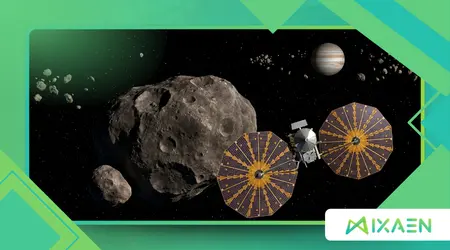
Trojan Asteroid Missions are rewriting the history books of our solar system as we speak, providing a direct link to the chaotic era of planetary formation.
These voyages represent a technological triumph, allowing us to visit “fossils” that have remained trapped in Jupiter’s gravitational dance for billions of years.
Scientists now view these distant rocks not just as debris, but as a biological and chemical blueprint for the ingredients that eventually formed Earth.
By venturing millions of miles into the outer solar system, we are finally gathering the missing data needed to solve our cosmic origin story.
Deep Space Discovery Roadmap
- Lagrangian Points: Understanding the unique gravitational pockets that keep these ancient asteroids locked in stable orbits around the sun.
- The Lucy Odyssey: A detailed look at the primary NASA mission currently navigating through diverse asteroid populations in the 2020s.
- Chemical Signatures: Exploring how the organic compounds found on Trojans could explain the presence of water and life on Earth.
- Planetary Migration: How these missions confirm the “Nice Model” theory regarding the movement of gas giants in the early system.
Why are these celestial bodies considered time capsules?
Exploring Trojan Asteroid Missions reveals that these objects are fundamentally different from the rocky bodies found in the closer, more familiar Main Asteroid Belt.
Because they reside at the cold distance of Jupiter, they have preserved volatile materials and ices that would have evaporated closer to the Sun.
These asteroids are the celestial equivalent of an unopened letter from four billion years ago, waiting for a robotic “reader” to break the seal.
They offer us a pristine sample of the primitive nebula from which the sun and all the planets originally condensed.
What secrets do their surfaces hold?
High-resolution imagery from ongoing missions suggests that Trojan surfaces are rich in dark, carbon-based compounds that might be precursors to the building blocks of life.
These substances provide a physical record of the environment that existed before the giant planets settled into their current, stable orbits.
By studying the craters and composition of these rocks, astronomers can determine exactly how much radiation and heat they have endured over eons.
This data is crucial for creating accurate simulations of how our neighborhood looked during its first few million years of chaotic existence.
++ How Space Probes Explore Places Humans Cannot Reach
How does the gravitational trap work?
Jupiter’s massive gravity works in tandem with the Sun to create five stable points known as Lagrangian points, where small objects remain indefinitely.
The Trojans occupy the L4 and L5 points, leading and following Jupiter in its orbit like a loyal guard of ancient cosmic debris.
This gravitational balance acts as a natural museum, preventing these asteroids from colliding with planets or being ejected into the void of interstellar space.
Consequently, we have a concentrated, accessible collection of diverse solar system history sitting in two very specific, predictable locations in deep space.
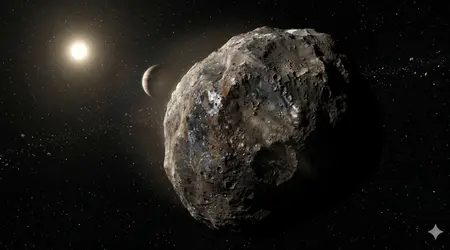
How do these missions redefine our planetary theories?
Current Trojan Asteroid Missions provide the physical evidence required to support the theory of planetary migration, which suggests that gas giants moved significantly over time.
This movement acted like a cosmic snowplow, pushing smaller objects from across the solar system into the gravitational pockets near Jupiter.
If these asteroids show diverse origins, it proves that the early solar system was a violent, shifting place rather than a static one.
Understanding this “grand tack” or “migration” is essential for predicting the stability and formation of exoplanets in other star systems.
Also read: How Space Exploration Has Transformed Everyday Technology
Why is diversity the key to discovery?
One of the most shocking findings from recent flybys is the incredible variety in color, density, and size among the Trojan asteroid groups.
Some appear reddish and icy like Kuiper Belt objects, while others look more like the grey, rocky bodies found near Mars.
This diversity suggests that the L4 and L5 points are “melting pots” that collected material from every corner of the young solar system.
Analyzing this mixture allows researchers to map out where different types of matter originated before the planets reached their final positions.
Read more: Project Orion and the Bomb-Powered Spaceship That Almost Was
What is the significance of the Lucy mission?
NASA’s Lucy mission is a masterpiece of trajectory design, visiting more independent targets than any other mission in history during its twelve-year journey.
As of 2026, the spacecraft is performing complex maneuvers to ensure it reaches its next primary Trojan target with surgical precision.
This mission is a practical example of high-efficiency space travel, using gravity assists to visit multiple “fossils” with a single launch.
Every image sent back is a new piece of a puzzle that has remained unsolved since the dawn of modern astronomy.
Why does the public care about such distant rocks?
It is easy to wonder why we spend billions on Trojan Asteroid Missions when there are so many challenges on our own home planet.
The answer lies in our fundamental curiosity: can we ever truly understand where we are going if we do not know where we came from?
These missions also test the long-range communication and autonomous navigation systems that will eventually take humans to Mars and beyond.
By solving the problems of deep-space travel now, we pave the way for a future where humanity is no longer confined to a single world.
How do missions impact future mining?
While the primary goal is scientific, the data gathered about asteroid composition is invaluable for the nascent space mining industry of the late 2020s.
Knowing the exact ratio of water-ice to rare metals helps private companies determine the economic viability of future resource extraction in deep space.
If we find that Trojans are rich in water, they could serve as “refueling stations” for missions headed to the outer moons of Saturn and Uranus.
This turning point would transform deep space from a barren desert into a network of resource-rich nodes for human exploration.
What is the “Trojan” analogy for life?
Think of the early solar system as a chaotic construction site where most of the leftover bricks were thrown away or buried deep underground.
The Trojan Asteroid Missions are the equivalent of finding a forgotten storage shed on that site, filled with the original blueprints and materials.
Without these missions, we are merely guessing about the temperature and pressure conditions that allowed life to take root on our blue marble.
Are we prepared to ignore the only remaining physical evidence of our own biological ancestry just because it is far away?
Space Mission Comparison: Historical vs. Modern
| Mission Name | Target Region | Launch Year | Primary Objective | Key Discovery (Real) |
| Pioneer 10 | Outer Planets | 1972 | First Asteroid Belt Crossing | Radiation environment data |
| Galileo | Jupiter / Gaspra | 1989 | First Asteroid Flyby | Discovered asteroid moon Dactyl |
| Lucy (NASA) | Jupiter Trojans | 2021 | Multi-target Survey | First Trojan “Dinkinesh” flyby |
| Destiny+ (JAXA) | Phaethon / Dust | 2025 | Cosmic Dust Analysis | Ongoing (Interplanetary dust) |
| Psyche | Metal Asteroid | 2023 | Core formation study | High-metal content mapping |
The Ultimate Cosmic Archive
In conclusion, Trojan Asteroid Missions serve as our most effective tool for peering back through the mists of time to the birth of our sun.
We have explored how these gravitational traps preserved the chemical seeds of our world and how robotic explorers like Lucy are finally unlocking their secrets.
These missions are more than just technical feats; they are a testament to human ingenuity and our relentless desire to understand the universe.
By mapping the diversity and composition of these ancient rocks, we gain the clarity needed to refine our theories of planetary evolution and the origin of water.
The data we gather today will inform the space travelers of tomorrow, ensuring that our journey into the stars is built on a foundation of scientific truth.
Would you rather see a mission that returns a sample of a Trojan asteroid to Earth, or one that establishes a permanent robotic base on its surface? Share your experience in the comments below!
Frequent Questions
Why are they called “Trojan” asteroids?
They are named after figures from the Trojan War in Greek mythology.
By convention, the asteroids in the L4 point are named after Greek heroes, while those in the L5 point are named after the heroes of Troy, creating two distinct “camps.”
Is there a risk of these missions crashing into the asteroids?
Space is incredibly vast, and missions are planned with extreme mathematical precision to ensure flybys occur at safe distances.
Engineers use autonomous optical navigation to make micro-adjustments, ensuring the spacecraft stays on its intended path without manual intervention.
How does a spacecraft like Lucy get enough power so far from the Sun?
Lucy uses massive, circular solar arrays that are nearly 24 feet in diameter each.
Even at the distance of Jupiter, where sunlight is very weak, these specialized panels are efficient enough to power all the scientific instruments and communication systems.
What is the “Nice Model” mentioned in the text?
The Nice Model is a scenario for the dynamical evolution of the solar system, proposing that the giant planets migrated from an initial compact configuration.
The presence and orbits of the Trojans are some of the strongest pieces of evidence supporting this specific theory.
Can we see Trojan asteroids with a backyard telescope?
Most Trojans are too small and distant to be seen with standard consumer equipment, as they are often very dark (low albedo).
Professional observatories and space-based telescopes are required to track them and study their faint light signatures in detail.
