
Why Cislunar Infrastructure Projects Are Expanding Rapidly Today
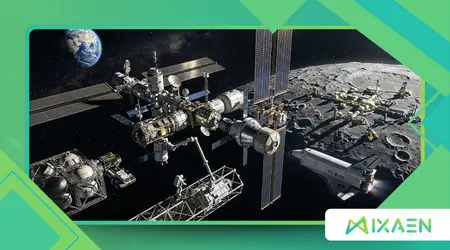
Cislunar Infrastructure Projects are expanding rapidly today because the space between Earth and the Moon is no longer a distant frontier, but a bustling economic zone.
Governments and private aerospace enterprises are investing billions of dollars to build the foundational systems required for long-term lunar habitation, resource extraction, and deep-space transit operations.
This modern space race is not about planting flags, but about staying permanently. Driven by recent technical breakthroughs and international resource competition, building in the cislunar domain ensures sustainable access to critical space assets.
Inside This Article
- The Drivers of Growth: Economic, strategic, and technical forces shaping the cislunar economy.
- Core Architectural Pillars: Communication, navigation, and fueling networks near the Moon.
- Geopolitical Realities: How international frameworks and competing coalitions impact lunar development.
- Practical Implications: Future trends, economic data, and key takeaways for global industries.
Why Is the Rush to the Lunar Orbit Happening Now?
The fundamental driver behind this sudden expansion is the shift from temporary exploration to permanent infrastructure development.
For decades, deep space missions relied on direct support from Earth, which limited their scope, duration, and financial viability.
Today, public-private partnerships have reduced launch costs significantly, making it feasible to position permanent hardware in lunar orbit to support surface operations.
Have you ever wondered why global superpowers are simultaneously targeting the exact same regions of the southern lunar pole?
The answer lies in the scarcity of vital resources, particularly water ice hidden within permanently shadowed craters.
By securing orbital positions now, nations establish the logistical pipelines necessary to harvest these resources, which will eventually provide life support and rocket fuel.
Imagine trying to explore a vast, uncharted continent without first building ports, roads, or supply depots along the coast.
Cislunar Infrastructure Projects act as those essential maritime ports, offering refueling stations and communication links that make the hostile environment survivable.
Without these orbital stepping stones, sustained human presence on the surface remains logistically impossible and financially ruinous.
Commercial space companies are also driving this expansion as they transition from government contractors to independent service providers.
These firms view the cislunar highway as a prime real estate market for satellite servicing, space tourism, and manufacturing. By
investing in scalable orbital architecture today, they are securing early market dominance in an emerging multi-trillion-dollar extraterrestrial economy.
++ Why Artemis II Mission Signals a New Era of Lunar Exploration
Economic Viability of Space Operations
The financial landscape of space exploration has transformed because reusable rocket technology has drastically lowered the price per kilogram to orbit.
Lower launch barriers allow private enterprises to calculate a realistic return on investment for long-term lunar manufacturing and communications infrastructure.
Consequently, venture capital is flowing into aerospace startups focused entirely on logistics, power generation, and orbital transport tugs.
Also read: The Role of Indigenous Knowledge in Modern Astronomical Research
Strategic Space Superposition
Securing stable gravitational positions, such as the Earth-Moon Lagrange points, offers unprecedented strategic and scientific advantages for monitoring space traffic.
These specific orbital locations require minimal fuel for station-keeping, making them ideal hubs for holding heavy equipment, fuel reserves, and deep-space telescopes.
Nations that control these positions effectively control the logistical gateways to the rest of the solar system.
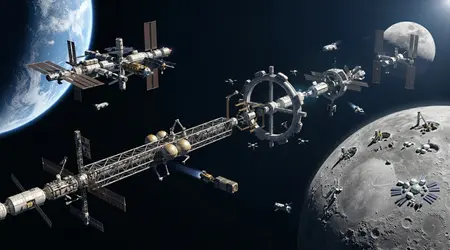
What Technologies Define Cislunar Infrastructure Projects?
Modern lunar infrastructure requires an interconnected web of autonomous technologies designed to operate without constant intervention from flight controllers on Earth.
Communication and navigation networks are the first critical components currently being deployed in lunar orbit to replace weak direct-to-Earth signals.
These systems ensure that hardware on the far side of the Moon can transmit high-bandwidth data seamlessly.
Another foundational element is the creation of orbital propellant depots that store fuel refined both on Earth and eventually from lunar ice.
Rocket engines require immense energy to break free from Earth’s gravity, consuming most of their fuel just reaching low orbit.
Refueling at a cislunar station allows spacecraft to journey to Mars with fully loaded tanks, fundamentally changing deep-space logistics.
Read more: China’s Silent Space Rise: What the World Should Pay Attention To
Autonomous Orbital Navigation
Operating safely near the Moon requires decentralized navigation networks that function independently of Earth-based tracking systems.
Advanced small-satellite constellations are entering lunar orbit to provide precise positioning, navigation, and timing services to surface rovers and descending landers.
This autonomous framework eliminates signal latency, reducing the risk of catastrophic failures during complex landing maneuvers in rugged terrain.
Automated Power Distribution Networks
Surviving the brutal fourteen-day lunar night requires innovative power generation systems placed in strategic, permanently sunlit orbital paths.
Constellations of solar-beaming satellites are being designed to redirect energy via lasers directly to assets working in dark surface craters.
This orbital power grid eliminates the need for heavy, short-lived chemical batteries on surface exploration vehicles.
How Do Global Partnerships Shape This New Frontier?
The deployment of Cislunar Infrastructure Projects relies heavily on international coalitions that share the immense financial and technological burdens of deep-space development.
The US-led Artemis Accords and the competing International Lunar Research Station coalition represent two distinct visions for governance and operational standards.
These frameworks dictate how participating nations share data, protect historic sites, and manage resource extraction rights.
| Project Initiative | Primary Operators | Core Architectural Focus | Operational Timeline |
| Artemis Gateway | NASA, ESA, JAXA | Human habitation and Mars transit hub | 2026–2028 Deployment |
| Lunar Pathfinder | ESA, Commercial Partners | High-bandwidth commercial data relay | 2026 Initial Testing |
| ILRS Network | CNSA, Roscosmos | Robotic surface and orbital integration | 2026–2030 Phase One |
| MoonLight Grid | European Space Agency | Dedicated navigation and communication | 2027 constellation |
This institutional division highlights the competitive geopolitical environment, where establishing infrastructure equates to setting the legal and operational precedents for future generations.
As a result, the expansion of orbital hardware has accelerated as each bloc races to establish its network first.
The infrastructure built today will form the legal foundation for space commerce and resource management tomorrow.
Public-Private Risk Mitigation
Governments are shifting from building every component themselves to buying specialized services from agile commercial aerospace vendors.
This approach accelerates development timelines by leveraging private capital and innovative engineering practices while reducing taxpayer financial exposure.
Space agencies can focus on high-risk scientific objectives while relying on commercial fleets for routine cargo transport and communication.
Standardizing International Interfaces
For diverse global hardware to dock, communicate, and share power in deep space, strict international technical standards must be universally adopted.
Collaborative engineering panels work continuously to ensure that a Japanese habitation module can connect flawlessly with an American propulsion system.
These universal docking and data protocols prevent fragmentation, ensuring the safety of international crews during unforeseen emergencies.
Why Is Sustainable Logistics Vital for Long-Term Success?
The long-term viability of Cislunar Infrastructure Projects depends entirely on shifting away from disposable architecture toward reusable, serviceable orbital assets.
Historic space missions discarded rocket stages and landing modules after a single use, an unsustainable practice for large-scale economic development.
Modern infrastructure focuses on modular designs that can be upgraded, repaired, and refueled directly in space by robotic service vehicles.
According to data tracked by the Space Foundation in their recent economic index reports, commercial investments in orbital logistics infrastructure grew by over 22% year-over-year.
This statistical surge reflects a broader realization that the true profits in space lie within the support supply chains.
Companies providing the basic necessities, like data relays and orbital towing, are building the most resilient business models.
Orbital Maintenance Systems
Robotic mechanics equipped with advanced machine vision are being developed to extend the operational lifespan of expensive cislunar satellites.
These service tugs can intercept aging hardware, replace degraded solar arrays, and replenish empty fuel tanks without human intervention.
This capability protects billions of dollars in orbital assets and drastically reduces the accumulation of dangerous space debris.
In-Situ Resource Integration
The ultimate goal of cislunar logistics is integrating materials harvested directly from the celestial bodies themselves into the production pipeline.
Processing lunar regolith into building materials or radiation shielding reduces the reliance on heavy payloads lifted out of Earth’s deep gravity well.
This transition marks the birth of a self-sustaining extraterrestrial economy independent of constant terrestrial resupply.
How Will This Infrastructure Transform Scientific Discovery?
Beyond the clear economic and strategic benefits, expanding orbital networks provides scientists with an unprecedented platform for deep-space observation.
The far side of the Moon is permanently shielded from the massive amounts of electromagnetic noise generated by human civilization on Earth.
By placing vast radio telescope arrays in stable cislunar positions, astronomers can peer into the cosmic dark ages without atmospheric interference.
Furthermore, these orbital stations serve as perfect testing environments for long-duration life support systems and advanced radiation shielding materials.
The deep-space environment poses severe health risks to human crews, including intense cosmic rays and unpredictable solar particle events.
Testing defensive technologies in the cislunar zone keeps astronauts relatively close to Earth if emergency medical evacuation becomes necessary.
Unfiltered Cosmic Observation
Orbital observatories positioned near the Lagrange points capture high-resolution data across the electromagnetic spectrum without distortion from Earth’s thick atmosphere.
These instruments allow astrophysicists to analyze the chemical compositions of distant exoplanets and detect subtle gravitational waves with extreme precision.
The infrastructure supporting these telescopes ensures they can operate continuously for decades through automated servicing missions.
Low-Gravity Manufacturing Laboratories
The unique microgravity environment of orbital stations enables the creation of pristine industrial materials that are impossible to manufacture on Earth.
Perfect fiber-optic cables, complex biological tissues, and ultra-pure metal alloys can be grown without gravitational defects disrupting their internal structures.
These high-value products can be transported back to Earth, justifying the initial cost of building specialized orbital factories.
Summary of Main Points and Next Steps
The unprecedented expansion of Cislunar Infrastructure Projects marks a profound turning point in human history as we build a permanent economic bridge into the cosmos.
By establishing robust communication networks, orbital fuel depots, and international technical standards, humanity is creating a predictable, repeatable pipeline to deep space.
This collaborative effort transforms space exploration from a series of brief, risky scientific expeditions into a sustained, thriving industry.
As these orbital networks become fully operational over the next few years, they will unlock revolutionary scientific discoveries and new economic paradigms.
The foundations laid down in the cislunar domain today will dictate the trajectory of human expansion across the solar system for the next century.
What aspect of this burgeoning lunar economy do you think will impact life on Earth the fastest? Share your perspective in the comments section below to join the global conversation.
Frequently Asked Questions
What exactly constitutes cislunar space?
Cislunar space refers to the entire spherical volume of space extending from low Earth orbit out past the Moon’s orbit.
This includes the complex gravitational zones known as Lagrange points, where objects can remain in stable positions with minimal fuel consumption.
Why is water ice on the Moon so valuable for orbital infrastructure?
Water ice can be broken down chemically into liquid hydrogen and liquid oxygen, which form the primary propellant mixture for modern rockets.
Harvesting this fuel in space eliminates the immense cost of launching heavy propellant payloads from Earth’s surface.
How does cislunar infrastructure protect against space debris?
Modern orbital networks incorporate strict tracking systems and autonomous collision-avoidance software to maneuver assets away from dangerous debris fields.
Additionally, modular designs allow robotic service tugs to capture and de-orbit decommissioned hardware safely.
Who regulates commercial activities in the cislunar zone?
Current operations are governed by international treaties like the Outer Space Treaty, supplemented by modern frameworks like the Artemis Accords.
These agreements establish non-interference zones and safety data-sharing protocols, though comprehensive property rights laws are still evolving globally.
