
Why Reusable Spacecraft Systems Redefine Exploration Costs
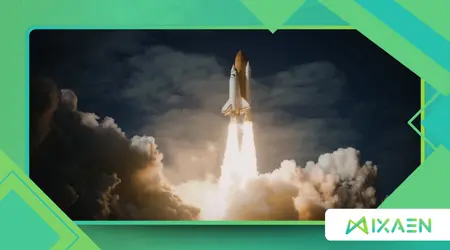
Reusable Spacecraft Systems represent the most significant shift in orbital logistics since the dawn of the Space Age, finally breaking the cycle of disposable rocketry.
As we navigate the complex aerospace landscape of 2026, the ability to land and relaunch boosters has moved from a miracle to a standard.
Modern exploration demands a radical reduction in the cost per kilogram to orbit, a feat only possible through advanced recovery technologies.
By treating rockets like commercial aircraft rather than expendable ammunition, we are finally opening the gateway to a sustainable presence on the Moon and Mars.
Orbital Economics Overview
- Launch Frequency: How rapid turnaround times are enabling a new era of mega-constellations and scientific missions.
- Cost Dynamics: A deep dive into the massive difference between building a new booster and merely refueling an existing one.
- Structural Innovation: The role of stainless steel and heat-shield technology in surviving the brutal reentry into Earth’s atmosphere.
- Environmental Impact: Evaluating the sustainability of returning hardware to the launch pad instead of letting it burn up in orbit.
Why are launch costs falling so rapidly?
The adoption of Reusable Spacecraft Systems has fundamentally altered the financial models used by private aerospace firms and national space agencies alike.
In the past, the massive expense of a mission was largely due to throwing away the entire vehicle after a single use.
Now, companies can amortize the manufacturing cost of a rocket over dozens of flights, much like a commercial airline operates its fleet.
This change has lowered the barrier to entry for smaller nations and private research institutions that previously found space inaccessible.
How does hardware recovery work?
Recovery involves a precise dance of physics where the first stage of a rocket performs a “boost-back” burn to return to land.
Cold-gas thrusters and grid fins allow the vehicle to steer itself through the atmosphere with the accuracy of a guided missile.
Landing legs deploy in the final seconds, allowing the booster to touch down gently on a drone ship or a concrete pad.
This process preserves the expensive engines, which represent the vast majority of the rocket’s total value and complexity.
++ How Trojan Asteroid Missions Unlock Early Solar System Clues
What is the role of rapid refurbishment?
Once a booster returns, engineers perform a thorough inspection and minor repairs to ensure it is ready for its next flight.
The goal in 2026 is to reach a “gas-and-go” state where turnaround takes only a matter of days or hours.
Reducing the time between flights increases the total number of launches possible per year, further driving down the overhead costs of the facility.
Reusable Spacecraft Systems succeed only when they can spend more time in the air than they do in the repair hangar.

How do reusable systems enable deep space missions?
Exploration beyond Earth’s orbit requires massive amounts of fuel and equipment that would be prohibitively expensive with single-use rockets.
Reusable Spacecraft Systems allow us to launch multiple “tanker” missions to refuel larger ships in orbit, a critical step for lunar bases.
This “gas station in the sky” model changes the math of long-duration space travel, making heavy payloads to Mars a practical reality.
Without reusability, the sheer mass required for a human mission to the red planet would bankrupt even the largest global economies.
Also read: What We’ve Learned from Landing Rovers on Other Planets
Why is orbital refueling so important?
Refueling in orbit allows a spacecraft to depart Earth’s gravity well with nearly full tanks, significantly increasing its range and speed.
This method is the backbone of the Artemis missions and the current 2026 private efforts to colonize the lunar surface.
It creates a hub-and-spoke model for solar system exploration where Earth is merely the first stop on a much longer journey.
Reusable tankers can ferry fuel back and forth, creating a permanent logistical bridge between our home planet and the stars.
Read more: Reimagining the Hubble: How It Changed the Way We See Space
Can we build infrastructure on the Moon?
Establishing a base requires delivering hundreds of tons of life-support systems, habitats, and scientific instruments over several years of continuous launches.
Reusable Spacecraft Systems make this possible by providing a reliable and relatively cheap cargo service to the lunar gateway.
With every successful landing, we prove that space is no longer a destination for flags and footprints, but a site for permanent industry.
The lower costs encourage private mining and research firms to invest in lunar infrastructure, accelerating the growth of the space economy.
Why is the aerospace industry shifting away from disposability?
For decades, we accepted that rockets were one-time-use items, a philosophy as wasteful as throwing away a Boeing 747 after a single flight.
Reusable Spacecraft Systems have proven that this “expendable” mindset was the primary bottleneck holding back the expansion of the human species.
In 2026, the competitive pressure from private innovators has forced traditional aerospace giants to rethink their legacy designs or face total obsolescence.
The market now rewards efficiency and sustainability, favoring those who can keep their hardware in the rotation.
What is the impact on satellite constellations?
Global internet coverage via low-Earth orbit satellites relies on the ability to launch hundreds of small craft in a very short window.
Reusable rockets provide the high cadence necessary to maintain these networks, replacing older satellites as they retire or fail.
This constant stream of launches has revolutionized communication, bringing high-speed connectivity to the most remote corners of the world in real-time.
It is a direct result of the logistical freedom granted by Reusable Spacecraft Systems and their reduced operational price tag.
How does reusability affect the environment?
While every launch has a carbon footprint, recovering the hardware prevents tons of metal and toxic debris from polluting the upper atmosphere.
In 2026, many firms are also experimenting with carbon-neutral fuels to further reduce the ecological impact of frequent spaceflight.
Reducing the amount of manufacturing required for each mission also saves energy and resources on the ground, creating a more circular aerospace economy.
If we can fly a rocket fifty times instead of once, we have essentially reduced its production-based environmental impact by 98%.
Launch Cost Evolution (2026 Data)
| Metric | Disposable Rocket | Partially Reusable | Reusable Spacecraft Systems |
| Cost per Launch | $150 Million | $60 Million | $15 – $25 Million |
| Turnaround Time | Months (New Build) | 4-6 Weeks | 2-5 Days |
| Payload Capacity | Moderate | High | Ultra-High |
| Primary Risk | Total Hardware Loss | Engine Wear | Fatigue Management |
| Sustainability | Low (Trash in Orbit) | Moderate | High (Recycled Assets) |
The Gateway to the Stars
The transition to Reusable Spacecraft Systems is the defining achievement of 2026, turning the dream of a multi-planetary species into a logistical reality.
We have explored how falling costs, rapid turnaround times, and orbital refueling are dismantling the barriers that once kept humanity grounded.
This shift is not just about saving money; it is about changing our fundamental relationship with the cosmos, moving from visitors to permanent inhabitants of the solar system.
By treating our spacecraft with the same care as our airplanes, we ensure that the final frontier remains open for generations to come.
The era of the “disposable” rocket is dead, and the era of the “orbital shuttle” has officially begun.
Would you take a trip to orbit if the ticket price fell to the cost of a luxury cruise, or do you still find the risks of spaceflight too high? Share your experience in the comments!
Frequent Questions
How many times can a single rocket be reused?
In 2026, some boosters have already surpassed 40 successful flights, though engineers suggest that with proper maintenance, a lifespan of 100 missions is theoretically possible.
This longevity is achieved through modular engine designs that allow for easy replacement of worn-out parts.
Is it safe to fly on a used rocket?
Statistically, a “flight-proven” booster is often considered more reliable because it has already survived the intense stresses of launch and reentry.
The data gathered from previous missions allows engineers to verify the structural integrity of the vehicle with extreme precision before it flies again.
Do reusable rockets carry less weight?
Initially, reusability required reserving some fuel for the landing, which slightly reduced the maximum payload to orbit.
However, in 2026, the development of larger, more powerful engines and lightweight materials has mitigated this “performance tax” almost entirely.
Who owns the most reusable rockets today?
While SpaceX remains the leader in the field, several other private companies and national space agencies in Europe and Asia have successfully deployed their own Reusable Spacecraft Systems this year.
The competition has created a thriving global market for launch services.
What is the biggest challenge to 100% reusability?
The most difficult part to recover is the second stage, which reaches orbital velocity and must withstand much higher temperatures during reentry.
Current 2026 designs are using exotic alloys and active cooling systems to overcome this final technical hurdle.
