
Why Habitable Zone Limits Are Being Rewritten by New Data
Habitable Zone Limits are currently undergoing a radical transformation as the James Webb Space Telescope (JWST) delivers unprecedented data from distant star systems in 2026.
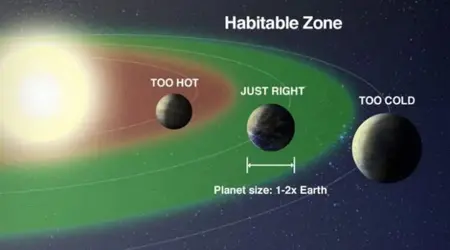
Astronomers previously defined these boundaries solely by a planet’s distance from its host star, focusing mostly on surface liquid water potential.
This traditional “Goldilocks” view is now proving too simplistic for the complex chemical signatures we are detecting in exoplanet atmospheres across the Milky Way.
We are discovering that geological activity and atmospheric thickness can keep a world warm far beyond the classical boundaries of its sun’s reach.
Essential Points of Orbital Science
- Atmospheric Insulation: How greenhouse gases like hydrogen and methane extend the outer edge of potential life-bearing regions.
- Tidal Heating: The process where gravitational friction generates internal heat, allowing frozen moons to host vast, liquid subterranean oceans.
- M-Dwarf Stability: New research into how red dwarf stars might support life despite their frequent and violent solar flare activity.
- The Hycean Class: A newly identified category of “hydrogen-rich” ocean worlds that redefine where we look for biological markers.
Why is the classic Goldilocks definition failing us?
The Habitable Zone Limits were once seen as static lines on a cosmic map, but 2026 data shows these zones are incredibly fluid.
We used to believe that if a planet was too far from its star, it would inevitably become a lifeless, frozen desert.
Modern observations of planets like K2-18b suggest that massive atmospheres can trap heat effectively even in the dark corners of a system.
This means the search for life is expanding into regions we previously dismissed as being too cold for any biological process.
How does hydrogen change the rules?
Hydrogen-rich atmospheres act like a thick thermal blanket, trapping heat far more efficiently than the nitrogen-oxygen mix we find here on Earth.
This “Hycean” model suggests that planets much further out can maintain liquid oceans for billions of years under high pressure.
Scientists are now re-evaluating thousands of candidate planets that were once considered “too far” from their suns to be of any interest.
This shift proves that the Habitable Zone Limits are determined as much by a planet’s air as by its star’s light.
++ What Exoplanet Population Growth Means for Life Probability
What is the impact of volcanic activity?
Geological heat can sustain life deep underground or beneath thick ice shells, regardless of how much sunlight a planet receives from its star.
Worlds like Enceladus in our own system show that internal energy is a powerful substitute for traditional stellar radiation.
The discovery of active volcanism on exoplanets far from their host stars confirms that “habitability” is a multi-layered concept.
We must now consider the thermal output of the planet itself when calculating where life might survive in the vastness of space.
How do tidal forces expand the reach of life?
Gravity is the new frontier in the Habitable Zone Limits debate, as we observe the immense power of “tidal squeezing” in gas giant moons.
When a moon orbits a massive planet, the constant gravitational tugging generates enough internal friction to melt solid ice into water.
This means a moon can be “habitable” even if it sits trillions of miles away from a star’s heat.
This discovery effectively detaches the concept of life from the necessity of direct sunlight, opening up every giant planet system.
Also read: Are We Ignoring Alien Life Because It’s Too Different?
Why are sub-surface oceans so important?
Sub-surface oceans are shielded from the deadly radiation of space by miles of protective ice, creating a stable environment for evolution.
These “hidden” worlds could be more common than Earth-like planets, suggesting that life in the universe might be mostly aquatic.
We are shifting our focus from searching for “second Earths” to searching for “second Europas” across the galaxy.
The Habitable Zone Limits are no longer just about the surface; they now include the deep, dark depths of oceanic moons.
Read more: Could a Silicon-Based Lifeform Really Exist?
Can red dwarf stars support stable zones?
M-dwarf stars are the most common in the galaxy, but their habitability has always been questioned due to their extreme magnetic storms.
Recent 2026 studies show that thick atmospheres can act as shields, protecting planetary surfaces from these frequent and violent solar flares.
This resilience allows planets orbiting close to these small stars to remain potential candidates for life over trillions of years.
The Habitable Zone Limits for red dwarfs are being pushed outward as we realize how hardy planetary atmospheres can truly be.
Why are researchers focusing on “unconventional” worlds?
Current data indicates that Habitable Zone Limits must account for planets that do not look or behave like our own home world.
We are finding planets with “tidal locking,” where one side always faces the star, yet the atmosphere circulates heat perfectly.
These “eyeball planets” have a frozen back and a molten front, but a perfect ring of liquid water around the twilight zone.
This narrow strip of habitability challenges our bias that a planet must rotate like Earth to support a thriving biosphere.
How does the “Stellar Wind” affect these limits?
Strong stellar winds can strip a planet of its atmosphere, but a strong magnetic field can fight back and preserve the air.
Habitability is a constant battle between a star’s destructive power and a planet’s protective magnetic shield and core density.
If a planet has a powerful magnetosphere, it can maintain its Habitable Zone Limits much closer to a star than previously predicted.
We are learning that the “protection” a planet offers itself is just as important as the star’s distance.
What is the significance of the 2026 data?
Research published in Nature Astronomy this year suggests that nearly 30% of exoplanets previously labeled “uninhabitable” may actually possess stable liquid water.
This staggering statistic comes from better modeling of cloud cover and its ability to reflect or trap thermal energy.
Our understanding is like a telescope finally coming into focus; the more we see, the more we realize life is adaptable.
The Habitable Zone Limits are being rewritten not just by new planets, but by our better understanding of planetary physics.
Comparison of Habitable Zone Models (2024 vs. 2026)
| Feature | Classic Model (2024) | Modern Dynamic Model (2026) | Impact on Research |
| Primary Variable | Distance from Star | Atmospheric Composition | Expands search radius |
| Energy Source | Stellar Radiation Only | Tidal & Geothermal Heat | Includes moons of giants |
| Water State | Surface Liquid Only | Sub-surface & High Pressure | Increases target list |
| Atmosphere | Earth-like Nitrogen/O2 | Hydrogen & Methane Heavy | Finds warmer “outer” worlds |
| Star Type | G-Type (Sun-like) | M-Dwarfs & Brown Dwarfs | Includes most common stars |
The New Frontier of Biological Potential
The realization that Habitable Zone Limits are far more expansive than we imagined gives us a new sense of hope for finding life.
We have moved from a narrow “Goldilocks” view to a vast, inclusive understanding of how planets and moons generate and retain heat.
By looking at atmospheres, tidal forces, and internal geology, we see a galaxy that is likely teeming with liquid-water environments.
The future of astrobiology is no longer about finding a mirror of Earth, but about finding the unique ways life survives the extreme.
As our sensors get better, the limits of what we call “habitable” will only continue to grow.
Do you think we will find the first signs of alien life on a planet that looks like Earth, or in a dark ocean hidden beneath ice? Share your experience in the comments!
Frequent Questions
Is Mars still considered to be within the Habitable Zone Limits?
Mars sits on the very outer edge of the classic habitable zone, but its thin atmosphere prevents it from retaining enough heat.
While it once had liquid water, its lack of a magnetic field led to the loss of its air, pushing it out of habitability.
Can a planet without a star be habitable?
Surprisingly, yes; “rogue planets” wandering through deep space can stay warm if they have thick enough hydrogen atmospheres or intense internal heat.
These worlds don’t have Habitable Zone Limits because they don’t orbit a star, yet they could host life.
How does the James Webb telescope help define these limits?
JWST uses infrared light to “see” through the thick clouds of exoplanets, allowing scientists to measure the exact chemicals in the air.
This data tells us if a planet is trapping enough heat to keep water liquid, regardless of its distance.
Will we ever visit these distant habitable worlds?
With current 2026 technology, we can only observe them from afar using light and spectroscopy.
However, these observations allow us to point our future interstellar probes toward the most promising targets, ensuring we don’t waste time on truly dead worlds.
Does a habitable planet always mean there is life?
No, habitability only means the conditions for life are present, such as water and energy.
Whether life actually starts a process called abiogenesis remains one of the greatest mysteries that scientists are still trying to solve through these new models.
