
How Space Resource Extraction Could Sustain Future Colonies
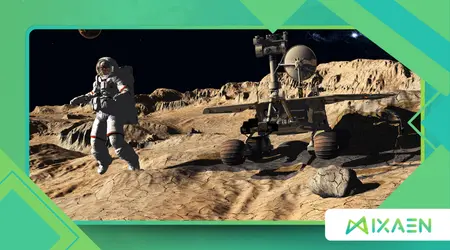
Space Resource Extraction Could Sustain Future Colonies represents the most significant shift in our approach to inhabiting the solar system as we navigate 2026.
For decades, the primary hurdle for space exploration was the prohibitive cost of launching every single liter of water and kilogram of fuel from Earth.
We are finally moving past the era of disposable missions. By utilizing lunar regolith and metallic asteroids, we can build a self-sustaining economy that exists entirely beyond our atmosphere.
This change transforms the Moon from a mere destination into a vital industrial hub for humanity’s expansion.
Key Insights for the New Frontier
- Lunar Volatiles: Why ice in permanently shadowed regions is the “new oil” for orbital refueling.
- In-Situ Resource Utilization (ISRU): Converting raw space dust into breathable oxygen and structural building materials.
- Asteroid Prospecting: The economic potential of Near-Earth Objects (NEOs) rich in platinum and rare-earth metals.
- Logistical Independence: Reducing the “Earth-dependency” ratio to ensure colony survival during launch window delays.
What is In-Situ Resource Utilization?
Space Resource Extraction Could Sustain Future Colonies by utilizing a process known as In-Situ Resource Utilization, or ISRU.
This involves harvesting raw materials directly from the celestial bodies where astronauts land, rather than bringing everything from home.
NASA’s MOXIE experiment on Mars proved we can generate oxygen from a thin atmosphere. In 2026, we are scaling these concepts to create entire habitats using 3D printers that melt lunar soil into solid stone.
How does lunar ice become rocket fuel?
Lunar craters hold billions of tons of water ice. By applying electrolysis, we split this water into liquid hydrogen and oxygen, the most powerful chemical propellant known today.
This creates a “gas station” in low lunar orbit. Ships heading to Mars can leave Earth light and refuel at the Moon, drastically cutting mission costs and complexity.
++ Why Reusable Spacecraft Systems Redefine Exploration Costs
Why is regolith valuable for construction?
The Moon’s surface is covered in fine grey dust called regolith. Using concentrated sunlight, robots can sinter this dust into bricks that provide excellent protection against solar radiation and micrometeorites.
Constructing thick-walled domes directly from the ground ensures that colonists remain safe. Without this ability, we would be limited to flimsy, inflatable structures brought at great expense from Earth’s deep gravity well.

Why are asteroids considered the gold mines of the future?
The theory that Space Resource Extraction Could Sustain Future Colonies extends far beyond the Moon to the millions of asteroids orbiting nearby.
These rocks are often concentrated veins of iron, nickel, and precious metals that are rare on our home planet.
A single 500-meter wide asteroid could contain more platinum than has ever been mined in human history. Mining these resources provides the raw metals needed for massive orbital manufacturing centers.
Also read: China’s Silent Space Rise: What the World Should Pay Attention To
How do we catch an asteroid for mining?
Private companies are now developing “robotic harvesters” designed to rendezvous with small Near-Earth Objects.
These machines use solar-powered thrusters to nudge the asteroid into a stable orbit around the Moon or Earth.
Once in a secure location, specialized drills extract the interior minerals.
This process prevents the environmental degradation we see with terrestrial mining while providing infinite raw materials for space-bound industries.
Read more: Why Interplanetary Law Is Becoming Urgently Necessary
What are the economic advantages of orbital mining?
Building a skyscraper in space using Earth-mined steel is a logistical nightmare.
However, refining metal in zero-gravity allows us to construct massive structures that would collapse under their own weight on Earth.
These orbital factories could produce high-efficiency solar panels and fiber optics. The wealth generated from these products will likely fund the first permanent cities on Mars and the moons of Jupiter.
How does space mining solve the oxygen crisis?
Recent data from the Artemis III geological surveys indicate that lunar rocks are nearly 45% oxygen by mass.
Finding ways where Space Resource Extraction Could Sustain Future Colonies includes chemical processing of these rocks to create a breathable atmosphere for underground bases.
By heating regolith to extreme temperatures, we release oxygen as a byproduct.
This means life support systems will eventually become autonomous, relying on local “air” rather than emergency tanks shipped from Florida.
Can we grow food in space soil?
Current research shows that with the right microbial additives, lunar and Martian soil can support plant life.
We are seeing the first “space greenhouses” that use recycled water and local minerals to produce fresh vegetables.
This reduces the psychological and physical strain on colonists. Eating food grown in the same soil they walk on creates a sense of home that freeze-dried rations can never replicate.
Is this sustainable for the long term?
Critics often wonder if we are simply exporting our “extractive” habits to the stars.
However, space mining targets dead rocks with no ecosystems, making it the most ethical form of resource gathering.
Using these resources allows Earth to recover. By moving heavy industry into the void, we can turn our home planet back into a protected biological preserve while humanity prospers among the stars.
Space Resource Potential and Value (2026 Estimates)
| Resource | Primary Location | Use Case | Estimated Value |
| Water Ice | Lunar South Pole | Life Support & Fuel | $10,000 per kg (Saved Launch Cost) |
| Helium-3 | Lunar Regolith | Clean Fusion Energy | $3 Billion per Ton |
| Platinum | M-Type Asteroids | Electronics & Industry | $20 Trillion (Single Asteroid) |
| Iron/Nickel | Near-Earth Asteroids | Habitat Construction | Infinite (Infrastructure Base) |
| Silica | Moon/Mars | Solar Panels & Glass | $500 per sq meter |
A New Era for Humanity
We have established that Space Resource Extraction Could Sustain Future Colonies by turning the solar system into a self-replenishing pantry.
The transition from being “explorers” to “dwellers” depends entirely on our ability to live off the land. By harvesting lunar ice for fuel and asteroid metals for steel, we break the umbilical cord to Earth.
This is not just a technical challenge; it is the birth of a multi-planetary civilization.
Just as the first explorers on Earth had to find water and timber to survive, our space pioneers must master the chemistry of the cosmos.
As we look toward the 2030s, the infrastructure we build today with local materials will be the foundation of a new history for our species.
Would you feel safer in a colony built from local stone or one made of Earth-shipped metal? Share your experience in the comments!
Frequent Questions
Is space mining legal under international law?
The 1967 Outer Space Treaty prevents nations from “owning” celestial bodies, but the 2015 Space Act (and similar laws in 2026) allows private entities to own what they extract.
It is similar to fishing in international waters; you don’t own the ocean, but you own the fish in your net.
How do we stop space debris from mining operations?
Mining companies are now required to use “closed-loop” extraction methods.
This means all dust and waste must be contained or magnetically gathered to prevent creating clouds of shrapnel that could damage satellites.
Is it cheaper to mine the Moon or an asteroid?
The Moon is closer, making it better for construction materials and water.
However, asteroids have no gravity, which makes it much cheaper to move large amounts of refined metal back to where they are needed.
When will the first “Space Mine” be fully operational?
Small-scale pilot plants are already running in 2026. Experts predict that the first commercial-scale lunar oxygen plant will be providing breathable air to a permanent crew by the end of 2028.
How does Space Resource Extraction Could Sustain Future Colonies affect Earth’s economy?
Initially, it will create a “Space Gold Rush” for tech companies.
Long-term, as rare metals become abundant, the cost of electronics and green energy tech on Earth will drop significantly, benefiting everyone on the home planet.
