
Why Extreme Magnetar Flares Produce Unusual Gamma-Ray Signals
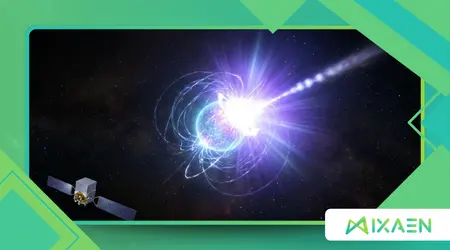
Extreme Magnetar Flares represent the most violent energy releases in the known universe, challenging our fundamental understanding of high-energy astrophysics and neutron star composition.
These cataclysmic events originate from the decaying magnetic fields of magnetars, which are a specialized class of neutron stars possessing the strongest magnetic fields ever observed in nature.
Astronomers analyze these sudden, intense bursts of electromagnetic radiation to decode the extreme conditions prevailing near these dense stellar remnants.
When a magnetar experiences a crustal fracture or a magnetic reconnection event, the resulting output spans the entire spectrum, with gamma-rays dominating the initial phase.
Understanding these phenomena requires looking beyond standard stellar models, as the physics involved pushes gravity and electromagnetism to their absolute limits.
Scientists currently strive to map the relationship between these internal structural instabilities and the observed external radiation signatures.
- Defining the core nature of magnetar energy.
- Analyzing the mechanics of electromagnetic bursts.
- Evaluating the impact of current observational technology.
What Causes These Enigmatic Cosmic Bursts?
How Does the Magnetic Field Fracture the Crust?
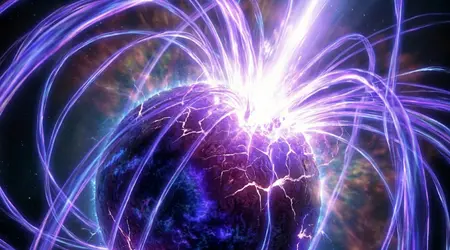
The immense magnetic pressure exerted by a magnetar’s internal field constantly stresses the solid crust of the star.
When this magnetic stress exceeds the breaking strain of the crystalline lattice, the crust abruptly fractures or deforms.
This sudden movement releases vast amounts of elastic energy, which propagates outward as a shearing wave, triggering the massive emission of photons.
Why Is the Energy Release So Sudden?
Magnetic reconnection acts as a cosmic short-circuit, rapidly converting stored magnetic energy into kinetic and thermal energy.
Within a fraction of a second, the Extreme Magnetar Flares channel this liberated energy into an expanding fireball of electron-positron pairs.
This process occurs so swiftly that it surpasses the capacity of traditional stellar cooling mechanisms, creating a momentary, blinding beacon.
++ Why Blue Lurker Stars Disrupt Traditional Stellar Aging Models
How Does the Plasma Fireball Interact with Radiation?
As the fireball expands, it remains trapped by the intense magnetic field, creating a complex environment of plasma and radiation.
The high density of particles causes significant scattering, which shapes the specific gamma-ray spectrum detected by orbiting telescopes.
This interaction determines the temporal profile of the burst, distinguishing it from other astrophysical transients like supernova remnants or standard pulsar emissions.
How Do Researchers Detect and Interpret the Signals?
What Tools Do Modern Observatories Use?
Instruments like the Fermi Gamma-ray Space Telescope and the Neil Gehrels Swift Observatory are crucial for capturing the fleeting data from Extreme Magnetar Flares.
By utilizing wide-field monitors, these satellites can trigger rapid follow-up observations across multiple wavelengths.
This multi-messenger approach ensures that we catch the decay phase of the burst before it vanishes into the cosmic background.
Also read: The Role of Indigenous Knowledge in Modern Astronomical Research
Why Is Spectral Timing Crucial?
The unique gamma-ray signals carry information about the star’s rotational frequency and magnetic field geometry.
By analyzing the pulse profile variations, researchers can map the magnetic surface features of the magnetar in real-time.
Tracking these changes allows scientists to differentiate between local magnetic reconnection and larger, global structural reorganizations within the neutron star.
Read more: China’s Silent Space Rise: What the World Should Pay Attention To
How Do Scientists Distinguish Noise from Signal?
Separating the true signal of an Extreme Magnetar Flares from background noise requires sophisticated algorithms and machine learning models.
Researchers compare the pulse rise time and decay energy spectra against established templates of solar flares and distant GRBs.
This rigorous statistical filtering process ensures that the reported data reflects genuine neutron star activity rather than instrumental artifacts or terrestrial interference.
What Do These Discoveries Reveal About Neutron Stars?
How Does the Core Influence Surface Events?
The interior of a magnetar, consisting of superfluid neutrons and superconducting protons, plays a definitive role in fueling these surface-level explosions.
The coupling between the core’s magnetic field and the surface crust determines the frequency of these flares.
Understanding this deep-seated connection provides a window into the state of matter at densities exceeding that of an atomic nucleus.
Why Is the Study of Magnetars Vital?
Studying these objects allows us to test gravity and electromagnetism under conditions impossible to replicate in Earth-based laboratories.
The Extreme Magnetar Flares serve as a natural testbed for quantum electrodynamics in strong-field regimes.
If we can master the physics of these events, we gain profound insights into how massive stars evolve and eventually die in the cosmos.
Could These Events Impact Nearby Planets?
While most magnetars exist at vast distances, a closer event could potentially affect Earth’s upper atmosphere, though such a proximity is statistically unlikely.
These flares help us quantify the “hazardous” nature of our galaxy, refining our models of stellar safety.
Could we ever truly predict these bursts with pinpoint accuracy, or will they forever remain the universe’s most unpredictable fireworks?
Key Characteristics of High-Energy Stellar Events
| Feature | Magnetar Flare | Solar Flare |
| Energy Output (ergs) | 10⁴⁴ – 10⁴⁶ | 10²⁵- 10³² |
| Primary Emission | Gamma-rays | X-rays / UV |
| Magnetic Strength | 10¹⁵ Gauss | 10² Gauss |
| Trigger Mechanism | Crustal Failure | Magnetic Reconnection |
Scientific Context: The SGR 1806-20 Event
In 2004, the giant flare from SGR 1806-20 released more energy in one-tenth of a second than the Sun radiates in 150,000 years.
This landmark event remains the benchmark for studying Extreme Magnetar Flares and continues to inform our current models of magnetar magnetic dissipation.
An Analogy for Cosmic Dynamics
Imagine a giant rubber band stretched to its absolute limit around a brittle rock. When the rubber band snaps, it releases the stored tension instantly, shattering the rock and sending debris flying in all directions.
In this analogy, the magnetar’s magnetic field is the rubber band, and the neutron star crust is the brittle rock.
Conclusion and Future Outlook
The study of these cosmic phenomena bridges the gap between particle physics and large-scale astronomy.
By dissecting every photon from these rare events, we refine our models of the universe’s most extreme environments.
As our observational sensitivity grows, we stand on the brink of discovering new classes of stellar behavior. We invite you to share your thoughts on the future of high-energy astrophysics in the comments below.
Frequently Asked Questions
1. Are these flares dangerous to humanity?
No, because all known magnetars are located thousands of light-years away from Earth.
2. How do we know these events are not just supernovas?
Supernovas are terminal explosions of stars, whereas magnetar flares are recurring, non-destructive surface events.
3. What is the main difference between a pulsar and a magnetar?
Magnetars have magnetic fields orders of magnitude stronger than those of standard pulsars, powering their unique flaring behavior.
4. Can we see these flares with amateur telescopes?
No, these events are only detectable in the high-energy gamma-ray and X-ray spectrum, requiring specialized space-based equipment.
5. Will we ever predict a flare before it happens?
While we currently track activity levels, predicting the exact millisecond of a fracture is currently beyond our predictive capability.
