
How Quantum Darwinism Explains the Emergence of Reality
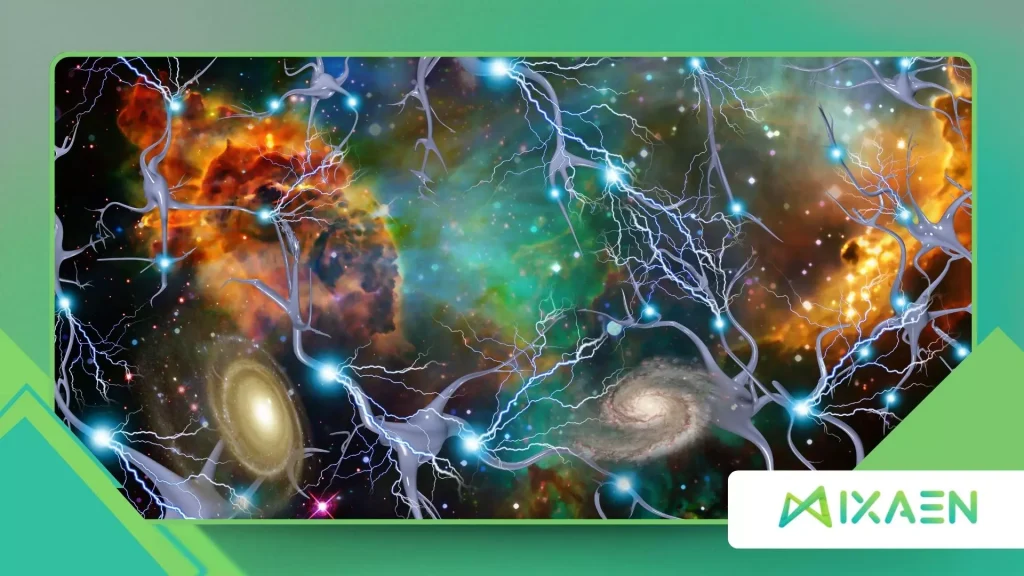
Quantum Darwinism is transforming our understanding of how the objective universe emerges from the chaotic, probabilistic realm of subatomic particles.
For decades, physicists grappled with the profound measurement problem: how do fuzzy quantum waves solidify into the concrete, predictable reality we experience every day?
The answer does not require a conscious observer, but rather a cosmic process of natural selection occurring at the microscopic scale.
This groundbreaking framework suggests that quantum states literally compete to leave their mark on the surrounding environment, allowing only the fittest information to survive.
As photons, air molecules, and dust particles constantly collide with quantum systems, they act as selective agents, replicating specific data while discarding the rest.
Consequently, what we perceive as objective reality is simply the most robust, highly replicated quantum information that managed to propagate across the universe.
Inside This Exploration
- The Core Mechanism: How cosmic selection shapes our objective physical reality.
- Environmental Interaction: The hidden role of photons and fields as information carriers.
- The Scientific Evidence: Tangible laboratory breakthroughs validating the theory.
- Macro vs. Micro: Resolving the historical paradox between Bohr and Einstein.
- Frequently Asked Questions: Clear, direct answers to profound cosmic riddles.
What Is Quantum Darwinism and How Does It Redefine Reality?
The classical world requires a predictable foundation, yet quantum mechanics offers only a haze of possibilities where particles exist in multiple places simultaneously.
This framework, pioneered by physicist Wojciech Zurek, explains that the environment acts as a filter, destroying delicate superpositions through a process called decoherence.
When an object interacts with its surroundings, the environment selectively preserves only certain robust states, known technically as pointer states, which resist disruption.
Through this continuous filtering, the environment creates billions of identical copies of the system’s information, broadcasting them to any observer.
Why do multiple people see a building in the exact same location? It is because the surrounding photon field has replicated the building’s positional data trillions of times, making the information public, stable, and undeniably real.
Why Do Quantum Superpositions Vanish in Our Daily Lives?
Superpositions are incredibly fragile, requiring absolute isolation to exist, which is why we never see chairs or cars in two places at once.
The moment a quantum system encounters an external element, its alternative realities collapse rapidly, leaving behind a single, resilient physical outcome.
This process happens almost instantaneously, transforming quantum fluff into hard, classical facts before our human senses can ever perceive the underlying chaos.
++ Why False Vacuum Decay Could Redefine Cosmic Stability
How Does the Environment Act as a Witness to Physical Information?
Instead of being a destructive nuisance, the environment serves as an immense cosmic communication channel that actively records and preserves quantum data.
Every photon bouncing off an object carries away a tiny blueprint of that object’s color, position, and structural velocity.
We do not probe the quantum system directly; instead, we decode the information safely stored within the environment’s vast, interwoven network.
Also read: Why Conformal Cyclic Cosmology Still Divides Physicists
What Role Does Information Replication Play in Building Objectivity?
Objectivity requires consensus, meaning that an object must look identical to different observers who are looking at it from entirely separate vantage points.
By creating astronomical numbers of identical copies of a pointer state, Quantum Darwinism ensures that every observer receives the exact same physical story.
This mass replication creates the illusion of an independent, pre-existing classical reality that exists whether we look at it or not.
How Does Selection Work at the Subatomic Scale?
At the microscopic level, particles undergo a brutal survival of the fittest, where only specific physical properties endure environmental scrutiny.
When a quantum system is exposed to a bath of photons or thermal fields, most of its fragile superpositions are instantly dissolved.
The states that survive are those that can pass through the environment completely unaltered, effectively winning the evolutionary race.
Consider a simple analogy: a coin spinning in the air represents a quantum superposition of both heads and tails simultaneously.
The surrounding air molecules act as the selecting environment, forcing the coin to eventually settle flat on a surface as a definite heads or tails.
Through this mechanism, Quantum Darwinism bridges the gap between quantum possibilities and the solid, singular facts of our macroworld.
Read more: Can Logic Fully Explain the Cosmos?
What Are Pointer States and Why Do They Survive?
Pointer states are the elite survivors of the quantum realm, possessing a natural immunity to the destructive effects of environmental decoherence.
These states typically include fundamental properties like mass, localized position, and electric charge, which can withstand continuous bombardment from external particles.
Because they remain undamaged during environmental interactions, they form the stable building blocks from which our entire visible universe is constructed.
How Do Photons Create the Illusion of a Solid Classical World?
Photons are the ultimate information messengers, constantly bouncing off every surface and carrying data across rooms and interstellar space.
When light hits a microscopic particle, it absorbs specific information about that particle’s state without altering the state itself significantly.
This gentle, massive data harvesting allows the classical world to appear solid, continuous, and completely independent of our personal observation.
Why Is Cosmic Selection Preferable to the Traditional Copenhagen Interpretation?
The classic Copenhagen interpretation relies heavily on a vague, ill-defined measurement apparatus, or even a conscious human observer, to collapse the wave function.
This modern framework removes human consciousness entirely from the equation, replacing it with a purely physical, mechanical process of environmental copying.
Reality does not need a human mind to exist; it only requires an environment capable of recording information.
What Empirical Evidence Validates This Quantum Selection Theory?
For years, critics dismissed these ideas as clever philosophy, but recent laboratory experiments have finally turned the theory into verified empirical science.
In late 2019, independent research teams in Italy, Germany, and China successfully trapped photons and artificial atoms to observe this replication process.
Their high-precision measurements confirmed that extracting a small fraction of the environment provides complete information about the central system.
These experiments utilized artificial quantum dots and complex diamond nitrogen-vacancy centers to track how information leaks into a controlled local environment.
The data revealed that a single quantum state leaves redundant copies of itself across the surrounding environment almost immediately.
This tangible breakthrough proves that Quantum Darwinism is a highly accurate description of the physical mechanisms shaping our daily reality.
How Did Researchers Observe Quantum Information Copying in 2019?
Physicists isolated a single qubit and monitored how it interacted with a small environment consisting of a few surrounding photons.
By analyzing the entanglement patterns, they discovered that looking at just one photon revealed nearly everything about the qubit’s state.
This provided the first direct, visual proof that the environment redundantizes information, exactly as the mathematical theory predicted years prior.
What Can Diamond Defect Experiments Teach Us About Material Reality?
Diamond nitrogen-vacancy centers provide an ideal, ultra-clean laboratory setting to study how microscopic quantum states transition into classical certainty.
Researchers manipulate these atomic defects using precise laser pulses, watching how nearby carbon atoms record the defect’s quantum spin data.
These studies show that even a tiny cluster of atoms can act as a selective environment, forcing classical reality to emerge.
How Reliable Are the Redundancy Plots Observed in Modern Physics Labs?
Statistical analysis of these quantum experiments reveals a specific plateau in the data charts, known to physicists as the redundancy plateau.
This plateau shows that after a certain point, analyzing more photons yields absolutely no new information about the system.
This indicates that the information is already perfectly, redundantly encoded throughout the environment, cementing the objectivity of the observed state.
Comparative Dynamics of the Quantum-to-Classical Transition
The structural shift from quantum mechanics to classical mechanics involves distinct changes in physical behavior, parameters, and informational properties.
The following table highlights the essential differences managed by environmental selection mechanisms.
| Physical Property | Quantum Domain (Microscopic) | Transition Zone (Decoherence) | Classical Domain (Macroscopic) |
| State Existence | Simultaneous Superpositions | Selection of Resilient Vectors | Single Independent Reality |
| Information Status | Private and Intrinsic | Actively Copying to Environment | Highly Redundant and Public |
| Behavior Pattern | Wave-Particle Duality | Fast Selection Action | Strict Newtonian Physics |
| Observer Impact | Direct Disruption of State | Information Leaks Naturally | Passive and Non-Disruptive |
| System Stability | Highly Fragile and Isolated | Environmental Filtering | Exceptionally Robust and Stable |
The Horizon of Universal Consensus and Reality
As we look deeper into the cosmos, Quantum Darwinism provides a elegant, unified worldview that harmonizes the conflicting physics of Einstein and Bohr.
It shows that our macroscopic reality is not an illusion, but a beautifully filtered subset of a vast quantum substrate.
By understanding how information propagates, scientists are unlocking new methods to protect quantum computers from the very decoherence that creates our daily world.
Ultimately, this framework proves that the universe is inherently communicative, constantly archiving its own history through the medium of the environment.
Every grain of sand, every gust of wind, and every beam of starlight acts as an active participant in this cosmic consensus.
We are living inside a grand, continuous broadcast where reality is constantly being voted into existence by the universe itself.
What unique perspectives do you have on this cosmic selection process? Share your thoughts and experiences in the comments below to join the discussion.
Frequently Asked Questions
What is the main difference between standard evolution and Quantum Darwinism?
Biological evolution selects living organisms based on their ability to survive and reproduce in a physical habitat.
This quantum framework selects static information states based on their ability to withstand environmental disruption and replicate their data across fields.
Does this theory mean that objective reality is just an illusion?
No, it proves the exact opposite by showing that objective reality is real, stable, and scientifically verifiable.
It explains how private quantum information becomes public, dependable data that anyone can see, measure, and experience safely.
How does this framework benefit the development of future quantum computers?
Quantum computers fail when their delicate qubits accidentally interact with the environment, causing premature decoherence.
By understanding the precise mathematical rules of environmental selection, engineers can build better shielding to keep quantum information private longer.
Can human consciousness influence the selection process described in the theory?
Human consciousness plays no role in this specific selection mechanism. The process relies entirely on mindless, physical interactions between particles, meaning that reality solidifies just fine in deep space without a single human looking.
