
How Near-Rectilinear Halo Orbit Enables Future Lunar Missions
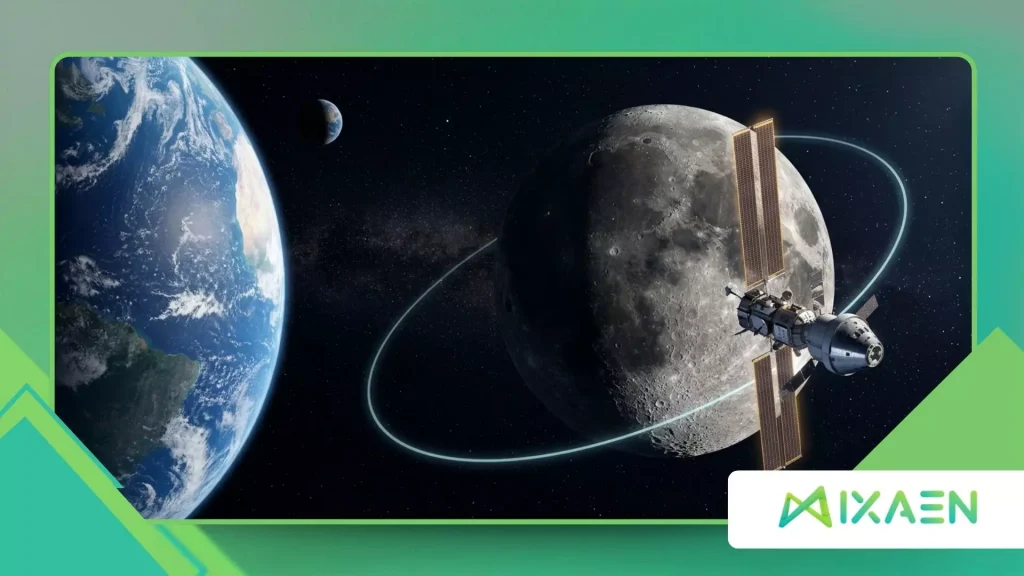
Near-Rectilinear Halo Orbit (NRHO) represents the primary gateway for humanity’s sustained return to the Moon, serving as the stable anchor for the Artemis program.
This unique gravitational pathway allows spacecraft to hover near the lunar south pole while maintaining constant communication links with Earth, revolutionizing deep space logistics.
Explorers now stand on the precipice of a new era, utilizing this complex celestial mechanics to build a permanent presence beyond our home planet.
This article dissects the orbital dynamics, strategic mission advantages, and technical requirements that define our future lunar infrastructure.
The following points define our journey: we explore orbital mechanics, examine station-keeping requirements, and analyze how this trajectory facilitates essential deep space exploration goals.
What defines this celestial pathway?
How does orbital mechanics work?
This specific orbit exists because of the intricate gravitational tug-of-war between the Earth and the Moon at specific Lagrange points.
Spacecraft essentially perform a delicate balancing act, requiring minimal energy to remain in a highly elongated path that never dips into the lunar shadow.
Think of it like a spinning top that remains perfectly upright because it rotates at the exact necessary velocity to counteract gravitational pull.
By positioning the orbit this way, designers ensure the station remains visible from Earth almost constantly, avoiding the hazardous blackout periods common in low-orbit missions.
++ Why Reusable Spacecraft Systems Redefine Exploration Costs
Why is this orbit unique?
Unlike circular orbits that require constant altitude adjustments, this trajectory offers unparalleled stability for long-duration missions lasting several years at a time.
The path takes a satellite far above the lunar surface, providing a perfect vantage point for both robotic landers and human crewed missions.
Engineers favor this route because it minimizes fuel consumption, allowing heavier payloads to reach the lunar surface without needing massive, expensive launch vehicles.
It creates a robust, reliable logistics hub that supports multiple international agencies working together on sustainable, long-term lunar surface development.
Also read: What We’ve Learned from Landing Rovers on Other Planets
What are the key characteristics?
The path features a high-eccentricity profile that dips close to the lunar north and south poles during every single pass.
This proximity grants scientists incredible access to polar regions, which contain vital water ice deposits essential for future human survival and propellant production.
Stability remains the primary advantage, as the orbit persists for years with only minor, periodic station-keeping burns by the onboard propulsion systems.
This resilience makes it the ideal location for an orbiting gateway, ensuring safe harbor for explorers venturing further into the solar system.
How does it enable lunar missions?
What role does the Gateway play?
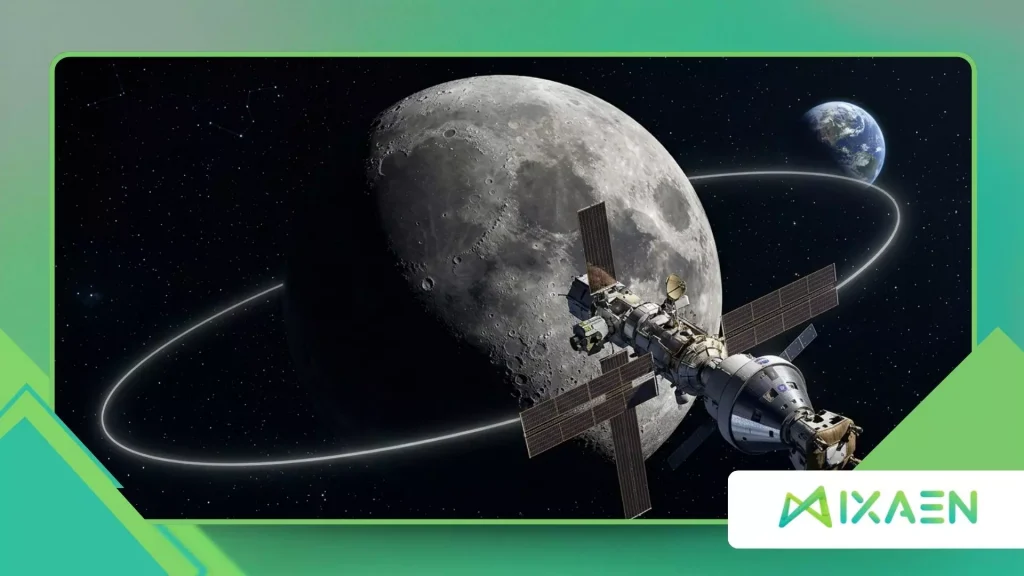
The Gateway, a modular space station, will orbit the Moon using this path to provide a staging point for all future crewed operations.
It functions as a bustling orbital airport, where ships from Earth dock, refuel, and transfer crews to specialized landers awaiting their next journey.
Reliability increases dramatically because the station remains in a high orbit, making it easier for ground teams to maintain contact across large distances.
This constant link ensures that mission control manages emergencies immediately, providing a critical safety net that was previously impossible during the Apollo era.
Read more: Reimagining the Hubble: How It Changed the Way We See Space
Why does fuel efficiency matter?
Efficient trajectories allow missions to carry more scientific instrumentation rather than heavy propellant tanks required for traditional, energy-intensive orbital maneuvers.
By leveraging the specific physics of this region, mission planners extend the operational life of robotic explorers by many months or years.
This advantage proves vital for sustainable development, as logistics chains become cheaper and more reliable over time.
When ships save fuel, they transform the economic feasibility of mining operations, scientific research, and potential future missions headed toward Mars and beyond.
How are landers supported?
Robotic and crewed landers depart from this stable staging ground to descend into the lunar south pole, then return to the gateway for processing.
This modular architecture decouples the flight to the Moon from the landing maneuver itself, reducing the complexity of each individual spacecraft design.
It allows diverse companies to contribute specialized modules that fit perfectly into this well-defined logistical ecosystem.
By standardizing the departure point, we minimize technical errors and maximize the success rate of complex landings, which is crucial for building permanent surface infrastructure.
What is the strategic significance?
Can we reach deeper space?
NASA data confirms that this orbit serves as an ideal “gateway” to the broader solar system, acting as a springboard for future human missions to Mars.
By proving our capability to sustain life in this stable region, we refine the life support and power systems needed for deeper exploration.
A study by the Lunar Exploration Analysis Group suggests that utilizing such trajectories can reduce the total mission mass by over 20 percent.
This reduction represents the difference between a prototype mission and a fully capable, sustainable transportation system ready for long-distance space travel.
How does communication work?
Constant, high-bandwidth communication remains achievable because the orbit remains outside the lunar shadow during its entire flight path, maintaining a clear line-of-sight.
This seamless data transmission allows researchers on Earth to control remote robots with negligible time delays, mimicking the real-time presence of human operators.
This capability transforms how we conduct remote science, moving from infrequent, delayed updates to continuous, high-definition exploration of the rugged lunar surface.
It turns the Moon into a giant laboratory that we monitor from the comfort of Earth using sophisticated, robust orbital relay technology.
What about international cooperation?
Multiple nations now coordinate their efforts around this common hub, sharing costs and expertise to achieve goals that no single country could manage alone.
This collaborative model fosters peaceful development of outer space, ensuring that lunar resources benefit all of humanity rather than just one entity.
When we share the burden of space exploration, we accelerate the timeline for achieving major scientific breakthroughs.
This orbit provides the neutral ground where international agreements become reality, laying the foundation for a prosperous, multi-national economy that extends from Earth to the moon and beyond.
| Mission Parameter | Traditional Low Orbit | Near-Rectilinear Halo Orbit |
| Stability | Low (Requires constant correction) | High (Long-term stability) |
| Communication | Periodic blackouts | Continuous Earth access |
| Mission Goal | Short-term surface sorties | Sustainable, long-term staging |
| Fuel Efficiency | Lower | Higher (Optimized trajectory) |
A future beyond the horizon
We currently witness an unprecedented transformation in how we inhabit space, moving from transient visitors to permanent pioneers in the lunar vicinity.
Embracing the Near-Rectilinear Halo Orbit empowers scientists to explore, live, and work beyond our planet with higher efficiency and safer communication networks than ever.
As we deploy more infrastructure, the potential for scientific discovery grows exponentially, turning our moon into a true bridge toward deep space exploration.
Share your thoughts on whether this architecture represents the best path forward for our species in the comments below!
Frequently Asked Questions
Is this orbit completely permanent?
It is extremely stable for many years, but it requires minor, automated engine burns to maintain perfect alignment against small gravitational perturbations.
These corrections remain infrequent, allowing the spacecraft to focus its primary power on scientific experiments and communication relay tasks for the crew.
How long does a full trip take?
A single full rotation around the Moon in this specific path typically takes approximately seven days to complete.
This timing aligns perfectly with the operational requirements of crewed missions arriving from Earth, allowing for efficient docking and departure cycles without forcing long wait times.
Can commercial companies use this orbit?
Yes, the open architecture of the Gateway and the strategic location of this path encourage commercial companies to develop their own logistics modules.
This promotes a competitive marketplace where private sector innovation drives down costs, ultimately accelerating the pace of human activity in deep space and near-lunar environments.
