
How Transient Radio Sources Are Expanding Cosmic Mystery Research
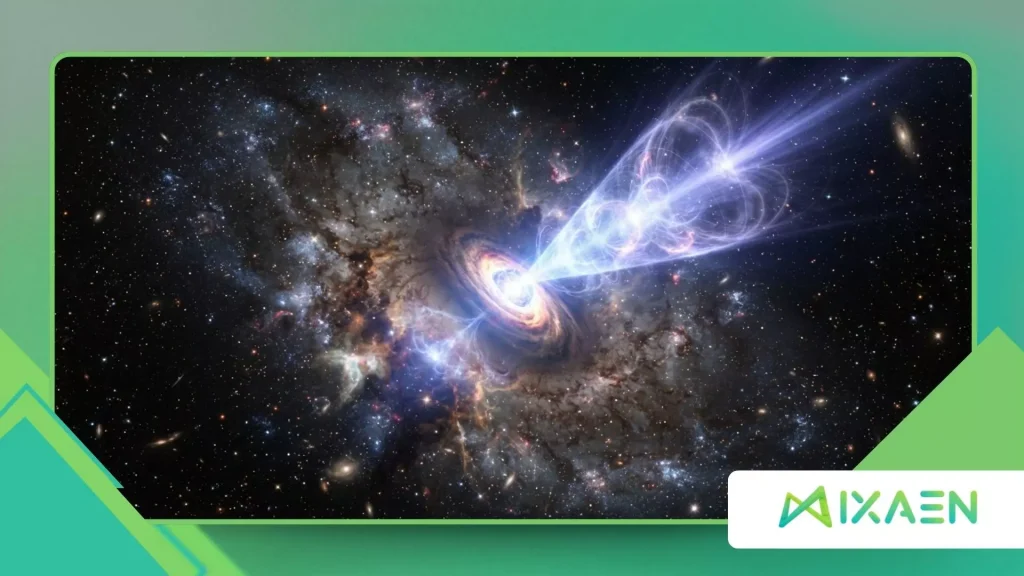
Transient Radio Sources unlock unprecedented astrophysical secrets across deep space by emitting sudden, high-energy electromagnetic bursts that defy standard stellar models.
Modern radio observatories scan the cosmos continuously, capturing elusive blinking signals from distant galaxies with extraordinary precision.
Researchers analyze these mysterious flashes to uncover extreme physics occurring near neutron stars and supermassive black holes.
Exploring these ephemeral cosmic phenomena reshapes our fundamental understanding of universe evolution.
Astrophysicists rely on advanced telescope arrays to track brief radio signatures that vanish almost as quickly as they appear.
Imagine searching for a single lightning flash across an entire continent during a pitch-black midnight storm. Are you ready to explore how fleeting radio signals challenge modern astrophysics?
Exploring Ephemeral Celestial Phenomena
- Investigating fast radio bursts and mysterious repeating galactic pulse anomalies.
- Analyzing advanced radio telescope arrays scanning the night sky continuously.
- Evaluating extreme stellar mechanics behind sudden electromagnetic energy releases.
- Decoding unusual periodicity signatures originating from distant deep-space sources.
What Are Transient Radio Sources and How Do They Emerge?
Transient Radio Sources represent unpredictable celestial events that release massive pulses of radio waves over milliseconds before fading into darkness.
These elusive signals originate from extreme environments such as magnetars, merging neutron stars, or active galactic nuclei.
Think of them as stellar lighthouse beacons flashing erratically across the vast cosmic dark. Modern interferometers detect these brief emissions, providing direct clues about extreme gravitational physics.
Astronomical surveys conducted by the International Centre for Radio Astronomy Research reveal thousands of newly cataloged transient events across recent observation cycles.
When massive stars collapse, they unleash intense magnetic shockwaves that propagate across light-years of interstellar space.
Researchers decode these signals to measure intergalactic matter density and cosmic expansion rates. Unlocking these secrets transforms our comprehension of stellar death cycles.
Why Do Magnetars Emit Intense Radio Flashes?
Magnetars possess magnetic fields quadrillions of times stronger than Earth, generating incredible interior stress that fractures stellar crusts.
This violent fracturing triggers powerful seismic waves that accelerate particles into relativistic radio jets. The resulting emissions flash brilliantly across deep space.
++ How Transient Lunar Phenomena Continue Defying Clear Explanations
How Do Interferometers Detect Fading Signals?
Modern radio telescopes combine data from multiple antenna dishes spread across continents to achieve extreme angular resolution.
This synthetic aperture allows scientists to pinpoint exact celestial coordinates of milliseconds-long radio flashes. Precision tracking enables multi-wavelength follow-up observations immediately.
Also read: Cosmic Lithium Problem Defies Big Bang Predictions Today
What Role Do Intergalactic Mediums Play?
As radio waves travel billions of years toward Earth, they interact with free electrons scattered across intergalactic space.
Measuring the dispersion delay of these pulses helps astronomers map invisible normal matter distributed throughout the cosmos. Every flash acts as a cosmic probe.
Why Are Fast Radio Bursts Revolutionizing Modern Astronomy?
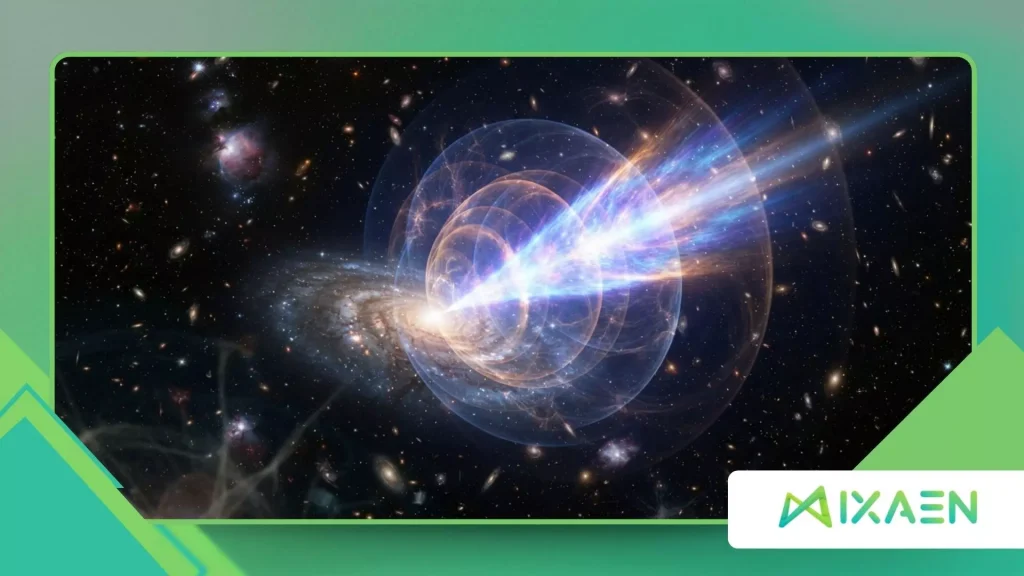
Transient Radio Sources like fast radio bursts provide unprecedented laboratories for testing Einstein’s general relativity under extreme conditions.
These millisecond flashes carry unique polarization signatures that reveal magnetic field strengths along their multi-billion-light-year journeys.
Imagine a cosmic messenger carrying encoded structural data from the edge of the observable universe. Astrometers utilize these pulses to weigh the invisible cosmic web connecting distant galactic clusters.
Recent findings published in astrophysical journals demonstrate that repeating fast radio bursts exhibit complex internal time structures previously thought impossible.
Researchers debate whether these precise periodicities indicate alien megastructures or exotic quark star physics.
Every new detection forces theorists to refine their models of high-energy particle acceleration. Curiosity drives astronomers deeper into the radio sky.
Read omre: Why Extreme Magnetar Flares Produce Unusual Gamma-Ray Signals
How Do Polarization Data Reveal Cosmic Magnetic Fields?
As radio waves pass through magnetized plasma, their polarization angles rotate due to the Faraday effect.
Measuring this rotation quantifies magnetic field intensities lurking between distant galaxies and our Milky Way. This technique maps invisible cosmic magnetism accurately.
Why Do Repeating Signals Baffle Theoretical Physicists?
Unlike one-time catastrophic collisions, repeating radio sources fire pulses rhythmically without destroying their underlying stellar structures.
Theorists struggle to construct physical models that sustain such repetitive energy output without collapsing. Nature continues defying human expectation.
Can Fast Radio Bursts Measure Universe Expansion?
By correlating dispersion measures with precise optical redshift data of host galaxies, scientists calculate accurate cosmic distance scales.
This independent method helps resolve ongoing scientific disputes regarding the exact universe expansion rate. Radio astronomy bridges cosmological gaps.
How Do Next-Generation Telescopes Track Cosmic Anomalies?
Transient Radio Sources require massive computing power and real-time machine learning algorithms to process petabytes of incoming telescope data.
Facilities like the Square Kilometre Array scan vast swaths of the southern sky searching for unexpected transient anomalies.
Think of these supercomputing pipelines as vigilant digital guardians filtering billions of noise signals. Automated alerts dispatch optical telescopes instantly to capture visible aftermath flashes.
Engineering reports from major observatory networks highlight how artificial intelligence dramatically accelerates transient discovery rates worldwide.
Instead of human astronomers manually reviewing endless data logs, neural networks isolate authentic cosmic signals within seconds.
This technological leap transforms observational astronomy into a dynamic, real-time science. The universe no longer hides its fleeting secrets from us.
How Do Machine Learning Algorithms Filter Noise?
Radio telescopes capture massive amounts of radio frequency interference generated by human satellites, cellular towers, and ground electronics.
Advanced neural networks separate terrestrial noise from genuine deep-space signals with incredible accuracy. Clean data ensures reliable scientific conclusions.
Why Are Automated Global Alerts Crucial?
Because transient radio events fade rapidly, global telescope networks must coordinate follow-up observations within minutes of initial detection.
Automated alert protocols link radio observatories with optical and X-ray space telescopes seamlessly. Instantaneous cooperation maximizes scientific discovery potential.
What Challenges Face Future Radio Observatories?
Managing exabytes of raw observational data requires revolutionary data storage and processing infrastructure that pushes modern engineering limits.
Protecting radio quiet zones from commercial satellite interference remains an ongoing battle for astronomers. Preserving our cosmic window demands strict international regulation.
Cosmic Transient Observation Comparison Matrix
The structured table below compares traditional targeted astronomy with modern wide-field transient radio survey methodologies.
| Observation Metric | Targeted Traditional Astronomy | Modern Wide-Field Transient Surveys |
| Sky Coverage | Narrow, focused patches of interest | Massive continuous hemispheric scanning |
| Data Processing | Manual human inspection of archives | Real-time machine learning neural networks |
| Discovery Speed | Slow, months of post-processing analysis | Instantaneous automated global alert triggers |
| Transient Detection | Accidental or highly serendipitous | Systematic, high-volume cataloging daily |
Expanding Cosmic Frontiers Through Ephemeral Radio Signals
Transient Radio Sources prove that the most dynamic secrets of the cosmos often reside in fleeting, invisible flashes rather than steady starlight.
By deploying advanced telescope arrays and artificial intelligence, humanity continues pushing the boundaries of astrophysical discovery.
Every recorded millisecond pulse brings us closer to understanding the extreme physics governing our expanding universe. Take a moment to ponder the hidden energies echoing across space right now.
How will future radio discoveries alter our perspective of cosmic history? Share your insights in the comments below!
Frequently Asked Questions
What actually causes fast radio bursts in distant galaxies?
While exact triggers remain unconfirmed, leading scientific models point toward hyper-magnetized neutron stars known as magnetars or cataclysmic stellar collisions.
Ongoing observations test these theories against newly captured repeating pulse data.
Can transient radio signals be detected by amateur astronomers?
Most transient radio events require massive professional interferometer arrays and supercomputing clusters to detect.
However, amateur radio enthusiasts participate in distributed citizen science projects analyzing open-source telescope datasets.
How fast do these mysterious radio signals travel across space?
Traveling at the absolute speed of light, these radio waves traverse billions of light-years across the cosmos before reaching Earth-based antenna arrays.
Their arrival times provide precise chronological markers for researchers.
Why are radio telescopes better suited for transient searches than optical telescopes?
Radio waves penetrate dense interstellar dust clouds and gas nebulae that completely block visible light wavelengths.
This unobstructed vision allows radio observatories to monitor hidden galactic centers effectively.
Do transient radio sources pose any physical danger to Earth?
No, these extreme energy bursts originate millions or billions of light-years away from our solar system.
By the time the radio waves reach Earth, their intensity is extremely faint and completely harmless.
