
Why Quantum Reference Frames Could Redefine Observation
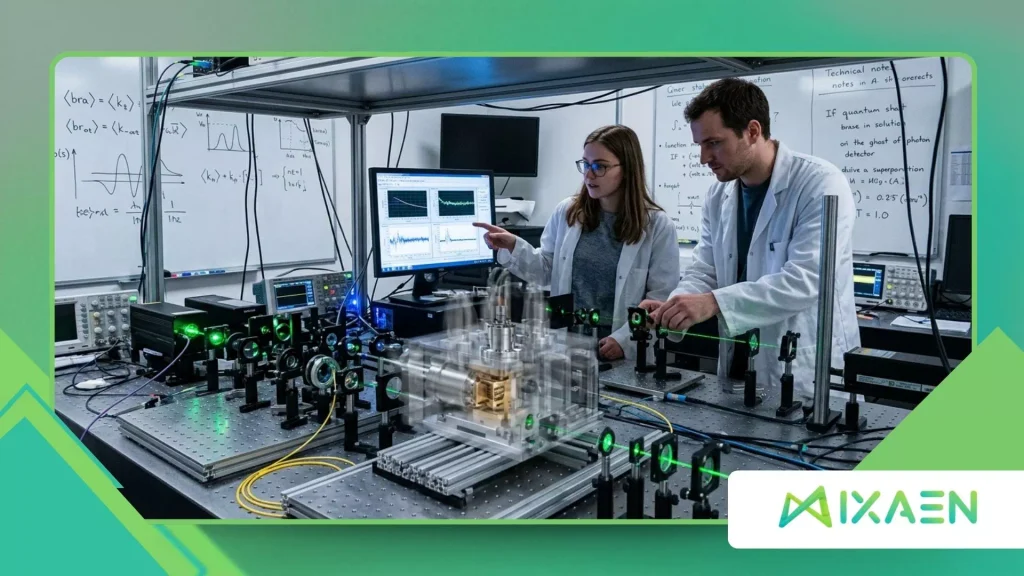
Quantum Reference Frames revolutionize theoretical physics by abandoning the classical assumption that observers and coordinate systems possess absolute, unchanging mass and position states.
Modern quantum physicists realize that measuring instruments themselves obey quantum mechanical laws, existing in superpositions of locations and orientations.
This profound realization shatters Newtonian absolutes, forcing researchers to recalculate how physical information translates between entangled quantum systems.
Understanding this paradigm shift alters our fundamental comprehension of objective reality across subatomic scales.
Navigating this complex theoretical landscape requires examining relational quantum mechanics, coordinate transformations, and operational observer limitations in advanced laboratory experiments.
Leading theoretical research institutes actively explore how localized observers interact with quantum gravitational fields without relying on external classical benchmarks.
Think of these microscopic frames as moving boats measuring ocean waves while tossing violently on the tide. Are you ready to explore how quantum relativity redefines physical observation?
Navigating Advanced Quantum Observer Frameworks
- Investigating relational coordinate transformations between entangled microscopic observers and targets.
- Analyzing operational limitations of quantum measurement devices possessing mass superpositions.
- Evaluating theoretical implications for quantum gravity and spacetime locality principles.
- Documenting recent laboratory breakthroughs in relational quantum information exchange protocols.
What Are Quantum Reference Frames and How Do They Work?
Quantum Reference Frames describe coordinate systems that exhibit quantum properties such as superposition, entanglement, and Heisenberg uncertainty limits.
Classical physics treats lab benches and spatial axes as rigid, unyielding anchors against which all particle motion is calculated.
Imagine attempting to measure car velocity using a rubber band instead of a steel ruler; your measurement tool warps continuously.
Theoretical physics papers published in Physical Review Letters demonstrate that assigning quantum states to coordinate systems eliminates absolute spacetime background assumptions.
Transforming coordinates between two quantum observers requires applying generalized relational quantum mechanics rather than standard Galilean or Lorentz equations.
When the observing apparatus itself enters a spatial superposition, physical states become entirely dependent upon the observer’s relative perspective.
Researchers utilize advanced mathematical group theory to map how quantum states shift between incompatible observer frames smoothly.
This operational flexibility resolves long-standing paradoxes regarding quantum entanglement across accelerated frames.
How Do Superposition States Affect Coordinate Measurement?
Placing a measurement apparatus in a spatial superposition means the instrument simultaneously records multiple conflicting coordinate positions for a target particle.
This dual reality challenges traditional laboratory epistemology by proving that measurement outcomes depend entirely on observer entanglement.
++ Why False Vacuum Decay Could Redefine Cosmic Stability
Why Must Observers No Longer Be Treated as Classical?
Treating lab instruments as infinitely massive classical objects ignores the tiny quantum recoil imparted by every single photon interaction.
Accounting for the observer’s own quantum back-reaction creates a more accurate, unified description of physical reality.
Also read: Why Conformal Cyclic Cosmology Still Divides Physicists
What Role Does Relational Quantum Mechanics Play?
Relational frameworks assert that physical properties only exist relative to other interacting systems, eliminating the need for an absolute universal background grid.
Every particle acts as a potential reference frame for its local neighbors.
Why Are Traditional Classical Coordinate Systems Failing Modern Physics?
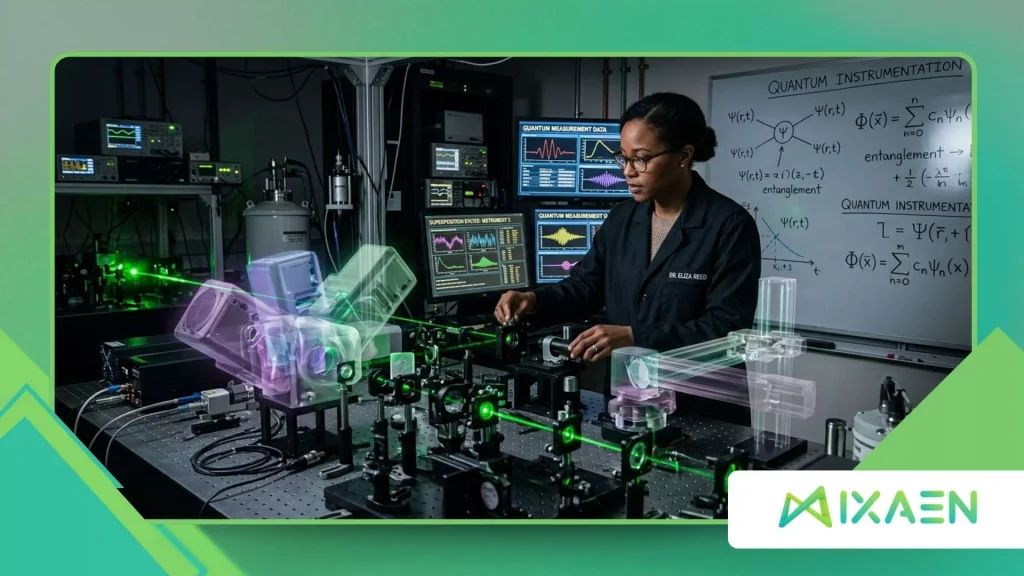
Quantum Reference Frames expose critical limitations in classical relativity whenever researchers attempt to unify quantum mechanics with gravitational field equations.
Standard Einsteinian general relativity relies on smooth, continuous spacetime manifolds governed by precise positions and heavy point-mass observers.
Think of trying to photograph galloping racehorses using a slow pinhole camera; the resulting image blurs into useless obscurity.
Theoretical analyses reveal that at the Planck scale, classical spatial coordinates lose all operational meaning entirely.
Advanced studies conducted by the Institute for Quantum Optics and Quantum Information confirm that neglecting observer quantum states introduces fundamental measurement errors.
When gravitational fields themselves enter quantum superpositions, external classical reference frames become completely non-existent in laboratory scenarios.
Physicists must therefore formulate entirely new mathematical toolkits where coordinates transform dynamically alongside particle wavefunctions.
Modern physics demands rigorous operational realism regarding experimental instrumentation.
Read more: Can Logic Fully Explain the Cosmos?
How Does Planck Scale Physics Break Classical Coordinates?
At ultra-microscopic Planck scales, quantum fluctuations distort spacetime geometry so severely that fixed spatial coordinates dissolve into chaotic foam.
Traditional coordinate grids cannot survive this extreme environmental turbulence without collapsing logically.
Why Do Gravitational Superpositions Demand New Mathematics?
Massive objects warp spacetime according to general relativity while obeying quantum superposition principles simultaneously, creating deep mathematical contradictions.
Dynamic quantum frames resolve this tension by treating spacetime geometry as inherently relational and probabilistic.
What Are the Implications for Quantum Information Science?
Secure quantum communication protocols rely on precise shared reference frames between distant communicating parties operating in noisy environments.
Utilizing quantum frames allows entanglement distribution to succeed even when transmission channels undergo severe gravitational distortions.
What Are the Groundbreaking Advantages of Relational Quantum Frameworks?
Quantum Reference Frames unlock unprecedented theoretical pathways for solving complex entanglement degradation problems encountered in modern quantum computing architectures.
By treating reference frames as controllable quantum resources, engineers can transmit sensitive quantum information without requiring pristine external calibration markers.
Imagine two spacecraft communicating across deep space while spinning wildly without any fixed navigational stars to guide them.
Relational protocols allow them to exchange encrypted data flawlessly using mutual quantum state comparisons alone.
Recent experimental proposals indicate that quantum frame transformations could soon be tested using tabletop atomic interferometers and laser cooling arrays.
These sensitive instruments can detect minute shifts in local gravitational potentials caused by observer mass superpositions in real time.
Validating these theories experimentally bridges the persistent gap between abstract mathematical philosophy and empirical laboratory science.
The future of precision metrology depends entirely on mastering relational physics.
How Do Quantum Resources Simplify Space Communication?
Spacecraft entangled across vast interstellar distances can utilize local quantum states as mutual reference frames, eliminating navigation errors caused by signal delays.
This self-calibrating capability revolutionizes deep-space telemetry and data security protocols.
Why Are Atomic Interferometers Crucial for Testing?
Laser-cooled atomic clouds serve as pristine laboratory testbeds capable of exhibiting quantum superposition states over macroscopic spatial separations.
Researchers monitor phase shifts to confirm predictions made by relational coordinate mathematics.
How Will Quantum Metrology Benefit From This Shift?
Ultra-precise atomic clocks and gravitational wave detectors will achieve revolutionary sensitivity levels by accounting for internal instrument recoil and quantum back-reaction effects.
Precision measurement enters an entirely unprecedented era of accuracy.
Quantum Observation Paradigms Comparison Matrix
The structured table below contrasts classical rigid coordinate assumptions with modern relational Quantum Reference Frames across key theoretical metrics.
| Observation Dimension | Classical Rigid Coordinate Systems | Modern Quantum Reference Frames |
| Observer State | Assumed infinitely massive and static | Exists in dynamic superpositions and entanglement |
| Spacetime Background | Absolute, continuous, and immutable manifold | Relational, probabilistic, and dynamically fluctuating |
| Measurement Recoil | Ignored as negligible experimental noise | Calculated as fundamental back-reaction on observables |
| Information Transfer | Requires external fixed calibration markers | Self-calibrating via mutual quantum state comparison |
Redefining Human Comprehension of Reality and Observation
Quantum Reference Frames prove that the act of observation is an inherently relational, dynamic dialogue between interacting quantum systems.
By discarding outdated classical assumptions about absolute space and static observers, physics enters a deeply unified era.
Embracing this relational worldview expands our technological capabilities and deepens our philosophical appreciation of the cosmos.
Take a moment to reflect on how your own perspective shapes your daily reality this week. How does the concept of relational observation alter your view of scientific truth? Share your insights in the comments below!
Frequently Asked Questions
What actually defines a quantum reference frame in laboratory physics?
A quantum reference frame is any physical measuring apparatus or coordinate system that is treated according to quantum mechanical laws, meaning it can possess position superpositions, momentum uncertainties, and entanglement with observed targets.
Why can’t we just use classical coordinate systems for subatomic particles?
Classical coordinate systems assume rigid, infinitely precise positions and masses, which violates the Heisenberg uncertainty principle and ignores the physical recoil and quantum back-reaction of real-world laboratory instruments.
How do quantum reference frames help unify quantum mechanics and gravity?
By treating spacetime coordinates and reference frames as relational quantum objects rather than fixed background grids, physicists can construct mathematical models where gravity and quantum superpositions coexist without paradox.
Are quantum reference frames currently testable in modern laboratories?
Yes, recent advancements in atomic interferometry, quantum optics, and laser cooling allow researchers to test relational coordinate transformations and observe quantum observer effects in controlled desktop experiments.
Do quantum reference frames affect secure quantum communication networks?
Absolutely, incorporating quantum frames enables secure communication protocols to function flawlessly even when communicating parties lack a pre-established classical spatial orientation or external calibration standard.
