
How Asymptotic Safety Gravity Seeks a Quantum Universe
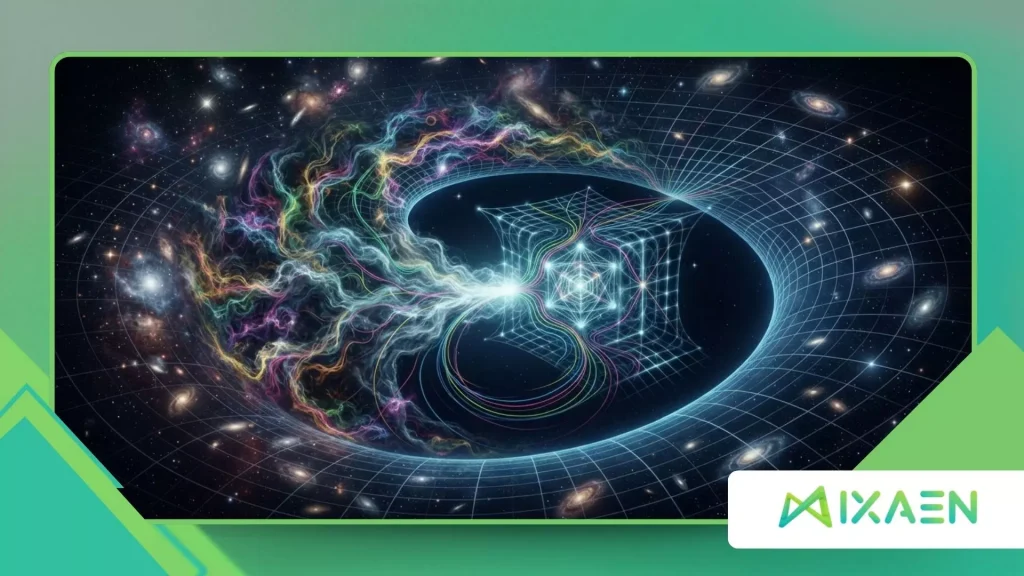
Asymptotic Safety Gravity offers a radical path toward reconciling Einstein’s General Relativity with the chaotic, discrete world of quantum mechanics.
For decades, physicists struggled to quantize gravity because standard mathematical approaches led to nonsensical results at the infinitesimal scale.
By applying the principles of the Renormalization Group, this framework suggests that gravity might actually remain well-behaved at incredibly high energies.
It provides a mathematically consistent way to describe the fabric of spacetime without discarding the core pillars of our classical understanding.
This perspective challenges the prevailing notion that we require completely new, exotic building blocks like strings or loops to explain the universe.
Instead, it posits that gravity is a “non-perturbatively renormalizable” force, meaning the structure of the theory survives the transition into the ultra-high energy domain.
If this hypothesis proves correct, it represents the final, missing piece of the Standard Model puzzle.
Does the key to the universe’s ultimate structure hide within the very laws we already think we understand?
Navigating the Quantum Landscape
- Explaining the fundamental conflict between gravity and quantum fields.
- The role of non-perturbative renormalization in modern theoretical physics.
- How this framework challenges alternative theories like String Theory.
- Current observational evidence and the road to experimental validation.
What Is Asymptotic Safety Gravity and Why Does It Matter?
The core challenge in physics involves the “UV completion” problem, where gravitational force appears to become infinite at distances near the Planck scale.
Asymptotic Safety Gravity proposes that a “fixed point” exists in the flow of physical constants, preventing these infinities from destabilizing the entire theory.
By locking these constants into a stable state at extreme energies, the theory achieves a profound level of mathematical consistency.
Think of it like a river flowing toward a waterfall; standard theories assume the current accelerates until it breaks, but this approach finds a hidden basin.
It suggests that gravity possesses a self-regulating mechanism, maintaining structural integrity regardless of how intensely you probe the underlying spacetime.
This revelation transforms our understanding of gravity from a troublesome outlier into a legitimate, predictable participant in the quantum realm.
How Does the Renormalization Group Function Here?
The Renormalization Group acts as a mathematical tool for tracking how physical laws change as we alter our observational scale.
It allows physicists to zoom out from the messy quantum fluctuations of the Planck length to the smooth geometry of our macroscopic world.
By discovering a fixed point, the theory demonstrates that gravity does not “blow up” but instead reaches a controlled, scale-invariant plateau.
++ Why False Vacuum Decay Could Redefine Cosmic Stability
Why Do Experts Prefer This Over String Theory?
String Theory requires the existence of hidden dimensions and complex mathematical structures that have yet to reveal themselves in any laboratory experiment.
Asymptotic Safety Gravity operates within the four-dimensional spacetime we already observe, making it more conservative and potentially easier to test.
It relies on the inherent logic of quantum field theory rather than invoking entirely new, unverified physical entities.
Also read: Why Conformal Cyclic Cosmology Still Divides Physicists
Is This Theory Experimentally Testable Today?
Current technology limits our ability to probe the Planck energy scale directly, which remains the primary obstacle for definitive verification.
However, researchers look for subtle imprints left in the Cosmic Microwave Background radiation from the early, high-energy universe.
These signatures might prove that gravity followed the predicted asymptotic path during the first fractions of a second after the Big Bang.
How Does This Framework Redefine Spacetime Geometry?
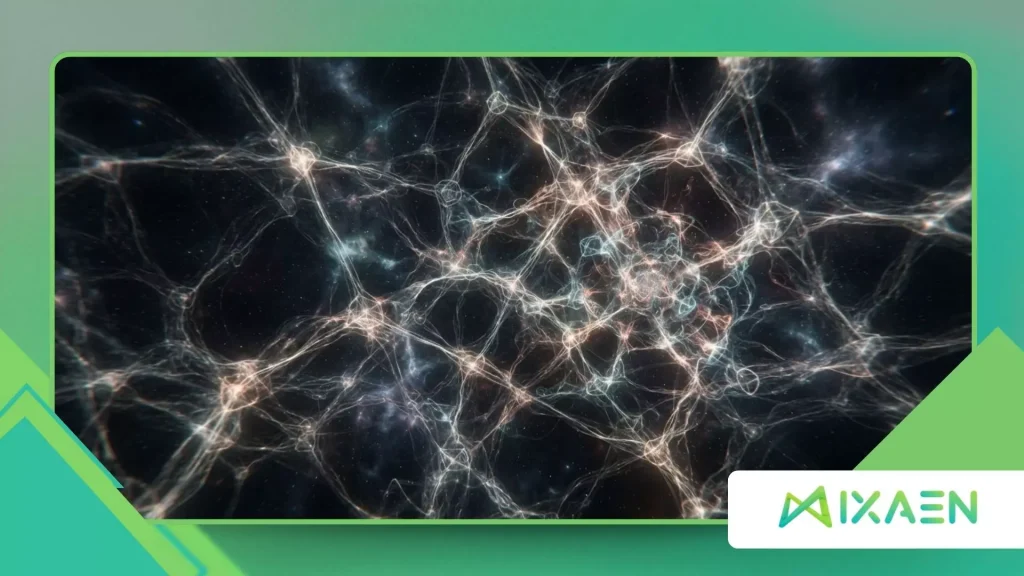
Quantum fluctuations typically suggest that spacetime at the smallest possible scale resembles a bubbling, chaotic “quantum foam” without definite dimensions.
This theory offers a more organized view, suggesting that spacetime retains a fractal structure that remains stable under extreme gravitational stress.
It describes a universe that is self-similar across different scales, providing a logical bridge between quantum particles and macroscopic planets.
This geometric stability prevents the total collapse of physics at the singularity of a black hole.
Where classical relativity predicts a point of infinite density, this approach suggests the presence of a “quantum core” that resolves the singularity.
By smoothing out these extreme curvatures, the theory offers a more coherent depiction of how the universe handles its most violent events.
Read more: Can Logic Fully Explain the Cosmos?
How Do Black Holes Behave Under This Theory?
Instead of a crushing singularity, black holes likely contain a dense, yet finite, distribution of energy within their centers.
This resolves the long-standing “information paradox,” as the quantum-corrected geometry allows information to escape or reform in a structured manner.
It turns black holes from destructive end-points into complex, dynamic objects that adhere to quantum laws.
What Is the Significance of Scale Invariance?
Scale invariance implies that the physical laws governing the universe look identical whether you examine them at the size of a galaxy or a proton.
This property simplifies our models, suggesting that we do not need infinite sets of different equations to describe different cosmic scales.
It provides a unifying aesthetic that physicists have long sought in their quest for a theory of everything.
How Do Quantum Fluctuations Affect Mass?
In this model, mass behaves as a dynamical variable that responds to the fluctuating energy density of the surrounding vacuum.
As we move to higher energy scales, the influence of these fluctuations stabilizes, preventing mass from spiraling into uncontrollable values.
This creates a feedback loop that maintains the overall equilibrium of the cosmos, even during extreme inflationary periods.
Why Is the Fixed Point Crucial for Physics?
The search for the “Fixed Point” represents a monumental effort to demonstrate that our current understanding of gravity is mathematically robust.
If the constants of nature converge to this stable value, it proves that gravity is inherently quantum in nature.
Asymptotic Safety Gravity gives us a framework where the force of gravity is not merely a consequence of geometry but a fundamental quantum field.
This realization bridges the final gap between the very large and the very small, completing the mission started by early 20th-century pioneers.
It suggests that the universe is not just a collection of random parts, but a coherent system dictated by elegant mathematical constraints.
We are finally uncovering the language that the cosmos used to write its own rulebook.
How Do We Validate the Fixed Point Mathematically?
Physicists utilize sophisticated numerical simulations and Functional Renormalization Group equations to map out the gravitational flow.
By calculating the evolution of Newton’s constant and the cosmological constant, they show that these values “lock” together at high energies.
This convergence is the hallmark of a healthy, non-perturbative quantum field theory.
What Does This Mean for the Cosmological Constant?
The cosmological constant, which drives the expansion of our universe, appears naturally within this framework as a consequence of quantum gravitational interactions.
It explains why the expansion remains steady and predictable rather than accelerating into total chaos.
This provides a rare, theoretical solution to one of the most stubborn mysteries in modern astrophysics.
Are There Any Competing Theories Worth Noting?
Loop Quantum Gravity and Causal Dynamical Triangulations represent alternative attempts to solve the same problem using discrete, geometric models.
While these theories assume space itself is made of tiny, fundamental chunks, Asymptotic Safety Gravity assumes that spacetime remains a continuum that obeys quantum rules.
Each approach offers unique insights, but the fixed-point method remains a dominant contender.
Theoretical Framework Comparison
The table below outlines the primary differences between this framework and other major contenders in the field of quantum gravity.
| Feature | Asymptotic Safety | String Theory | Loop Quantum Gravity |
| Spacetime View | Continuum/Fractal | Extra Dimensions | Discrete/Chunks |
| Fixed Point | Exists/Stable | Not Applicable | Not Applicable |
| Particle Basis | Standard Fields | Strings/Brane | Spin Networks |
| Energy Limit | Scale Invariant | UV Complete | Finite Area/Volume |
Conclusion
Asymptotic Safety Gravity provides a compelling, mathematically rigorous path toward understanding the ultimate nature of our quantum universe.
By proving that gravity can be self-consistent without requiring exotic dimensions, it maintains the elegance of General Relativity while embracing the complexity of quantum fields.
This development could reshape our understanding of black holes, the Big Bang, and the fundamental expansion of our reality.
As research continues into 2026, the prospect of an experimentally verifiable quantum gravity theory moves from fantasy to reality.
The universe is far more stable than we once imagined. Share your thoughts on this quantum leap in our comments below!
Frequently Asked Questions
Is the theory already fully proven?
No, the theory remains a highly active area of mathematical research.
While the existence of the fixed point is supported by numerical simulations, a full, non-perturbative proof remains one of the greatest challenges in theoretical physics.
How does this affect our understanding of the Big Bang?
This theory replaces the traditional “singularity” at the beginning of time with a “quantum bounce” or a controlled expansion phase.
It allows for a description of the earliest moments of our universe that obeys physical laws instead of breaking them.
Why is gravity so much harder to quantize than electromagnetism?
Gravity is inherently non-linear and dictates the geometry of space itself, whereas other forces exist within space.
This coupling makes gravity resistant to standard quantization methods, requiring the specialized approach of the Renormalization Group used in Asymptotic Safety Gravity.
