
How Cosmic Neutrino Sources Remain Hidden Across Deep Space
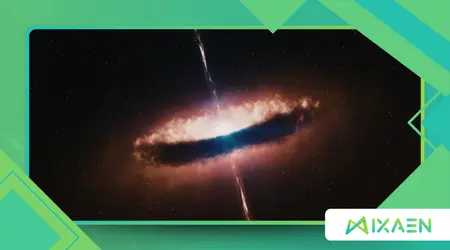
Cosmic Neutrino Sources hold the ultimate blueprint of our universe’s most violent, high-energy events, yet they remain stubbornly veiled in deep space.
For decades, astrophysicists have chased these nearly massless, ghostly particles, which travel across light-years without altering their course or losing energy.
While conventional photons from distant galaxies are easily blocked by cosmic dust or warped by magnetic fields, neutrinos pass through everything entirely unscathed.
Ironically, the very property that makes them perfect cosmic messengers also makes pinning down their exact origins an astronomical nightmare.
Quick Navigation & Key Takeaways
- The Ghost Particle Paradox: Why cosmic neutrinos are crucial yet nearly impossible to catch.
- IceCube & Baikal-GVD: The massive subatomic telescopes hunting signals in ice and water.
- The Blazar Connection: How active galactic nuclei act as natural particle accelerators.
- Overcoming the Dust: Why traditional astronomy fails where neutrino physics succeeds.
What Are Cosmic Neutrino Sources and Why Do They Matter?
What is a neutrino?
A neutrino is an elementary subatomic particle with no electrical charge and a mass so infinitesimally small that it was long thought to be zero.
Produced in massive amounts during nuclear fusion in stars and supernovae, they are the most abundant particles with mass in the cosmos.
Because they only interact via gravity and the weak nuclear force, billions of them pass through your thumb every single second.
They carry pristine data from the edges of the observable universe, acting as clean, unhampered historical records of deep-space phenomena.
How do they escape detection?
The extreme elusiveness of these particles stems directly from their lack of charge and near-zero mass, allowing them to bypass matter entirely.
Unlike cosmic rays, which bend along magnetic fields, neutrinos travel in straight lines, directly pointing back to their volatile violent origins.
Yet, catching them requires building massive detectors out of natural materials like Antarctic ice or deep lake water to force an interaction.
Only on incredibly rare occasions does a neutrino strike an atomic nucleus, producing a flash of light that scientists can record.
Why look for them?
Studying these elusive points of origin allows researchers to map the high-energy universe in ways traditional optical or X-ray telescopes simply cannot manage.
They offer a rare, unobstructed view into the hearts of supermassive black holes, hypernovae, and active starburst galaxies.
By tracking these particles, we are effectively uncovering the universe’s natural particle accelerators, solving long-standing puzzles about cosmic ray acceleration.
This research bridges the gap between quantum mechanics and large-scale astrophysics, reshaping our fundamental understanding of space-time.
How Do Scientists Track These Hidden Sources Across Deep Space?
Where are the detectors located?
To capture a fleeting glimpse of cosmic neutrino sources, astrophysicists must transform entire natural landscapes into highly sensitive, colossal scientific instruments.
The IceCube Neutrino Observatory, for instance, uses a cubic kilometer of crystal-clear Antarctic ice embedded with thousands of optical sensors.
Similarly, the Baikal-GVD in Russia utilizes the deep, pristine waters of Lake Baikal to watch for subatomic collisions. These remote, sterile environments are chosen specifically to minimize background noise from atmospheric interference and everyday human activity.
How does detection work?
When a high-energy neutrino rarely collides with an atom in the ice or water, it generates a secondary particle called a muon. This muon streaks through the medium faster than light can travel through that same material, producing a distinct blue glow.
This phenomenon, known as Cherenkov radiation, acts like a mini sonic boom of light, mapping the precise trajectory of the original particle.
Scientists trace this glowing blue path backward across the sky, pointing their traditional telescopes toward the suspected point of origin.
What are the main challenges?
The primary obstacle in this celestial detective work is filtering out the massive amount of background noise caused by atmospheric cosmic rays.
Earth is constantly bombarded by debris from space, creating a chaotic soup of particles that can easily mimic a genuine deep-space signal.
Furthermore, because these interactions are so profoundly rare, detectors must run continuously for years just to gather a handful of verifiable events.
Distinguishing a true cosmic messenger from local atmospheric static requires highly advanced machine-learning algorithms and absolute analytical precision.
Why Do These Cosmic Powerhouses Remain So Successfully Veiled?
What hides these sources?
The environments that generate these high-energy particles are shrouded by dense walls of cosmic dust, intense radiation fields, and thick gas clouds.
For example, the active galactic nucleus of a distant galaxy might be completely opaque to traditional light waves or X-rays.
While the neutrinos escape these chaotic environments effortlessly, the visible indicators that would help astronomers identify the source are completely swallowed up.
Consequently, we receive the ghostly signal, but when we look closer with standard telescopes, we often see nothing but darkness.
How do magnetic fields interfere?
While neutrinos travel in perfectly straight lines, cosmic rays which are charged particles generated by the same phenomena are violently deflected by magnetic fields.
Interstellar space is woven with complex magnetic grids that twist, bend, and scramble the trajectories of protons and electrons over millions of light-years.
By the time these charged particles reach Earth, all directional data regarding their point of origin has been completely erased.
Astronomers are left with a scrambled puzzle, making the uncharged neutrino our only direct directional link to these distant systems.
Can we use multi-messenger astronomy?
The breakthrough solution to this cosmic hide-and-seek game lies in combining neutrino detection with gravitational waves, gamma rays, and traditional radio astronomy.
When IceCube detects a high-energy event, it immediately triggers worldwide alerts, prompting automated space telescopes to pivot toward that exact coordinate.
This cooperative approach was famously successful in tracking a neutrino to the blazar TXS 0506+056, marking a historic milestone in space exploration.
By gathering different types of cosmic data simultaneously, scientists can finally pierce through the thickest interstellar fog.
Current Breakthroughs and Data Insights
Our ability to pinpoint cosmic neutrino sources has advanced dramatically, moving from speculative theories to precise, data-driven discoveries.
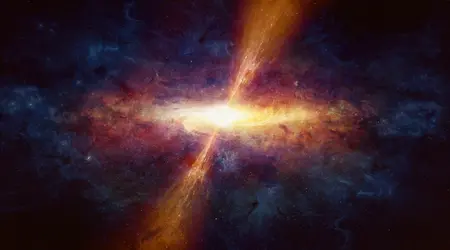
Recent observations have confirmed that active galaxies specifically blazars with relativistic jets aimed directly at Earth are primary contributors to the cosmic flux.
Statistically, a singular high-energy neutrino alert can now mobilize over twenty ground and space-based observatories within less than a minute.
This rapid-response network has revolutionized our understanding of the extreme universe, proving that these hidden sources can be unmasked through global scientific cooperation.
| Observatory Name | Location | Detection Medium | Target Sources |
| IceCube | Amundsen-Scott South Pole Station | 1 km³ Antarctic Ice | Blazars, Supernovae, Active Galaxies |
| Baikal-GVD | Lake Baikal, Siberia | Deep Fresh Water | Galactic Nuclei, Dark Matter Annihilation |
| KM3NeT | Mediterranean Sea | Deep Salt Water | Cosmic Accelerators, Neutrino Oscillations |
Summary of the Cosmic Chase
Unraveling the mysteries of cosmic neutrino sources requires an incredible mix of patience, global teamwork, and colossal engineering feats.
These ghostly particles offer an unadulterated look into the most volatile environments in the universe, bypassing the dust and magnetic fields that blind traditional telescopes.
While their weak interactions make them exceptionally difficult to capture, advanced observatories worldwide are successfully turning nature into subatomic traps.
As multi-messenger astronomy matures, the dark corners of deep space are finally being illuminated, one rare flash of blue light at a time.
What are your thoughts on the hunt for these ghost particles? Share your thoughts in the comments below!
Frequently Asked Questions
What makes a cosmic neutrino different from a solar neutrino?
Solar neutrinos are low-energy particles produced by nuclear fusion inside our Sun, whereas cosmic neutrinos possess millions of times more energy.
These high-energy variants originate from extreme cosmic events outside our galaxy, such as supermassive black holes or colliding neutron stars.
Why do we build neutrino detectors deep underground or underwater?
Superficial cosmic rays constantly bombard Earth’s surface, creating immense background noise that easily drowns out rare neutrino signals.
Placing detectors deep under ice, ocean water, or rock uses the earth as a natural shield, filtering out everything except the highly penetrative neutrinos.
Can neutrinos travel faster than the speed of light?
Neutrinos possess a tiny amount of mass, meaning they travel incredibly close to, but slightly below, the speed of light in a vacuum.
However, inside mediums like ice or water, secondary particles generated by neutrinos can travel faster than light does in that specific medium, causing Cherenkov radiation.
