
Why Photochemical Haze Worlds Complicate Life Detection Efforts
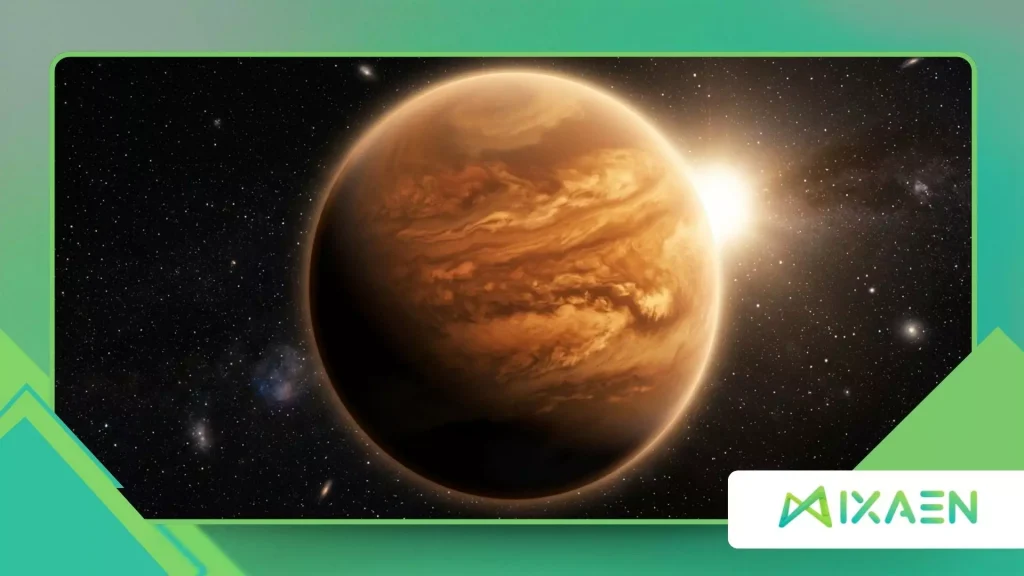
Photochemical Haze Worlds present unprecedented optical barriers that severely confound modern astronomical biosignature detection efforts across distant extrasolar systems today.
Advanced space-based observatories struggle to peer through thick atmospheric aerosol layers masking potentially habitable planetary surfaces below.
Stellar ultraviolet radiation continually triggers complex chemical reactions in planetary atmospheres, generating dense organic hazes that block critical spectroscopic transmission lines.
Astrobiologists face monumental analytical hurdles when trying to distinguish abiotic haze signatures from true biological activity markers.
Deciphering these clouded atmospheres requires innovative modeling techniques and next-generation infrared telescope capabilities to pierce opaque atmospheric veils successfully.
Think of these planetary hazes like tinted smoked-glass windows hiding a secret room filled with priceless historical artifacts.
Without clearing or accounting for the obstructive aerosol scatter, researchers risk missing vital chemical clues indicating alien life. Are you ready to explore how planetary smog conceals the greatest scientific secrets of our galaxy?
Navigating Atmospheric Aerosol Challenges
- Understanding how stellar ultraviolet radiation drives complex organic haze formation processes.
- Evaluating spectroscopic interference patterns caused by dense planetary aerosol layers.
- Deploying next-generation space telescopes to pierce opaque exoplanet skies.
- Differentiating between abiotic atmospheric smog and genuine biological biosignatures.
What Causes Dense Atmospheric Smog on Distant Exoplanets?
Photochemical Haze Worlds develop thick atmospheric veils when high-energy stellar photons break apart simple atmospheric gases like methane and carbon dioxide.
These dissociated molecular fragments recombine rapidly into complex organic macromolecules that condense into floating aerosol particles.
Imagine a planetary chemistry laboratory where ultraviolet sunlight acts as an unceasing ignition source for organic smog production.
Over geological timescales, these microscopic particles accumulate into impenetrable atmospheric blankets wrapping entire worlds.
Recent observational data published by the National Aeronautics and Space Administration highlights that haze-forming chemistry occurs across diverse exoplanet categories.
These organic aerosols scatter incoming and outgoing starlight aggressively, mututing critical spectral absorption features that scientists rely upon.
When astronomers point powerful spectrographs at cloudy targets, the resulting data reveals flat spectral lines devoid of sharp chemical markers.
This optical masking prevents direct identification of underlying atmospheric water vapor or trace gases.
How Does Ultraviolet Radiation Drive Reactions?
High-energy UV photons strike atmospheric molecules, stripping away valence electrons and initiating complex radical chain reactions.
These reactive fragments collide continuously, chaining together into heavy hydrocarbon polymers that form solid aerosol particles. Stellar activity dictates the intensity and speed of this atmospheric manufacturing plant.
++ What If We Discover Life That Doesn’t Want to Be Found?
Why Do Aerosols Flatten Spectroscopic Data?
Aerosol particles block and scatter photons indiscriminately across visible and near-infrared wavelengths, creating a smooth, featureless transmission spectrum.
This optical noise drowns out the subtle absorption fingerprints left by atmospheric gases like oxygen or methane.
Astrobiologists must develop advanced computational algorithms to filter out this frustrating aerosol interference.
Also read: Why Finding Life Elsewhere Might Force Us to Rethink Religion
Can Haze Shield Alien Life From Radiation?
Thick organic hazes act as natural planetary sunscreens, blocking lethal stellar UV radiation from sterilizing exposed planetary surfaces.
This protective shield might actually foster primordial biological evolution by safeguarding fragile organic molecules in shallow waters. Haze creates a paradoxical barrier that simultaneously hides and protects potential biospheres.
How Do Aerosols Obscure Key Biological Markers?

Photochemical Haze Worlds frustrate exoplanet characterization because dense smog signatures mimic metabolic byproducts, creating dangerous false positives or hidden negatives.
When atmospheric models fail to account for aerosol scattering, researchers might misinterpret abiotic methane as proof of alien biology.
Think of trying to read a billboard through a blinding desert sandstorm; the message becomes completely distorted and unreadable.
This analytical ambiguity forces the scientific community to demand multiple independent verification lines before claiming biosignature discovery.
Advanced transit spectroscopy missions operating in 2026 utilize mid-infrared wavelengths to peer deeper beneath upper atmospheric haze layers.
Infrared photons penetrate organic aerosols much more effectively than visible light, revealing hidden molecular absorption bands underneath.
However, thermal emission noise and instrumental limits still restrict how clearly scientists can resolve lower atmospheric compositions. Precision calibration remains the ultimate key to unlocking cloudy exoplanet secrets.
Read more: How Exoplanet Water Inventories Influence Climate Stability
Why Is Methane Detection Ambiguous?
Methane serves as a prime potential biosignature, but volcanic activity and photochemical haze production generate abundant abiotic methane simultaneously.
Without context from surrounding atmospheric gases, researchers cannot determine whether methane originates from living organisms or geological venting. Haze compounds complicate this detective work by locking carbon atoms into complex chains.
How Do Infrared Telescopes Pierce Smog?
Mid-infrared light carries longer wavelengths that slip between microscopic aerosol particles with minimal scattering loss.
Space observatories equipped with cryogenic infrared spectrometers capture thermal emission data that bypasses upper-level optical blocks.
This technological leap transforms fuzzy atmospheric guesses into concrete chemical inventories.
What Are False Positive Biosignatures?
Abiotic chemical reactions driven by lightning, meteor impacts, and photochemistry can produce oxygen or organic molecules without any biological input.
Haze particles often trap these abiotic gases in unique ratios that trick automated detection software.
Rigorous atmospheric modeling helps scientists separate genuine biological whispers from noisy chemical static.
Why Is Atmospheric Modeling Crucial for Exoplanet Science?
Photochemical Haze Worlds demand sophisticated three-dimensional climate and chemistry models to simulate how winds distribute aerosols across planetary globes.
Because tidal locking or rapid rotation creates uneven day-night haze distribution, static one-dimensional models frequently fail.
Imagine predicting global weather patterns on Earth using only a single thermometer placed in a random backyard.
Comprehensive computer simulations integrate photochemistry, fluid dynamics, and radiative transfer to decode complex observational signals accurately.
Leading astrophysicists emphasize that laboratory simulations of exoplanet atmospheric chemistry provide vital baseline data for space telescope observations.
Recreating alien haze chambers on Earth allows scientists to measure exact light-scattering properties across various gas mixtures.
These empirical laboratory measurements feed directly into advanced data-processing pipelines used by modern orbital observatories.
Theory and laboratory experimentation must unite to conquer the optical tyranny of planetary smog.
How Do 3D Models Map Haze Distribution?
Global circulation models simulate how supersonic atmospheric winds push organic aerosols from day-sides toward cooler night-sides continuously.
This dynamic transport creates patchy, asymmetric haze layers that alter transit spectra as planets rotate. Accounting for spatial variability prevents major misinterpretations of telescope data.
Why Are Laboratory Haze Chambers Necessary?
Simulating alien atmospheres inside stainless-steel vacuum chambers lets researchers synthesize exact analog particles under controlled stellar radiation.
Measuring how these laboratory-grown aerosols absorb light provides the mathematical foundation for astronomical data interpretation. Empirical calibration eliminates guesswork from remote sensing analyses.
What Role Do Supercomputers Play?
Processing massive multi-variable atmospheric datasets requires petascale supercomputing power running complex radiative transfer algorithms.
These machines test thousands of possible atmospheric scenarios against real telescope observations in mere minutes. Computational muscle turns raw, noisy light curves into detailed planetary portraits.
Comparative Matrix of Exoplanet Atmospheric Types
The structured table below contrasts clear-sky exoplanets with photochemical haze worlds across key observational and biological detection metrics.
| Atmospheric Category | Primary Optical Challenge | Biosignature Detectability | Dominant Chemical Driver |
| Clear-Sky Worlds | Low optical depth, faint signals | High (Clear transmission lines) | Photolysis and basic photochemistry |
| Photochemical Haze Worlds | Dense aerosol scattering and flat spectra | Low (Requires mid-IR telescopes) | UV-driven organic polymer condensation |
| Water-Vapor Rich Worlds | Thick cloud decks masking lower troposphere | Moderate (Upper atmosphere signatures only) | Condensation cycles and global humidity |
Navigating the Cloudy Future of Astrobiology
Photochemical Haze Worlds remind us that discovering life in the universe will require extraordinary scientific patience, technological innovation, and rigorous analytical skepticism.
While opaque atmospheric smog complicates our search for biosignatures, it also points toward rich, active chemical environments waiting to be understood.
Every technological upgrade brings us closer to reading the true atmospheric stories written across distant star systems. Take a moment to ponder the hidden worlds orbiting stars beyond our sun.
Which upcoming space telescope mission excites you the most for discovering true alien biosignatures? Share your thoughts in the comments below!
Frequently Asked Questions
Why do some exoplanets develop thick photochemical hazes while others remain clear?
Haze formation depends heavily on the ratio of atmospheric carbon to oxygen, stellar ultraviolet radiation intensity, and atmospheric temperature profiles.
Planets with elevated methane-to-carbon dioxide ratios exposed to intense UV starlight produce heavy organic polymers that condense into persistent aerosols.
Can current space telescopes see through exoplanet haze layers completely?
Current observatories utilize advanced mid-infrared spectroscopy to peer deeper beneath upper aerosol decks, though dense multi-layered hazes still present significant analytical challenges.
Future direct-imaging space telescopes currently in development will provide even sharper resolution capabilities.
Are photochemical hazes a sign that a planet is completely lifeless?
Not at all, as prebiotic organic chemistry driven by hazes might actually provide the chemical building blocks necessary for life to originate.
Hazes simply mask surface and lower-atmospheric chemical markers, requiring sophisticated indirect methods to search for underlying biological activity.
