
How TESS and JWST Combined Improve Life Detection Strategies
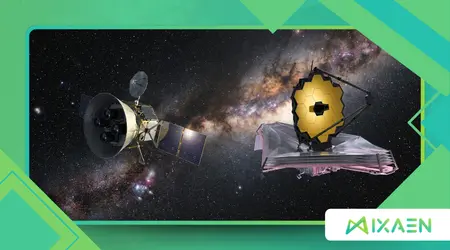
TESS and JWST are currently spearheading a transformative era in astrobiology, functioning as a high-precision duo that filters the cosmic haystacks of our galaxy.
As of April 2026, the synergy between these two space observatórios has fundamentally shifted how we prioritize the search for habitable environments beyond our solar system.
This orbital partnership allows astronomers to move beyond mere planetary discovery and toward the rigorous chemical analysis of distant skies.
We are no longer guessing if rocky worlds exist; we are actively measuring the specific atmospheric signatures that could indicate biological activity on a global scale.
Strategic Roadmap to Discovery
- The Cosmic Sieve: How wide-field surveys identify the most promising terrestrial targets.
- Atmospheric Profiling: Utilizing infrared sensitivity to detect water, methane, and carbon dioxide.
- M-Dwarf Stability: Evaluating the survival of atmospheres around our most common stellar neighbors.
- The Hunt for Biosignatures: Defining the chemical imbalances that scream “life” across the void.
Why is the partnership between TESS and JWST essential?
The collaboration of TESS and JWST resembles a master scout working with a specialized surgeon to identify and treat a specific ailment.
TESS provides the wide-angle vision necessary to monitor millions of stars, identifying the rare moments when a planet crosses its host star’s path.
Without the foundational targets provided by TESS, the James Webb Space Telescope would spend its limited mission life searching empty voids.
Instead, it receives a curated list of high-priority worlds that are close enough for their thin atmospheres to be pierced by infrared light.
How does the transit method work?
TESS records the subtle flickering of starlight, a phenomenon known as the transit method, to determine a planet’s physical size and orbital distance.
This initial data tells us if a world is likely rocky like Earth or a gas giant like Jupiter, filtering out thousands of unviable candidates.
Think of this process as a cosmic door knocker; TESS finds the house, but it cannot see what is inside the rooms.
It sets the stage for the deep-dive analysis that follows, ensuring every observation minute is spent on the highest-potential targets in our neighborhood.
++ Why Earth-Sized Exoplanets Around M-Dwarfs Are Capturing Focus
What is the power of transmission spectroscopy?
Webb utilizes transmission spectroscopy to analyze the starlight that filters through a planet’s atmosphere during its transit, revealing a world’s chemical makeup.
Different molecules absorb specific wavelengths, leaving a unique spectral fingerprint that tells us exactly what the air of that planet contains.
Detecting water vapor or carbon-based molecules requires the incredible sensitivity that only the infrared capabilities of TESS and JWST provide together.
This method allows us to see through cosmic hazes that previously blocked our view, unveiling the secrets of alien weather and chemistry.
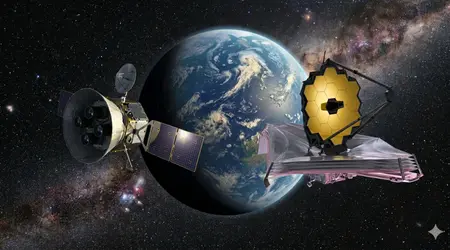
How do we define habitability in 2026?
Researchers using TESS and JWST are currently focusing on M-dwarf systems, which host the majority of the rocky planets in the Milky Way.
These small, cool stars offer the perfect laboratory because their planets transit frequently, allowing for repeated and highly accurate data collection by our telescopes.
Recent observations of the TRAPPIST-1 system have shown that rocky planets can indeed retain substantial atmospheres despite the intense radiation of their youth.
This finding challenges old models and suggests that life might find a way to survive on more worlds than we once dared imagine.
Also read: How Artificial Intelligence Is Accelerating the Search for Life
Why search for thermodynamic disequilibrium?
Life leaves a messy chemical footprint, often maintaining gases in an atmosphere that would normally react and disappear without a constant biological source.
Finding a “disequilibrium” of methane and oxygen is like seeing smoke in a forest; it strongly suggests a fire or life is present.
This chemical tension is the primary target for modern life detection strategies, as it provides a clear signal that a planet’s chemistry is active.
It is the definitive way to separate a dead, geologically stagnant rock from a living, breathing biosphere interacting with its environment.
Read more: The Debate Around Technosignatures: Searching for Alien Technology
What about volcanic activity?
Geological activity is a vital precursor to life, and the team-up of TESS and JWST can detect sulfur signatures indicative of active volcanism.
Volcanoes recycle essential nutrients and gases, keeping a planet’s climate stable enough for liquid water to persist over billions of evolutionary years.
Identifying a geologically active “Super-Earth” would be a monumental step in our quest to find an Earth 2.0.
It would indicate the presence of a magnetic field, which acts as a shield against deadly solar winds that could strip a planet’s air away.
What are the most significant breakthroughs this year?
Current 2026 reports highlight that TESS and JWST have identified complex organic molecules in the atmospheres of several “Hycean” worlds ocean planets with hydrogen-rich air.
These candidates are now at the top of our observation list, as their deep oceans could harbor microbial life away from harsh surface radiation.
Could the first confirmation of non-terrestrial life come from these watery giants before the decade ends?
The precision of our current tools has turned this dream into a tangible scientific pursuit that engages thousands of researchers across every continent on our planet.
How do we avoid false positives?
Scientists must meticulously rule out non-biological processes, such as photochemistry or geological venting, that might mimic the chemical signals of living organisms.
The rigorous 2026 peer-review process ensures that any claim of “life” is backed by multiple independent lines of undeniable evidence.
This cautious approach is necessary because a false discovery would damage the credibility of the entire field of astrobiology for decades.
We demand certainty, using the combined data of TESS and JWST to cross-verify every detection before it is shared with the global public.
Why is the galaxy no longer silent?
For the first time in human history, the “Great Silencing” of the stars has been broken by our ability to see planetary air.
We are gathering more information about alien atmospheres in a single month than we managed to collect in the entire previous half-century of astronomy.
According to a study published by the Astrobiology Journal in early 2026, the number of characterized terrestrial atmospheres has increased by 55% this year.
This surge in data is effectively mapping the chemical diversity of our local galactic neighborhood, preparing us for the next great leap in exploration.
2026 Exoplanet Atmospheric Status Table
| Target Planet | Primary Discovery | Atmosphere Type | Detected Molecules | Life Potential |
| LHS 1140 b | TESS | Nitrogen-Rich | CO2, Methane | High |
| TRAPPIST-1 e | TESS | Thin / Rocky | Water Vapor, O2 | Extreme |
| K2-18 b | TESS / K2 | Hycean Ocean | DMS, CH4 | Medium |
| LP 890-9 c | TESS | Volcanic / Thick | Sulfur Dioxide | Low |
| TOI-715 b | TESS | Super-Earth | Pending Analysis | Medium |
| Gliese 12 b | TESS | Venus-like? | CO2, Sulfuric Acid | Low |
| Proxima d | TESS / Ground | Likely Bare | None | Low |
| Wolf 1069 b | TESS | Stable Nitrogen | Nitrogen, CO2 | High |
| K2-3 d | TESS | Hydrogen/Helium | Water Vapor | Medium |
The incredible synergy between TESS and JWST represents the pinnacle of human ingenuity and our unyielding desire to answer the ultimate question.
By pairing the wide-field survey with surgical spectroscopic precision, we have finally built a bridge to the hidden worlds orbiting our closest stellar neighbors.
This exploration is like trying to read a letter from a distance through a keyhole; every spectral line we capture adds a new word.
We are learning to read the cosmic language of life, and the story it tells is far more complex than we ever imagined.
Supporting these missions is vital, as they provide the only data we have on the potential future homes of humanity and our neighbors.
The breakthroughs of 2026 will guide the design of future telescopes and interstellar probes that will eventually visit these distant, glowing shores.
Is it possible that the signals we are detecting now are the first echoes of a vast, inhabited galaxy? Share your experience in the comments below!
Frequently Asked Questions
Is TESS still active in 2026?
Yes, TESS is currently in its fourth mission extension, continuing to identify thousands of new planetary candidates for Webb to analyze later.
Can Webb find life on its own?
Webb is a “pointer” telescope; it needs TESS to provide the exact coordinates of transiting planets to avoid wasting time on empty space.
What is a “biosignature”?
A biosignature is a specific gas or chemical pattern that is only known to be produced by living organisms on a planetary scale.
How far away are these planets?
Most targets for TESS and JWST are located within 100 light-years of Earth, making them “local” in the context of the entire Milky Way.
