
How Quantum Elastic Geometry Reframes the Nature of Reality
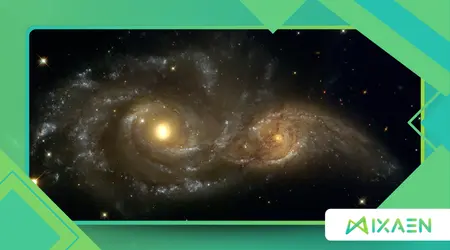
Quantum Elastic Geometry emerges as the most provocative framework in modern physics, fundamentally reshaping how we understand the fabric of our universe.
By merging quantum mechanics with the flexible nature of spacetime, this theoretical breakthrough suggests that reality is not a static background, but a dynamic, stretchable canvas.
Physicists now view the cosmos through this adaptive lens, shifting away from rigid traditional models. As we analyze these cosmic mechanics, we uncover a universe deeply interconnected by microscopic, elastic fluctuations.
Highlights of the Cosmic Shift
- The Core Concept: Spacetime behaves like an elastic, quantum fabric rather than a smooth, fixed grid.
- The Big Resolution: Bridges the historic mathematical divide between General Relativity and Quantum Mechanics.
- Real-World Impact: Explains anomalies in black hole event horizons and early universe expansion data.
What Is Quantum Elastic Geometry and Why Does It Matter?
How does the universe stretch at the Planck scale?
For decades, scientists viewed spacetime as a smooth, continuous stage where particles played their parts. However, recent observations of cosmic microwave background anomalies suggest that at the smallest imaginable scales, the universe behaves like a flexible, vibrating mesh.
This revolutionary perspective shows that quantum fluctuations actively stretch, twist, and bend the geometry of space, creating a microscopic dance of constant geometric adaptation.
When we look closely at this Planck-scale activity, the traditional Euclidean notions of distance completely break down. Instead of fixed points, we find a fluid network where distances fluctuate based on quantum energy densities.
This means that the very geometry of our universe possesses an inherent elasticity, responding dynamically to quantum states in ways that traditional physics never anticipated.
Why do traditional physics models fail without it?
Einstein’s General Relativity treats spacetime as a beautiful, smooth fabric curved by mass, while quantum mechanics views the world as a chaotic, probabilistic realm.
When physicists try to combine these two frameworks inside a black hole, the mathematics break down completely, yielding nonsensical infinite values.
Without incorporating the principles of Quantum Elastic Geometry, our equations remain fundamentally blind to the true mechanics of extreme cosmic events.
By introducing an elastic threshold to quantum spacetime, we prevent these mathematical infinities from ruining our cosmological models.
The fabric of space cannot be crushed into an infinitely small singularity because its quantum elasticity resists ultimate collapse.
This structural resilience allows physicists to calculate cosmic phenomena with unprecedented accuracy, solving riddles that have haunted laboratories for a century.
++ Why Noncommutative Spacetime Models Challenge Classical Physics
What do recent satellite data reveal about spacetime?
Recent cosmological datasets from advanced orbital observatories have revealed unexpected correlations in high-energy gamma-ray bursts traversing the cosmos.
These photons, traveling across billions of light-years, show minute arrival-time variances that directly challenge standard, non-elastic models of vacuum space.
The data imply that the vacuum itself exerts a subtle, quantum-elastic drag on specific high-energy wavelengths during their long journey.
Furthermore, analyzing these subtle discrepancies provides the first indirect empirical evidence supporting non-static, microscopic spatial structures.
Instead of encountering an empty void, these cosmic signals map a lively, resilient medium that reacts to energetic particles.
This real-time astronomical feedback transforms a purely philosophical theory into an active, testable branch of modern observational astrophysics.
How Does This Metric Elasticity Reshape Quantum Gravity?
Can we finally unite Einstein with quantum mechanics?
The holy grail of modern physics is a unified theory of Quantum Gravity, a single equation capable of explaining both galaxies and subatomic quarks.
Quantum Elastic Geometry achieves this monumental feat by redefining the graviton not as a standard particle, but as a localized geometric excitation.
This conceptual shift allows the smooth curves of relativity to seamlessly merge with the discrete, jittery steps of quantum interactions.
Imagine space as a highly sophisticated, self-correcting smart fabric that distributes tension perfectly across its entire surface area.
When a quantum particle moves, the local geometry stretches responsively, naturally generating the phenomenon we perceive macroscopically as gravitational pull.
This elegant integration eliminates the need for arbitrary mathematical fixes, providing a clean, unified pathway toward total cosmological understanding.
Also read: Could Time Be a Psychological Artifact Instead of a Physical Dimension?
How do black holes store information on their horizons?
The famous black hole information paradox states that physical information could be permanently destroyed when falling past an event horizon, violating quantum law.
However, applying an elastic geometric framework reveals that the horizon behaves like an ultra-dense, vibrating quantum membrane. Information is never truly lost; it is dynamically encoded into the elastic microscopic ripples of the boundary itself.
As matter crosses the threshold, its quantum signature stretches across the horizon’s surface, creating a permanent, accessible geometric imprint.
This surface elasticity allows information to escape via subtly modulated Hawking radiation over immense periods of time. Consequently, the universe preserves its holographic integrity, proving that space retains a perfect, indelible memory of everything it consumes.
What Are the Philosophical Implications for Our Reality?
Is physical space an illusion born from quantum tension?
If the underlying structure of our world is an elastic, vibrating network, then our familiar three-dimensional space may be an emergent property.
What we perceive as empty distance is actually the macroscopic manifestation of complex quantum tension held between fundamental nodes.
Could it be that our entire physical universe is merely a beautifully projected hologram, shimmering on the surface of deeper quantum boundaries?
This radical perspective implies that objects are not merely placed inside space; rather, they are intricate knots woven directly into the fabric.
The distinction between matter and empty vacuum completely dissolves, leaving behind a singular, continuous medium of varying geometric tension.
This deep ontological shift forces us to reevaluate our place in a universe where separation is entirely illusory.
How does non-locality redefine the concept of distance?
In an elastic quantum framework, two points that appear billions of light-years apart can remain intrinsically connected through underlying geometric folds.
Because the fabric can stretch and bend across higher dimensions, quantum entanglement becomes a natural consequence of structural proximity.
Distance, once considered an absolute and unbreakable law of nature, reveals itself to be a highly subjective, malleable illusion.
Consider the universe as a folded piece of paper: points on opposite edges touch instantly when the sheet is creased tightly together.
This cosmic folding explains how entangled particles communicate instantly across vast galaxies without violating the universal speed of light.
The cosmic fabric simply bypasses traditional distance entirely, maintaining instant, unyielding contact through its hidden, elastic infrastructure.
Read more: Is Consciousness a Fundamental Component of Spacetime?
Why does the macro-world appear so stable to us?
If subatomic reality is a chaotic, stretching web of geometric fluctuations, why does a morning cup of coffee remain perfectly solid?
The answer lies in the law of large numbers, where billions of microscopic quantum fluctuations average out into macroscopic predictability.
Our human senses operate on a scale so vast that the underlying cosmic jitter smoothens into a deceptive illusion of stillness.
This stabilization process is highly analogous to looking at a digital television screen from a significant distance.
Up close, you see millions of chaotic, blinking pixels changing color rapidly every millisecond; step back, and a smooth, coherent image emerges.
We live exclusively within that grand, blended image, entirely oblivious to the vibrant, elastic mechanics generating our steady everyday reality.
What is the precise mathematical impact on cosmic constants?
To understand how this framework alters our calculations, we can look at how it redefines fundamental cosmic metrics. The table below illustrates the profound differences between rigid classical assumptions and the new elastic quantum parameters.
| Physical Parameter | Classical Relativity Model | Quantum Elastic Geometry Model |
| Spacetime Structure | Continuous, smooth, and rigid | Discrete, fluctuating, and elastic |
| Singularity Resolution | Infinite density (Mathematical failure) | Finite density limit via elastic resistance |
| Information Retention | Lost forever past the horizon | Encoded directly into surface geometry ripples |
| Cosmological Constant | Fixed, unexplained vacuum energy | Dynamic residual tension of quantum stretching |
Embracing the Stretchable Cosmos
Ultimately, Quantum Elastic Geometry forces a profound rewrite of our cosmic narrative, turning a cold, rigid void into a vibrant, responsive masterpiece.
By proving that spacetime possesses quantum elasticity, this framework successfully bridges the historic chasm between the microscopic world and the vast macroscopic cosmos.
We no longer inhabit a static, indifferent theater; we are deeply embedded within a living, stretching web of geometric relationships.
As global laboratories continue to analyze real-time cosmic data, our understanding of this elastic reality will only deepen and expand.
The universe is beckoning us to discard our outdated, rigid preconceptions and embrace a fluid, beautifully interconnected reality.
How will this new understanding alter your own perspective on the nature of existence?Share your thoughts and join the conversation in the comments below!
Frequently Asked Questions
What is the main difference between string theory and this geometric framework?
While string theory focuses on one-dimensional vibrating strings moving through space, Quantum Elastic Geometry models the literal fabric of space itself as a dynamic, elastic entity.
Can we use this technology to create warp drives in the future?
Manipulating Quantum Elastic Geometry requires immense energy levels, but understanding spatial elasticity is the vital first mathematical step toward theoretical metric manipulation.
How does this theory explain the accelerating expansion of the universe?
The accelerating expansion is viewed as the natural, elastic relaxation of the cosmic fabric, driven by the residual tension of quantum-scale interactions.
