
How Temperate Mini-Neptunes Redefine Planet Classification
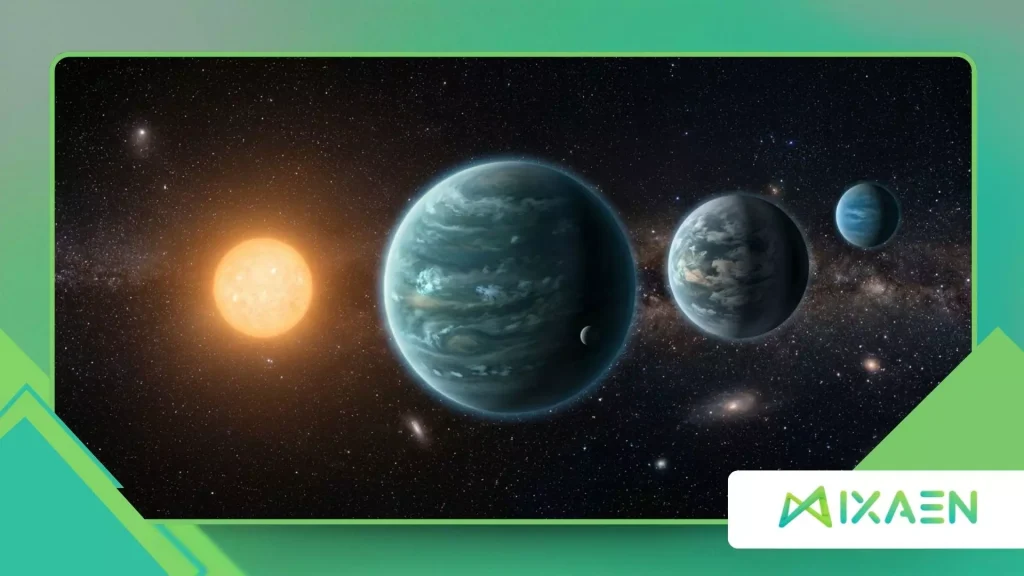
Temperate Mini-Neptunes represent one of the most profound mysteries in modern astrophysics, effectively shattering the traditional boundaries we used to categorize alien worlds.
For decades, astronomers relied on a relatively simple framework derived from our own solar system, dividing planets neatly into small, rocky terrestrial bodies like Earth or massive, gaseous giants like Neptune and Jupiter.
However, deep-space surveys have revealed that the universe favors a completely different template one that bridges this exact gap and forces us to rethink everything we know about planetary evolution and habitability.
As we analyze the latest atmospheric data streaming in from our most advanced space observatories, these intermediate-sized worlds challenge our preconceptions about where life can thrive.
They possess sizes between two and four times the radius of Earth, yet they maintain mild equilibrium temperatures that allow for the existence of volatile elements.
By studying their unique compositions, scientists are realizing that our previous planetary classification models are not just incomplete; they are fundamentally outdated.
What You Will Learn in This Article
- The exact physical characteristics that distinguish intermediate gaseous worlds from rocky super-Earths.
- The groundbreaking spectroscopic methods used by modern observatories to scan alien atmospheres in real time.
- An in-depth look at the Hycean world hypothesis and its massive implications for astrobiology.
- How recent discoveries are forcing a complete rewrite of astronomy textbooks worldwide.
What Are These Intermediate Worlds and Why Do They Defy Categories?
What defines a sub-Neptune planet?
To understand these cosmic anomalies, we must look at their physical dimensions and the strange environments they harbor.
A sub-Neptune is generally classified as a planet smaller than Neptune but significantly larger than Earth, typically possessing a thick envelope of hydrogen and helium gas over a dense core.
When these worlds orbit within or near the habitable zone of their parent stars, they become temperate mini-Neptunes, a specific subset where temperatures are mild enough to prevent the atmosphere from boiling away.
The presence of a massive volatile envelope changes the entire thermodynamic behavior of the planet.
Unlike Earth, where a thin atmosphere rests upon a solid crust, these planets feature a gradual transition from a thick, high-pressure gas layer down to a molten or fluid mantle.
This structural ambiguity makes it incredibly difficult for scientists to draw a sharp line where the atmosphere ends and the actual surface begins.
Where do they fit in the cosmic hierarchy?
Our solar system completely lacks any planet of this size, which originally led scientists to assume they were rare anomalies in the wider galaxy.
Statistics from NASA’s Exoplanet Archive completely flipped this narrative, demonstrating that planets of this specific size range are actually the most common type found throughout the Milky Way.
Think of them as a celestial platypus; they combine characteristics of different planetary families into a single, perplexing entity that completely refutes our localized observations.
This glaring absence in our immediate neighborhood created a major blind spot in early astronomical models.
We assumed the gap between Earth and Neptune was a natural physics barrier, a “radius valley” where planets simply could not persist over billions of years.
Instead, the universe has shown us that our solar system is the historical outlier, not the rule.
++ What If We Discover Life That Doesn’t Want to Be Found?
How do they differ from our gas giants?
While deep-space giants like Neptune and Uranus are freezing, distant worlds locked in perpetual winter, these intermediate planets experience intense stellar radiation that drives complex chemistry.
The milder temperatures allow for the condensation of water vapor and the formation of unique cloud decks made of photochemical hazes.
This means their atmospheric dynamics are far more active and chemically diverse than the stagnant, frozen outer envelopes of our local gas giants.
Furthermore, the lower total mass of temperate mini-Neptunes means their gravitational pull cannot retain the massive, crushing envelopes seen on Jupiter.
This creates a highly delicate balance between the core’s geothermal output and the stellar winds stripping the outer layers.
The result is an incredibly diverse spectrum of worlds, ranging from puffy, low-density spheres to highly compressed, water-rich environments.
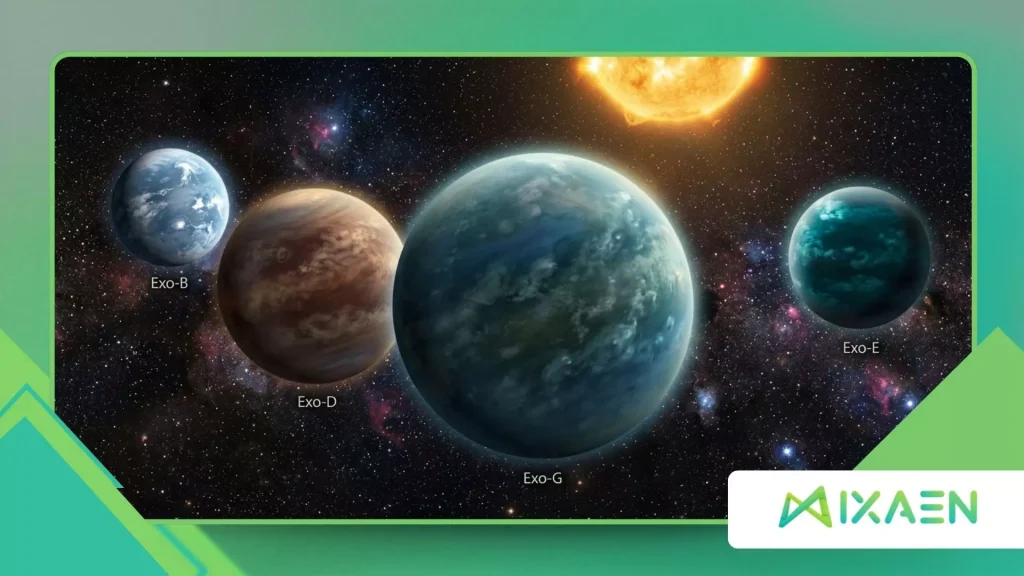
How Do Modern Telescopes Analyze Their Atmospheres in Real Time?
What tools do astronomers use today?
We no longer have to rely on mere guesswork or blind theoretical modeling to understand these distant atmospheres.
Space-based observatories utilize high-precision instruments capable of isolating the incredibly faint signatures of starlight filtering through an exoplanet’s outer gas envelope.
By focusing on these minute variations in light, researchers can deduce the exact chemical composition of a world lying hundreds of light-years away.
The sheer precision required for these observations is staggering, demanding instruments that can filter out stellar noise and cosmic interference with absolute perfection.
Ground-based arrays complement these space assets by providing high-resolution Doppler measurements that help nail down the planet’s exact mass.
Together, this global network of technology allows humanity to perform real-time chemical audits of alien skies.
Also read: Why Finding Life Elsewhere Might Force Us to Rethink Religion
How does transmission spectroscopy reveal hidden gases?
When a planet transits across the face of its host star, a tiny fraction of the starlight passes directly through its extended atmosphere before reaching our detectors.
Different chemical elements absorb very specific, predictable wavelengths of this light, leaving behind a telltale graphical fingerprint known as an absorption spectrum.
Can you imagine reading the molecular recipe of a sky that no human eyes will ever see directly?
This technique allows us to identify the presence of water vapor, carbon dioxide, methane, and even more complex organic compounds.
By measuring the depth of these absorption lines, atmospheric scientists can calculate the relative abundance of each gas.
This process directly exposes the internal chemistry and tells us whether a planet is a choking volcanic wasteland or a humid, volatile-rich paradise.
Read more: How Exoplanet Water Inventories Influence Climate Stability
Why is the James Webb Space Telescope data a game-changer?
The deployment of the James Webb Space Telescope (JWST) has completely revolutionized this field of study by providing unprecedented infrared sensitivity.
Older instruments struggled to peer through the thick, global haze layers that frequently blanket temperate mini-Neptunes, often returning flat, featureless spectra.
JWST’s longer wavelengths cut right through these obscuring clouds, revealing the rich chemical secrets hiding beneath the upper atmosphere.
A prime example of this technological leap is the ongoing investigation into planets like K2-18b.
JWST’s Near-Infrared Spectrograph detected an abundance of carbon-bearing molecules, shaking up the scientific community and validating decades of fringe planetary theories.
These real-time discoveries are providing the concrete data points needed to build entirely new classification systems.
Why Does the Hycean World Hypothesis Change the Search for Life?
What is a Hycean planet?
A groundbreaking study led by astronomer Nikku Madhusudhan at the University of Cambridge introduced the concept of “Hycean” worlds to describe a specific class of planets.
These are defined as temperate mini-Neptunes that boast massive, hydrogen-rich atmospheres sitting atop a planet-wide liquid water ocean.
This hypothesis suggests that these planets could possess the perfect combination of pressure, temperature, and moisture to support liquid water.
The term itself is a portmanteau of “hydrogen” and “ocean,” reflecting the dual nature of these fascinating environments.
If these oceans truly exist, they would be vastly deeper and more voluminous than anything found on Earth. This opens up an entirely new avenue for habitability that doesn’t rely on a rocky, terrestrial surface.
Can life actually survive under a thick hydrogen sky?
For a long time, conventional biology assumed that life required an oxygen-rich or strictly Earth-like atmosphere to develop and sustain itself.
However, microbial life on Earth has proven remarkably resilient, with many anaerobic organisms thriving in environments completely devoid of oxygen.
Under the crushing pressure of a thick hydrogen sky, specialized biochemical pathways could theoretically utilize alternative energy cycles to survive.
The massive greenhouse effect provided by a hydrogen-rich atmosphere also means these planets can maintain liquid oceans even when orbiting far from their stars.
This dramatically expands the traditional definition of a star’s habitable zone, effectively multiplying the number of potentially life-bearing worlds in the galaxy. The search for biosignatures is no longer a quest to find an exact twin of Earth.
Which specific planets are leading this scientific revolution?
Astronomers are focusing their immediate attention on a select handful of targets that offer the cleanest spectroscopic data.
Planets orbiting nearby red dwarf stars are particularly attractive because their small stellar size makes the transiting planet’s atmospheric signal much easier to isolate.
The planet K2-18b remains the poster child for this research, continuously drawing intense scrutiny from teams worldwide.
Another highly compelling target is LHS 1140 b, which sits roughly 50 light-years away and occupies a pristine position within its star’s habitable zone.
Recent data analysis suggests it may lean closer to a volatile-rich ocean world than a purely gaseous sub-Neptune. The table below outlines the core characteristics of these primary targets based on current observational data.
| Planet Name | Distance (Light-Years) | Radius (Earth Radii) | Mass (Earth Masses) | Primary Atmospheric Components Detected |
| K2-18b | 124 | 2.6 | 8.6 | Methane( CH₄)Carbon Dioxide (CO₂) |
| LHS 1140 b | 50 | 1.7 | 5.6 | Nitrogen (N₂) rich / Water Vapor (H₂O) candidate |
| TOI-732 c | 72 | 2.4 | 8.1 | Hydrogen (H₂) envelope, Volatiles |
| GJ 1214 b | 48 | 2.7 | 8.1 | High-altitude clouds, Haze layers |
How Does This Paradigm Shift Rewrite Astronomy Textbooks?
Why must we abandon the old binary classification system?
The traditional binary view of planets is simply incapable of accommodating the vast spectrum of worlds we are uncovering.
Forcing a planet that is 50% water and 10% hydrogen gas into either the “rocky” or “gas giant” category is an exercise in futility.
We need a fluid, multidimensional classification matrix that accounts for volatile mass fractions, core-to-envelope ratios, and stellar insolation levels.
Continuing to use outdated labels creates deep confusion within both the scientific community and the public sphere.
When a headline announces the discovery of a “Super-Earth,” people naturally envision a rocky world with continents and shallow seas.
In reality, many of these worlds are actually shrouded temperate mini-Neptunes, complete with hostile, high-pressure environments that look nothing like home.
What are the practical examples of this classification crisis?
Consider the long-standing debate surrounding GJ 1214 b, a planet that has actively resisted definitive classification for over a decade.
Early observations could not determine whether it was a water-rich world with a dense steam atmosphere or a mini-Neptune with a puffy hydrogen envelope masked by clouds.
This ambiguity demonstrates that our current terminology lacks the nuance required to describe intermediate planetary states.
Another excellent example is the shifting identity of LHS 1140 b as our instruments improve. It has bounced between being classified as a rocky Super-Earth and a water-dominated sub-Neptune depending on the precision of the mass-and-radius calculations.
This ongoing identity crisis proves that nature operates on a continuous spectrum rather than sticking to neat, isolated boxes.
How will future missions resolve the planetary mystery?
The next decade will bring an onslaught of advanced space assets designed specifically to clear up these planetary identity crises.
Space missions will focus on wide-field atmospheric surveys, gathering large statistical samples to map out the true distribution of chemical profiles across the galaxy.
This will allow us to see exactly where the transition from rocky world to gas world occurs under different cosmic conditions.
By gathering high-fidelity data from hundreds of intermediate worlds, we will finally build a predictive model for planetary formation.
This will allow us to look at a planet’s mass and orbit and instantly deduce its internal structure with high confidence.
The mystery of the sub-Neptunes will transition from a perplexing paradox into a foundational pillar of modern planetary science.
Redefining Our Place in the Universe
The study of intermediate worlds has proven that our solar system is a highly curated, somewhat unusual corner of the cosmos.
By challenging our rigid classification systems, these unique planets remind us that nature constantly resists our attempts to enforce simple binaries.
The discovery of potential deep-ocean worlds beneath thick envelopes of primitive gas expands our understanding of habitability, proving that life may find a way to thrive in environments we once considered completely hostile.
As our telescopes continue to capture the faint light of distant transits, we must remain willing to discard old dogmas and embrace a far more complex, vibrant, and fascinating universe.
What are your thoughts on these exotic worlds? Do you think the next great discovery of alien life will happen on a planet completely unlike Earth? Share your thoughts and join the conversation in the comments below!
Frequently Asked Questions
What is the main difference between a Super-Earth and a Mini-Neptune?
The primary distinction lies in their physical composition and the thickness of their outer envelopes.
A Super-Earth is a massive planet composed primarily of rock and metal with a relatively thin atmosphere, whereas a Mini-Neptune retains a significant, deep envelope of hydrogen, helium, and other volatile gases over its core.
Can humans ever colonize a temperate mini-Neptune?
Surface colonization as we imagine it is practically impossible due to the immense atmospheric pressure and the complete lack of a solid, rocky terrain to land on.
However, these worlds remain incredibly valuable scientific laboratories for studying remote chemistry and understanding the broader mechanics of planetary formation.
Why didn’t our own solar system produce a mini-Neptune?
Astronomers believe that the early distribution of matter and the specific migration patterns of Jupiter and Saturn disrupted the growth of intermediate planets in our local neighborhood.
This unique gravitational dance cleared out the material that would have otherwise formed a sub-Neptune, leaving behind a distinct gap between Earth and Uranus.
