
How Planet-Star Interactions Influence Atmospheric Survival
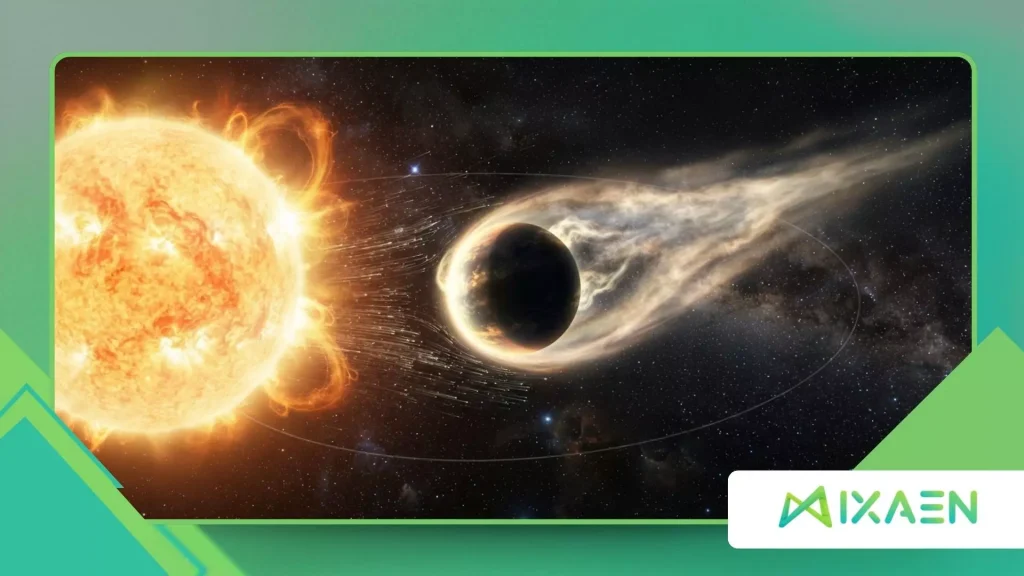
Planet-Star Interactions dictate the cosmic survival of alien atmospheres across our galaxy, determining whether an orbiting world retains its life-supporting gas envelope or transforms into a barren rock.
Stellar winds, intense ultraviolet radiation, and coronal mass ejections constantly bombard exoplanets, testing the structural integrity of their fragile gaseous covers.
Astrophysicists studying these complex dynamics utilize advanced space-based observatories to decode how energetic star systems shape planetary destiny.
This delicate cosmic dance between a host star and its orbiting companion defines the ultimate boundary between a living world and a dead wasteland.
Observing these violent stellar tantrums reveals the immense pressure outer atmospheres endure daily under fierce electromagnetic bombardment.
Researchers analyze spectral signatures to measure atmospheric escape rates, providing critical insights into planetary evolution across deep space.
Without accounting for these stellar influences, our models of alien habitability remain fundamentally incomplete.
Can we truly understand life’s potential in the universe without measuring the stellar storms that threaten it?
Cosmic Dynamics and Atmospheric Survival
- Decoding the mechanisms driving stellar wind erosion on alien worlds.
- The role of magnetic fields in shielding planetary atmospheres from radiation.
- Observational breakthroughs from modern space telescopes analyzing exoplanet weather.
- Comparative metrics of atmospheric retention across diverse stellar systems.
What Are Planet-Star Interactions and How Do They Work?
Planet-Star Interactions encompass the complex network of gravitational, magnetic, and radiative forces exchanged between a host star and its orbiting worlds.
When a star releases powerful flares, high-energy photons slam into the upper layers of an exoplanet, ionizing gas molecules and stripping electrons away.
Imagine a fierce solar gale constantly sandblasting a fragile glass fortress, gradually wearing down its protective outer defenses over millions of years.
This relentless erosion forces planetary atmospheres into a state of permanent hydrodynamic escape, where gases stream continuously into the vacuum of space.
Furthermore, tidal forces synchronize orbits and induce intense internal heating, driving volcanic outgassing that attempts to replenish lost atmospheric volume from below.
This continuous tug-of-war between stellar destruction and planetary outgassing determines whether a world keeps its protective blanket intact.
Understanding this dual mechanism allows scientists to map out which planetary systems can sustain long-term climatic stability.
The sheer scale of these astrophysical processes highlights the precarious nature of planetary survival in harsh stellar environments.
How Do Stellar Flares Strip Away Gas Envelopes?
High-energy coronal mass ejections emit massive quantities of X-rays and extreme ultraviolet radiation that heat upper atmospheres past their escape velocity.
This extreme thermal expansion causes planetary gases to blow off into space like vapor from a boiling kettle.
Red dwarf systems are notoriously active, frequently launching flares that devastate the atmospheric security of close-in terrestrial worlds.
++ What If We Discover Life That Doesn’t Want to Be Found?
What Role Does Magnetic Field Strength Play?
A robust planetary magnetic field acts like an invisible shield, deflecting incoming charged particles away from vulnerable atmospheric layers.
Planets lacking intrinsic dynamos experience direct solar wind stripping, losing their volatile compounds exponentially faster than magnetized worlds.
Magnetic protection is therefore a primary prerequisite for maintaining long-term surface water and stable climatic conditions.
Also read: Why Finding Life Elsewhere Might Force Us to Rethink Religion
Can Orbital Distance Mitigate Stellar Damage?
Exoplanets orbiting far beyond the habitable zone reside outside the primary danger corridor of stellar wind intensity and extreme radiation.
Increased orbital distance reduces radiative pressure significantly, allowing even modest gravity wells to hold onto primordial hydrogen envelopes.
However, extreme distance also plunges worlds into deep freezes, creating an entirely different set of survival challenges.
How Do Modern Observatories Measure Atmospheric Loss?

Analyzing Planet-Star Interactions requires ultra-sensitive space instruments capable of capturing minute dips in starlight as an exoplanet transits its host star.
Telescopes like the James Webb Space Telescope detect specific spectral absorption lines, revealing atmospheric gases bleeding away into the cosmos.
Researchers track hydrogen plumes streaming millions of kilometers behind hot Jupiters, providing direct empirical proof of ongoing atmospheric stripping.
These observations transform theoretical astrophysics into an exact observational science with real-time data streams.
Data published by astrophysical survey teams indicate that close-in super-Earths frequently lose their primary envelopes within the first billion years of stellar evolution.
This empirical evidence confirms that stellar youth is the most perilous epoch for any nascent planetary system.
By observing these distant atmospheric dynamics, scientists reconstruct the historical timeline of our own solar system’s youth.
The cosmos serves as a grand laboratory where every stellar type demonstrates a unique method of atmospheric attrition.
Read more: How Exoplanet Water Inventories Influence Climate Stability
What Is Transmission Spectroscopy?
Transmission spectroscopy analyzes starlight filtering through an exoplanet’s atmosphere during a transit event, revealing the chemical fingerprint of escaping gases.
Different molecules absorb specific wavelengths of light, creating distinct spectral signatures that researchers decode to determine atmospheric composition.
This technique allows us to “taste” the air of worlds located light-years away from Earth.
Why Are Hot Jupiters Prime Targets?
Hot Jupiters orbit so close to their parent stars that their upper atmospheres reach thousands of kelvins, driving extreme hydrodynamic mass loss.
Their massive size and puffed-up gas envelopes make them ideal laboratories for studying stellar wind dynamics and atmospheric blow-off.
Observing these extreme worlds helps calibrate theoretical models applied to smaller, rocky planets.
How Do Stellar Winds Alter Planetary Chemistry?
Persistent radiation breaks down complex molecules like methane and water vapor in the upper atmosphere, altering the planet’s chemical makeup permanently.
Lighter elements escape into space while heavier ions remain, gradually shifting the atmospheric density and greenhouse properties over geological timescales.
This chemical evolution directly impacts whether a world can support organic chemistry or complex biology.
Why Do Magnetic Fields Determine Long-Term Habitability?
The ultimate defense mechanism against destructive Planet-Star Interactions is a powerful planetary dynamo driven by a churning molten core.
Without this internal magnetic shield, stellar winds erode atmospheric pressure until surface liquids boil away directly into the vacuum of space.
Think of a magnetic field as an invisible umbrella deflecting a relentless downpour of cosmic shrapnel away from a city’s residents.
Worlds possessing strong magnetic protection retain their volatile inventories, fostering stable climates capable of supporting complex chemistry over billions of years.
Moreover, studying these protective magnetic barriers helps astrobiologists narrow down the search targets for extraterrestrial life within our stellar neighborhood.
Not all rocky planets develop functional dynamos, making core composition and rotation rates critical variables in the habitability equation.
As stellar activity waxes and wanes over a star’s lifetime, the resilience of the planetary magnetosphere dictates its ultimate survival.
The universe rewards worlds built with robust internal engines and punishes those lacking dynamic defenses.
How Do Molten Cores Generate Dynamos?
Convective movements of liquid iron and nickel within a planet’s outer core generate electrical currents that produce a planetary magnetic field.
This internal geodynamo requires rapid planetary rotation and sufficient thermal energy to maintain its shielding capacity over geological epochs.
If the core cools prematurely, the magnetic shield collapses, leaving the atmosphere entirely defenseless.
What Happens During Geomagnetic Storms on Exoplanets?
Intense stellar eruptions compress planetary magnetospheres, triggering violent auroral displays and driving atmospheric ions out along open magnetic field lines.
These global storms inject massive amounts of energy into the upper atmosphere, causing sudden heating and accelerated gas loss.
Monitoring these events reveals the dynamic vulnerability of worlds orbiting active stars.
Can Atmospheres Regenerate After Initial Stripping?
Volcanic outgassing and internal tectonic activity can replenish lost atmospheric gases long after the turbulent youth of the host star subsides.
This secondary atmosphere provides a second chance for worlds that survived the initial wave of high-energy stellar erosion.
Balancing outgassing rates against atmospheric escape is the key to calculating long-term planetary survival.
Comparative Metrics: Stellar Impact Across Planet Types
The following analytical table contrasts how different exoplanet categories withstand radiative pressure and stellar wind erosion from active host stars.
| Planetary Classification | Primary Vulnerability | Typical Survival Rate | Dominant Escape Mechanism |
| Hot Jupiters | Extreme UV radiation and tidal heating | Moderate (Massive initial gas reservoir) | Hydrodynamic thermal blow-off |
| Super-Earths | Stellar wind stripping without strong dynamo | Low to Moderate | Ion pickup and photoevaporation |
| Habitable Zone Rocky Worlds | Flare activity from active M-dwarf stars | High (If magnetic shield is present) | Sputtering and photochemical loss |
Conclusion
Understanding Planet-Star Interactions unlocks the fundamental rules governing atmospheric retention and the search for habitable worlds across the cosmos.
We have examined how stellar winds, magnetic shields, and radiative forces continuously reshape the destinies of planets orbiting distant stars.
Every observation brings us closer to mapping the true distribution of life-supporting environments in our galaxy.
What are your thoughts on how stellar activity impacts the possibility of alien life? Share your insights in the comments below!
Frequently Asked Questions
What causes an exoplanet to lose its atmosphere entirely?
Intense stellar ultraviolet radiation and high-speed stellar winds heat the upper atmospheric layers past the planet’s escape velocity, driving continuous gas loss into space.
Planets lacking strong intrinsic magnetic fields are especially vulnerable to this relentless erosion process over long timescales.
Are red dwarf stars dangerous for orbiting planets?
Yes, red dwarfs are notoriously active, frequently launching violent flares and high-energy radiation that can strip the atmospheres off close-in rocky worlds within their habitable zones.
This extreme stellar activity poses a major hurdle for finding stable, life-supporting environments around small stars.
How do space telescopes detect atmospheric escape?
Observatories detect escaping gases by observing spectral absorption lines during planetary transits, noting when specific elements like hydrogen stream away from the planet.
This technique maps out invisible gas plumes stretching millions of kilometers across space.
