
Could Moons Like Europa Teach Us About Exoplanet Oceans?
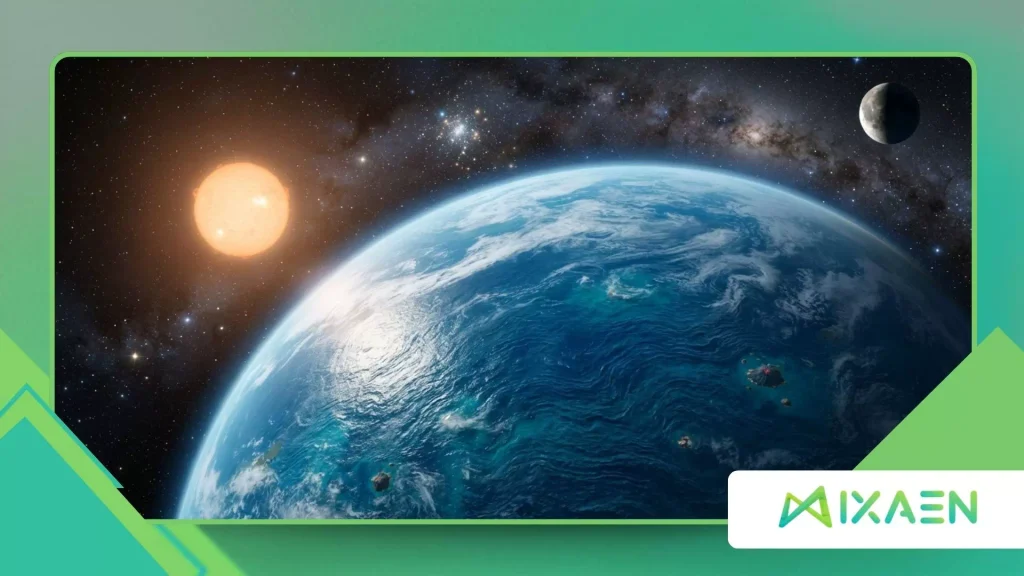
Exoplanet oceans harbor the greatest potential for discovering extraterrestrial life beyond our solar system, challenging modern astrobiology to look deep beneath frozen planetary crusts.
Planetary scientists now realize that icy celestial bodies orbiting distant stars may mirror the subsurface aquatic environments found right here in our cosmic neighborhood.
Exploring these distant water worlds opens unprecedented windows into how life might thrive under extreme conditions across the galaxy.
Think of our solar system’s frozen moons as accessible laboratory templates decoding galactic secrets. Can distant icy shells protect thriving aquatic ecosystems from harsh stellar radiation?
Investigating alien liquid reserves requires combining planetary data from local spacecraft with cutting-edge spectroscopic observations gathered by space telescopes.
As astronomers map atmospheric compositions and thermal signatures, the search for submerged extraterrestrial biospheres accelerates dramatically.
Every new observational breakthrough brings humanity closer to answering whether life is a cosmic anomaly or a universal inevitability.
How do gravitational forces and tidal heating keep sub-surface liquid layers warm across light-years?
Exploring Subsurface Aquatic Worlds Across the Cosmos
- Analyzing how Jovian and Saturnian icy satellites model distant planetary hydrology.
- Evaluating spectroscopic methods used by modern observatories to detect remote water vapor.
- Unpacking tidal heating mechanisms sustaining liquid water beneath frozen exterior crusts.
- Assessing habitability markers and astrobiological biosignatures within alien aquatic environments.
What Are the Key Parallels Between Jovian Icy Moons and Distant Water Worlds?
Exoplanet oceans share fundamental physical and thermodynamic characteristics with the subsurface liquid layers discovered beneath the frozen crust of Jupiter’s moon Europa.
Tidal flexing generated by gravitational interactions with massive host planets creates intense internal friction that melts subterranean ice into vast oceans.
Imagine a planetary body locked in a perpetual gravitational dance, generating enough core warmth to maintain liquid water miles beneath solid ice.
Astrobiological models confirm that tidal heating represents a primary driver for maintaining habitable liquid zones far beyond traditional stellar habitable boundaries.
Comparative planetology allows researchers to extrapolate data gathered from local space missions to interpret the complex telemetry arriving from distant exoplanetary systems.
When space agencies study Europa’s cracked ice shells and plume emissions, they gain a direct physical blueprint for analyzing remote spectroscopic anomalies.
These localized celestial laboratories provide concrete baseline parameters for evaluating whether exoplanetary ice shells conceal deep, life-sustaining liquid layers.
Understanding local icy moons transforms abstract astronomical speculation into rigorous, verifiable planetary science.
How Does Tidal Heating Sustain Subsurface Liquid Layers?
Gravitational friction squeezes and stretches planetary interiors continuously, generating internal thermal energy that prevents subterranean water from freezing solid over geological epochs.
This powerful mechanical process occurs independently of direct stellar radiation warmth.
++ What If We Discover Life That Doesn’t Want to Be Found?
Why Do Iced Surfaces Mirror Alien Hydrology?
Fractured surface crusts and cryovolcanic activity provide visible exterior clues regarding internal pressure, composition, and dynamic liquid movement happening miles below the frozen exterior shell.
Exterior scarring directly reflects internal aquatic activity.
Also read: Why Finding Life Elsewhere Might Force Us to Rethink Religion
What Role Do Hydrothermal Vents Play in Deep Subsurface Habitability?
Deep-sea thermal vents provide essential chemical nutrients and thermal energy gradients, fueling chemosynthetic microbial ecosystems entirely independent of solar light or surface photosynthesis.
How Do Modern Observatories Detect Hidden Subsurface Aquatic Bodies?
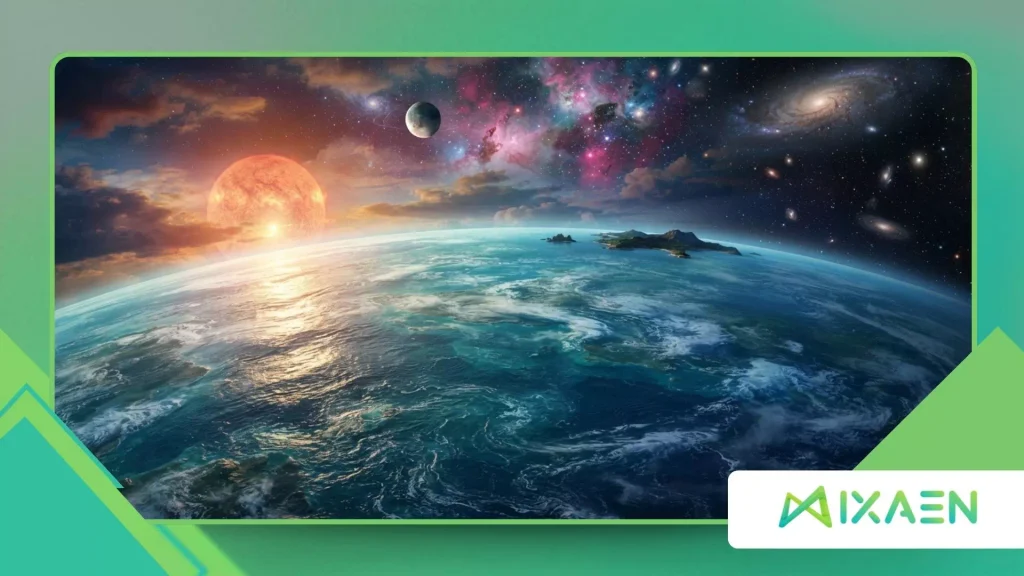
Exoplanet oceans remain notoriously difficult to image directly, requiring advanced astronomical instruments to analyze subtle atmospheric vapor plumes and infrared thermal emissions.
Space telescopes utilize high-resolution transmission spectroscopy to scan starlight filtering through planetary atmospheres during transit events.
Picture capturing the faint chemical fingerprint of water vapor escaping from a distant world as it crosses in front of its parent star.
Recent data archives compiled by space agencies highlight growing evidence of water signatures in distant multi-planet systems.
Detecting indirect biomarkers like atmospheric vapor, ozone proxies, and volatile chemical imbalances offers our best technological pathway toward confirming alien aquatic life.
When orbiting observatories register anomalous atmospheric moisture alongside active tectonic indicators, astrobiologists calculate the high probability of hidden sub-surface liquid reservoirs.
These sophisticated remote-sensing techniques bypass the limitations of direct visual imaging by decoding molecular light interactions across interstellar distances.
Technological innovation continues expanding our observational reach deeper into the cosmos.
Read more: How Exoplanet Water Inventories Influence Climate Stability
What Is Transmission Spectroscopy and How Does It Work?
Astronomers measure the exact wavelengths of starlight filtering through an exoplanet’s outer atmosphere during transit, identifying specific molecular absorption lines corresponding to water vapor and other gases.
Why Are Atmospheric Water Vapor Plumes Critical Biomarkers?
Active cryovolcanic plumes eject sub-surface liquid samples directly into the upper atmosphere, where remote telescopes can capture their chemical composition during transit alignments.
How Do Infrared Thermal Scans Reveal Hidden Liquid Dynamics?
Thermal infrared imaging detects uneven surface temperature distributions across distant planetary globes, indicating internal heat transport mechanisms driven by deep liquid convection currents.
What Are the Astrobiological Implications of Subterranean Extraterrestrial Life?
Exoplanet oceans fundamentally redefine traditional astrobiological definitions by proving that life does not require a sunlit surface to originate and flourish.
Subsurface aquatic environments protected beneath thick sheets of ice are shielded from cosmic radiation, stellar flares, and catastrophic meteorite impacts.
Imagine an eternal, pitch-black ocean warmed by geothermal vents where resilient microbial organisms evolve complex survival strategies.
Astrobiological research indicates that ice-covered water worlds may actually outnumber traditional terrestrial Earth-like planets across the Milky Way.
The discovery of chemosynthetic life thriving in extreme terrestrial environments like Antarctic subglacial lakes provides a compelling biological model for alien ecosystems.
If life can adapt to total darkness, high pressure, and mineral-rich geothermal outflows on Earth, similar processes likely occur across distant exoplanetary systems.
This paradigm shift broadens the cosmic search zone, suggesting that habitable real estate is far more abundant than previously imagined.
Subterranean aquatic biospheres might represent the most common cradle of life in the universe.
How Do Chemosynthetic Ecosystems Survive Without Sunlight?
Instead of relying on solar photosynthesis, deep-dwelling microorganisms metabolize chemical compounds released by hydrothermal vents, converting geological minerals into essential biological energy.
Why Does Ice Shielding Enhance Long-Term Habitability?
Thick exterior ice crusts act as robust planetary armor, deflecting dangerous solar radiation, blocking harmful ultraviolet rays, and stabilizing internal planetary climate conditions over billions of years.
What Lessons Do Antarctic Subglacial Lakes Offer Astrobiologists?
Extreme subglacial environments on Earth demonstrate that active, diverse microbial communities can thrive in absolute isolation beneath kilometers of solid glacial ice for millions of years.
Exoplanet Ocean Analogs and Comparative Metrics
The structured table below compares local solar system icy bodies with distant exoplanetary ocean candidates across key astrobiological parameters.
| Celestial Body Category | Primary Heating Source | Estimated Ice Shell Depth | Astrobiological Potential |
| Solar System Moons | Gravitational tidal flexing | 15 to 25 kilometers | High probability for microbial life |
| Super-Earth Exoplanets | Radiogenic decay and stellar flux | Variable or completely molten | Moderate to high habitability index |
| Free-Floating Rogue Worlds | Primordial core heat and pressure | 50+ kilometers | Low surface visibility, unique deep ecology |
Unlocking the Mysteries of Distant Cosmic Water Worlds
Exoplanet oceans bridge the gap between local planetary exploration and deep-space astrobiological discovery, transforming our understanding of life’s distribution in the universe.
By studying icy analogs within our solar system and applying advanced spectroscopic tools, scientists decode the hidden secrets of distant water worlds.
Continued technological innovation promises to reveal whether subsurface aquatic ecosystems represent a common galactic phenomenon.
What planetary system will yield the definitive signature of alien aquatic life first? Share your perspective in the comments below!
Frequently Asked Questions
How do scientists detect water on planets light-years away?
Astronomers utilize transmission spectroscopy to analyze starlight filtering through planetary atmospheres during transit events, identifying molecular water absorption signatures.
Why are icy moons considered better targets than Earth-like planets?
Icy moons feature protective exterior ice crusts that shield sub-surface liquid oceans from cosmic radiation, extreme temperature swings, and dangerous meteorite impacts.
Could life exist without sunlight in exoplanet oceans?
Yes, chemosynthetic microorganisms can thrive in pitch-black subterranean oceans by metabolizing chemical energy generated by deep-sea hydrothermal vents.
What role does tidal heating play in sustaining liquid water?
Gravitational interactions between orbiting bodies create intense internal friction, generating sufficient thermal energy to keep subsurface water liquid far from stars.
Are subsurface oceans common across the Milky Way galaxy?
Astrobiological models suggest that icy, water-rich bodies with subterranean liquid layers are remarkably abundant throughout stellar neighborhoods across the cosmos.
