
Why On-Orbit Refueling Could Extend Deep Space Missions
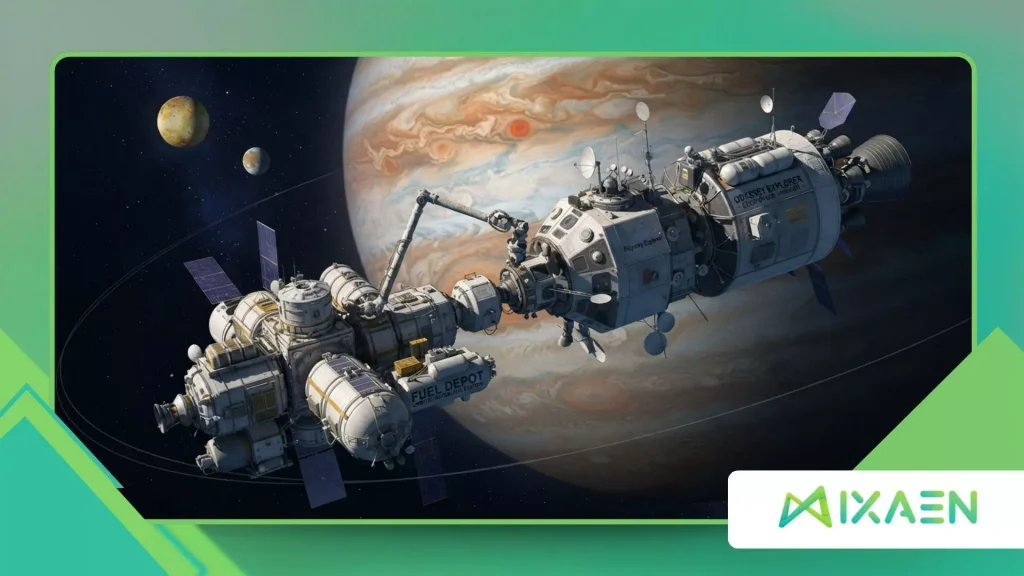
On-Orbit Refueling transforms future deep space exploration by breaking the tyrant’s rule of heavy rocket mass limits.
Space agencies currently launch giant structural propulsion systems carrying all necessary fuel from Earth’s deep gravity well.
This brute-force method limits payload sizes and makes interplanetary crewed voyages financially impossible for commercial operators.
Transferring propellant in microgravity unlocks infinite operational range for orbital spacecraft.
Engineers now build automated docking valves designed to handle supercooled liquid hydrogen and methane safely in vacuum conditions.
Imagine refueling a long-haul commercial airliner mid-flight while traveling at thousands of miles per hour.
That exact engineering marvel now happens beyond our atmosphere, extending satellite lifespans significantly. Are you ready to witness humanity conquer the solar system through orbital logistics?
Navigating the Frontier of Orbital Fuel Logistics
- Examining the mechanics of cryogenic propellant transfer in zero-gravity vacuum environments.
- Evaluating cost reductions for commercial lunar missions and Mars transit vehicles.
- Overcoming thermodynamic boil-off challenges during long-term space storage.
- Establishing international safety standards for autonomous robotic spacecraft docking maneuvers.
What Are the Core Mechanics of Orbital Propellant Transfer?
On-Orbit Refueling requires complex fluid dynamics management to move volatile liquid propellants between orbiting spacecraft safely.
Without Earth gravity pulling liquids downward, engineers utilize centrifugal force, mechanical bladders, and pressurized gas displacement.
Think of it like pouring milk into a glass while riding a roller coaster without spilling a single drop.
Precise robotic arms guide fuel lines together, establishing leak-free seals before high-speed pumps activate.
Data published by NASA indicates that cryogenic boil-off remains the single greatest engineering hurdle for storing liquid hydrogen in orbit.
Specialized thermal insulation shields and active cryo-coolers prevent fuel vaporization during months of interplanetary transit.
When fuel depots maintain stable cryogenic temperatures, spacecraft retain full maneuverability upon reaching distant planetary targets. This technological leap transforms orbital stations into high-tech filling stations.
How Do Automated Docking Systems Connect Fuel Lines?
Autonomous optical sensors and laser rangefinders guide chaser spacecraft toward fuel depots with millimeter-level positional accuracy.
Robotic grapplers lock structural latches securely before pneumatic umbilical ports snap together to initiate fluid transfer.
Computers monitor pressure gradients constantly to prevent catastrophic tank ruptures during active pumping sequences.
++ Why Reusable Spacecraft Systems Redefine Exploration Costs
Why Is Zero-Gravity Fluid Management Challenging?
Surface tension dominates fluid behavior in microgravity, causing liquid propellants to cling randomly to tank walls as floating droplets.
Engineers deploy fine mesh screens and internal baffling systems to corral liquid fuel toward tank outlets. Mastering this fluid control ensures uninterrupted pump delivery without ingesting dangerous gas pockets.
Also read: What We’ve Learned from Landing Rovers on Other Planets
What Role Do Cryogenic Coolers Play?
Advanced pulse-tube cryocoolers absorb ambient solar heat and radiate it back into deep space via large titanium panels.
Maintaining ultra-low temperatures stops liquid oxygen and hydrogen from boiling away into useless gas. Continuous thermal regulation preserves payload mass over multi-year exploration missions.
How Does Refueling Slash Deep Space Mission Costs?
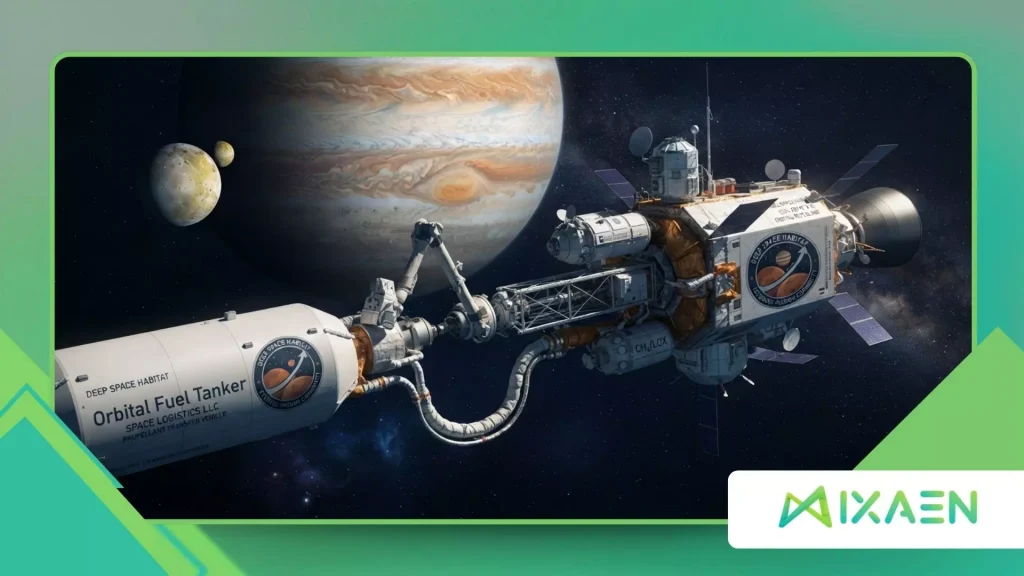
On-Orbit Refueling slashes mission budgets drastically by removing the need for monstrous, single-use mega-rockets on every launch window.
Launching dry spacecraft first and topping off their propulsion tanks in low Earth orbit requires much smaller launch vehicles.
Economics dictate that reusable rockets combined with orbital fuel depots reduce interplanetary ticket prices exponentially.
Commercial space tourism and asteroid mining suddenly transition from science fiction into viable economic realities.
A comprehensive space industry analysis by the Counterpoint Research group highlights that orbital logistics infrastructure will generate billions in commercial revenue.
Private aerospace firms invest heavily in depot architectures to support upcoming lunar base supply chains and crewed Mars flights.
When spacecraft reuse becomes standard practice, the cost per kilogram of delivered payload drops by an order of magnitude. Efficiency replaces brute-force engineering as the guiding principle of modern astronautics.
Read more: Reimagining the Hubble: How It Changed the Way We See Space
Why Are Single-Launch Architectures Inefficient?
Single-launch designs force rockets to carry the heavy fuel load required for escape velocity and return journeys simultaneously.
This enormous mass requirement demands gigantic first-stage boosters that push engineering limits and inflate manufacturing budgets.
Splitting payload delivery and propellant loading into separate launches bypasses this physical bottleneck entirely.
How Do Fuel Depots Lower Interplanetary Ticket Prices?
Orbital fuel stations stockpile surplus propellant delivered by frequent, low-cost commercial cargo flights over several months.
Deep-space vessels dock empty, fill their main propulsion tanks completely, and depart with maximum payload capacity. This modular supply chain optimizes resource allocation across every mission phase.
Can Commercial Ventures Profit From Orbital Logistics?
Private companies plan to sell stored propellant directly to scientific research institutions and government space exploration agencies.
Establishing commercial filling stations in low Earth orbit creates a self-sustaining space economy driven by high demand. Profit motives accelerate technological innovation far faster than government funding alone.
What Technological Hurdles Remain for Orbital Depots?
On-Orbit Refueling still faces significant technical hurdles regarding long-term storage stability, valve reliability, and automated leak detection systems.
Solar radiation and orbital thermal cycling stress exterior depot hulls, threatening microscopic cracks in cryogenic insulation layers.
Engineers must design robust robotic repair systems capable of servicing aging fuel lines without human EVA intervention.
Overcoming these hurdles requires relentless testing aboard permanent orbital laboratory platforms.
Consider how early maritime explorers established supply ports along treacherous coastlines to enable global oceanic trade routes.
Orbital fuel depots function identically, serving as crucial oasis waypoints for humanity’s expansion into the solar system.
Solving fluid transfer vulnerabilities opens the door for permanent human settlements on the Moon and Mars. Perseverance and brilliant engineering continue turning impossibilities into routine operational procedures.
How Do Solar Radiation and Thermal Cycling Affect Depots?
Extreme temperature swings between direct sunlight and planetary shadow cause thermal expansion and contraction across metal hulls.
These cyclical stresses degrade insulation blankets and weaken welded joints over extended operational lifespans. Advanced composite materials and reflective shielding protect fuel integrity against harsh space weather.
Why Is Remote Leak Detection Critical?
Microscopic propellant leaks escape detection easily in a vacuum, creating invisible explosive vapor clouds around docking spacecraft.
Specialized infrared cameras and mass spectrometers monitor valve junctions continuously to identify escaping gases instantly. Automated emergency shutoff valves isolate compromised tanks before catastrophic ignition occurs.
What Are the Safety Protocols for Autonomous Docking?
Spacecraft employ redundant guidance computers and fail-safe thruster abort sequences to prevent high-speed collisions during docking maneuvers.
International regulatory bodies establish standardized communication frequencies and mechanical interfaces for all participating commercial nations. Safety protocols ensure peaceful, orderly traffic management across busy orbital corridors.
Orbital Infrastructure Comparison Matrix
The structured table below contrasts traditional deep-space mission designs with modern fuel depot architectures.
| Mission Parameter | Traditional Single-Launch Model | On-Orbit Refueling Architecture |
| Initial Rocket Mass | Massive, single-use super-heavy lift | Moderate, reusable modular launch vehicles |
| Payload Capacity | Severely restricted by escape fuel weight | Maximized for heavy science and crew gear |
| Operational Lifespan | Limited by initial onboard propellant supply | Extended indefinitely via orbital top-offs |
| Mission Economics | Prohibitive multi-billion dollar budgets | Scalable, commercially sustainable logistics |
Expanding Humanity’s Reach Across the Cosmos
Mastering On-Orbit Refueling gives humanity the logistical foundation required to establish permanent outposts across the solar system.
By decoupling spacecraft design from initial launch mass restrictions, engineers unlock unprecedented payload capacities for deep space missions.
Future generations will look back at orbital fuel depots as the pivotal turning point of interplanetary civilization. Take a moment to reflect on how far our technological capabilities have advanced over the past decade.
What planetary destination are you most excited for human explorers to reach next? Share your thoughts in the comments below!
Frequently Asked Questions
How do spacecraft prevent volatile liquid fuels from evaporating in space?
Spacecraft utilize multilayer insulation blankets, active cryo-coolers, and reflective sunshades to maintain extremely low temperatures required for liquid hydrogen and oxygen storage.
These thermal protection systems prevent solar radiation from causing rapid boil-off inside propellant tanks.
Who is currently developing on-orbit fuel transfer technology?
Several leading commercial aerospace companies, alongside government space agencies like NASA and ESA, are actively testing automated robotic docking and cryogenic fluid transfer systems.
These flight tests pave the way for upcoming lunar exploration architecture and Mars transport vehicles.
Can different types of rocket propellants be transferred in orbit?
Yes, automated systems handle various propellant combinations, including liquid oxygen, liquid methane, and refined kerosene fuels.
Each chemical fuel type requires specific temperature controls, pump pressures, and specialized sealing materials to ensure safe transfer.
